
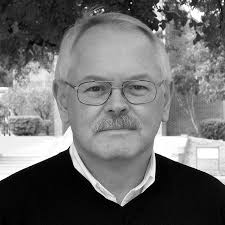
Ronald Rolheiser (b. 1947) is a Canadian Catholic priest, theologian, and widely read spiritual writer known for making classical Christian spirituality accessible to ordinary believers. A member of the Missionary Oblates of Mary Immaculate, he is especially recognized for his pastoral approach to spirituality and his emphasis on desire, incarnation, and everyday holiness.
Early Life and Formation
Ronald Rolheiser was born in 1947 in the rural community of Cactus Lake. He entered the Oblates of Mary Immaculate as a young man and was ordained a Catholic priest in 1972.
He pursued advanced theological studies at the University of Louvain (KU Leuven), where he completed his doctorate in theology. His academic formation combined solid Catholic theological grounding with strong pastoral sensitivity—traits that would characterize his later writing.
Academic and Pastoral Career
Rolheiser served in various teaching and leadership roles within the Oblate community. He later became president of St. Mary’s University, where he served from 2005 to 2015.
Alongside his academic work, he became widely known through:
– Syndicated newspaper columns
– Retreat ministry
– Public lectures
– Popular spiritual books
His ability to translate deep theology into everyday language made him one of the most widely read Catholic spiritual writers of his generation.
His Theology
Ronald Rolheiser’s theology is best described as incarnational, affective, and pastorally grounded. He stands firmly within the Catholic spiritual tradition while speaking directly to the emotional and existential struggles of modern people.
1. Spirituality as What We Do with Our Desire
Perhaps Rolheiser’s most famous theological insight is:
“Spirituality is what we do with our desire.”
He argues that every person is already spiritual because every human life is driven by deep longing—for love, meaning, union, and transcendence. The key question is not whether we are spiritual but how we channel our desire.
This reframes spirituality from something optional to something universal and unavoidable.
2. The Incarnational Vision
Rolheiser strongly emphasizes the Incarnation—that God meets us in ordinary human life, not just in explicitly religious moments.
Key implications in his theology:
– Sexuality, embodiment, and emotion matter spiritually
– Ordinary life is the primary place of holiness
– Community and relationships are sacramental
– The physical world is a carrier of grace
He frequently pushes back against overly dualistic or world-denying spiritualities.
3. Affective and Relational Spirituality
Like Henri Nouwen, Rolheiser pays close attention to the emotional life. He believes many modern people struggle not with disbelief but with:
– Restlessness
– Loneliness
– Overstimulation
– Fragmentation
His theology addresses the interior chaos of contemporary life and offers classical spiritual disciplines (silence, community, Eucharist) as remedies.
4. The Paschal Mystery as the Pattern of Life
Rolheiser repeatedly returns to the Paschal Mystery (the pattern of death → waiting → resurrection) as the fundamental rhythm of Christian existence.
He teaches that authentic growth almost always involves:
– Letting go
– Living in the in-between
– Receiving new life
This framework helps readers interpret suffering, disappointment, and transition spiritually.
5. Mature Discipleship and the Long Haul
A hallmark of Rolheiser’s theology is his focus on long-term fidelity rather than dramatic spiritual experiences.
He emphasizes:
– Fidelity in ordinary duties (morality and Christian life are measured by fidelity rather than success or extraordinary achievements)
– Staying power in relationships (mature love is defined by fidelity, commitment, and sticking with a partner even when feelings of love have faded)
– Patience with slow growth (God often moves slower than humans desire, and this “slowness” requires us to be patient with God and the process of unfolding)
– “White Martyrdom” (Unlike “red” martyrdom, which involves shedding blood for the faith, white martyrdom involves the quiet, courageous endurance of daily suffering, rejection, and sacrifice for the sake of the Gospel.)
This makes his spirituality especially resonant with laypeople, married persons, and those in secular vocations.
6. Ecclesial but Broadly Accessible
Rolheiser writes clearly from within Catholic tradition—especially Eucharistic and communal spirituality—yet his work is widely read across Protestant and ecumenical audiences because of its pastoral tone and psychological realism.
Major Works
Rolheiser’s most influential books include:
– The Holy Longing
– Sacred Fire
– Against an Infinite Horizon
– Wrestling With God
– The Passion and the Cross
– The Restless Heart
The Holy Longing in particular has become a modern classic of Catholic spirituality.
Legacy and Influence
Ronald Rolheiser remains one of the most influential contemporary Catholic spiritual writers. His work is especially valued for:
– Translating classical spirituality for modern readers
– Addressing real emotional and cultural struggles
– Integrating psychology and theology
– Emphasizing incarnational, everyday holiness
Alongside figures like Henri Nouwen, Thomas Merton, and Thomas Keating, Rolheiser is often seen as part of the late-20th-century renewal of accessible contemplative and pastoral spirituality.