
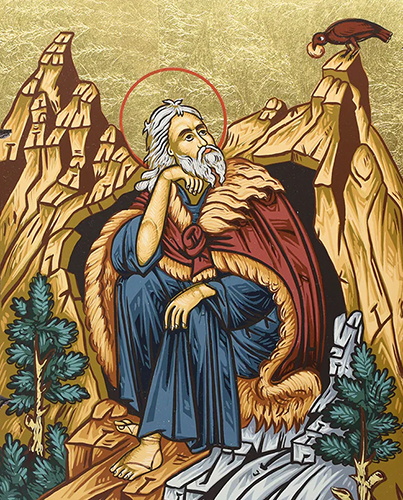
Many theologians view John the Baptist as fulfilling the role of Elijah—coming in his “spirit and power” (Luke 1:17) to prepare the way for the Messiah—rather than being a literal reincarnation, emphasizing John’s prophetic ministry of calling Israel to repentance and purification, much like Elijah confronted idolatry in his time to ready a remnant for God’s coming. Both figures served as radical, wilderness-dwelling prophets challenging the status quo, clearing the path for the Lord’s presence, though John’s “half-job” of denunciation needed Jesus’s empowerment for true salvation.
John the Baptist was aware of both his strength and his impotency. He could point out what’s wrong and what should be done, but after that, he was helpless, with nothing to offer in terms of the strength needed to correct the wrong.
In essence, that’s what we bring to any situation when we criticize something. We are able, often with brilliance and clarity, to show what’s wrong. That contribution, like John the Baptist’s, is not to be undervalued. The gospels tell us that, next to Jesus, there isn’t anyone more important than John the Baptist. But, like John, criticism too is only a half-job, a half-prophecy: It can denounce a king, by showing what’s wrong, and it can wash the soul in sand, by blasting off layers of accumulated rust and dirt, but ultimately it can’t empower us to correct anything. Something else is needed. What
At one point in the gospels, Jesus tells his disciples that it is easier for a camel to pass through the eye of needle than for a rich person to enter the kingdom of heaven. The disciples are stunned and Peter responds by saying: If that is the case than it is impossible! Jesus appreciates that response and adds: It is impossible for humans, but not for God. Anybody who is in recovery from an addiction knows exactly what Jesus means by that. They’ve experienced it: They know that is impossible for them to give up the object of their addiction – and yet they are giving it up, not by their own willpower, but by some higher power, grace.
The gospels speak of this as a baptism and they speak of two kinds of baptisms: the baptism of John and the baptism of Jesus, adding that John’s baptism is only a preparation for Jesus’ baptism. What’s John’s baptism? It’s a baptism of repentance, a realization of what we are doing wrong and a clear resolution to correct our bad behavior. What’s Jesus’ baptism? It’s an entry into grace and community in such a way that it empowers us internally to do what is impossible for us to do by our willpower alone.
Sadly, many of us, who are solid believers, still haven’t grasped the lesson. We’re still trying to live out our lives by John’s baptism alone, that is, by own willpower. That makes us wonderful critics but leaves us mostly powerless to actually change our own lives. What we are looking for, and desperately need, is a deeper immersion into the baptism of Jesus, that is, into community and grace. [Excerpt from Ron Rolheiser’s “Willpower Alone is Not Enough” September 2012]
