
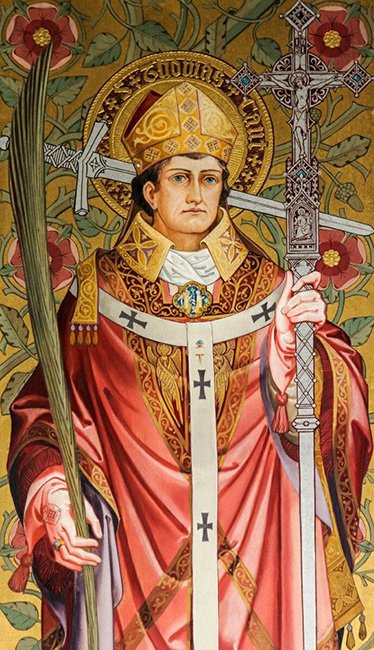
T.S. Eliot suggests in Murder in the Cathedral, a temptation can present itself as a grace, and that can be the case in terms of being virtuous. He illustrates this through the struggles of his main character, Thomas a Beckett. Beckett was the Archbishop of Canterbury from 1162 until he was murdered in his own Cathedral in 1170. As Eliot presents him, Beckett does all the right things. He is altruistic, radically faithful, resists all compromise, and is ready to accept martyrdom. However, as Eliot highlights, these can be “the temptations of the good person”, and it can take some time (and a deeper maturity) to distinguish certain temptations from grace. Hence, Eliot coined these now-famous lines:
Now is my way clear; now is the meaning plain:
Temptation shall not come in this kind again.
The last temptation is the greatest treason:
To do the right deed for the wrong reason.
For those who serve the greater cause
Make the cause serve them.
Those who serve the greater cause can easily make the cause serve them, blind to their own motivation. Don’t we all know it! Those of us who work in ministry, in teaching, in administration, in the media, in the arts, and those of us who are habitual good Samaritans helping out everywhere, what ultimately drives our energy as we do all this good?
T.S. Eliot’s main character in Murder in the Cathedral is a man who does all the right things, is recognized for his goodness, but is someone who still has to examine himself as to his real motivation for doing what he does. What Eliot highlights is something which should give all of us who are trying to be good, virtuous, faithful persons, pause for reflection, scrutiny, and prayer. What’s our real motivation? How much is this about helping others and how much is about ourselves, about gaining respect, admiration, a good name – and having a good feeling about ourselves?
This is a hard question and perhaps not even a fair one, but a necessary one which, if asked, can aid us in our quest for a deeper level of maturity. In the end, are we doing good things because of what it does for others or because of what it does for us? This side of eternity our motivations are pathologically complex and mixed.
