
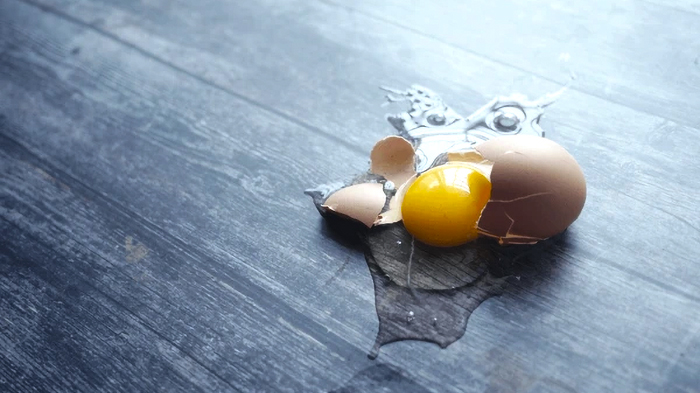
Some years ago, a young man came to me for confession. It was a difficult confession for him. He had been having an affair with a girl and she had become pregnant. He recognized that he had sinned. He also recognized that he had helped create a situation that was irrevocable, a certain ease and innocence had been destroyed, some things would never be quite the same again. He ended his confession on a note of sadness and hopelessness: “There is no way I’ll ever live normally again, beyond this. Even God can’t unscramble an egg!” What this young man was saying was that, for him, there would always be a skeleton in the closet. Ordinary life would, in its own way, limp along, but he would remain forever marked by this mistake.
Today we live in a world and a church in which this kind of brokenness and attitude are becoming more the rule than the exception. For more and more people, there is a major something to live beyond, some skeleton in the closet. What we need today, in the church, perhaps more than anything else, is a theology of brokenness that relates failure and sin seriously enough to redemption.
If the Catholicism that I was raised in had a fault, and it did, it was precisely that it did not allow for mistakes. It demanded that you get it right the first time. There was supposed to be no need for a second chance. If you made a mistake, you lived with it and, like the rich young man, you were doomed to be sad, at least for the rest of your life. A serious mistake was a permanent stigmatization, a mark that you wore like Cain.
We need a theology which teaches us that even though God cannot unscramble an egg, God’s grace lets us live happily and with renewed innocence far beyond any egg we might have scrambled. We need a theology that teaches us that God does not just give us one chance, but that every time we close a door, God opens another one for us. We need a theology that challenges us not to make mistakes, that takes sin seriously, but which tells us that when we do sin, when we do make mistakes, we are given the chance to take our place among the broken, among those whose lives are not perfect, the loved sinners, those for whom Christ came.
We need a theology which tells us that a second, third, fourth, and fifth chance are just as valid as the first one. We need a theology that tells us that mistakes are not forever, that they are not even for a lifetime, that time and grace wash clean, that nothing is irrevocable. Finally, we need a theology which teaches us that God loves us as sinners and that the task of Christianity is not to teach us how to live, but to teach us how to live again, and again, and again. [Excerpt from Ron Rolheiser’s “God Overcomes Scrambled Eggs” June 2016]
