
In John’s Gospel (10, 16), Jesus says: I have other sheep too, that are not of this sheepfold. I must bring them also. They will listen to my voice, and there will be one flock and one shepherd.
I’ve learned the truth of that statement through personal experience. Within my nearly forty years in ministry I have met, befriended, and become a faith-companion to men and women from every type of denomination and religion: Protestants, Episcopalians, Anglicans, Evangelicals, Unitarians, small free Churches of all kinds, Jehovah Witnesses, Hindus, Moslems, and Buddhists. In all of these denominations and religious communities, I have met men and women of deep faith and outstanding charity.
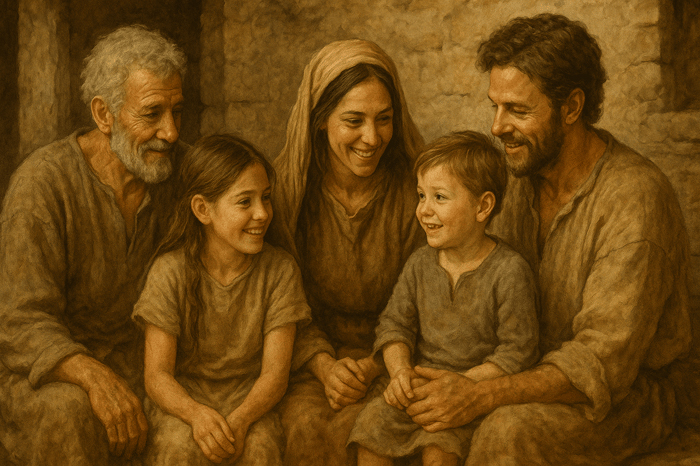
And this has caused me to ask myself the question that Jesus once asked those who approached him and told him that his mother and family were outside the circle he was talking to, asking for him: “Who is my mother? And who are my brethren? And he stretched forth his hand toward his disciples, and said, Behold my mother and my brethren! For whosoever does the will of my Father which is in heaven, is my brother, and sister, and mother. (Matthew 12:46-50)
We tend to believe that “blood is thicker than water” and so we sometimes defend our own families, ethnic groups, countries, and churches, even when they do wrong things. What Jesus affirms is that “faith is thicker than blood” and, even more deeply, that faith is also thicker than denominational or religious affiliation.
St. Paul agrees: In his Epistle to the Galatians, he asks the question: Who is living inside the Holy Spirit? Who really has genuine faith? His answer: Those whose lives manifest charity, joy, peace, patience, kindness, goodness, faithfulness, gentleness, and chastity. The presence of these virtues manifests faith and Christ. Conversely, he warns that we shouldn’t delude ourselves when our lives manifest, among other things, adultery, hatred, factionalism, strife, and envy. Our real brothers and sisters in faith are those whose lives manifest charity rather than selfishness, love rather than hatred, large hearts rather than selective sympathies, gentleness rather than hardness, and kindness rather than mean-spiritedness. Virtue trumps denominational identity.
I will always be a Roman Catholic, just as I will always be a member of my biological family, the Rolheisers, and my religious community, the Missionary Oblates of Mary Immaculate. I’ve been baptized into these families and baptism, as the old catechisms rightly teach, leaves an indelible mark on our souls. These will always be my families; but they may not be my only loyalty. I have other families too, not of these sheepfolds: non-Roman Catholics, non-Rolheisers, non-Oblates. And I don’t love the Roman Catholic Church, my biological family, or the Oblates of Mary Immaculate any less because of this. Paradoxically, I love them more.
When Jesus asks the question: “Who is mother and brother and sister to me?” he answers that whoever does the will of God is his true mother, true brother, and true sister. But, as the Gospels writers have at that point already strongly emphasized, his biological mother, Mary, was the first person who fit that description. Hence, he is not denigrating his mother, but re-establishing her worth and importance at a higher place.
The same should be true for us in our relationship to the faith families into which we have been baptized, even as we open up our hearts more and more to embrace those others who are not of our fold. Faith is thicker than blood – and thicker even than religious affiliation. [Excerpt from Ron Rolheiser’s “Other Sheep Not Of Our Flock” January 2012]
