
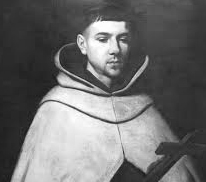
John of the Cross was born Juan de Yepes Álvarez in 1542 in Fontiveros, Spain, into a family of modest means. Orphaned at a young age, he faced hardship early in life, which shaped his deep spiritual sensitivity. He entered the Carmelite Order in 1563 and was ordained a priest in 1567. His close collaboration with Teresa of Ávila would profoundly influence his spiritual journey.
Mystical Theology
John of the Cross is widely regarded as one of the greatest mystics and theologians of the Catholic tradition, particularly for his writings on the ascent of the soul to God through detachment and purification.
- The Dark Night of the Soul
One of John’s central theological concepts is the “dark night of the soul,” which describes the process by which the soul is purified of attachment to worldly and even spiritual comforts in order to achieve union with God. In his work Dark Night of the Soul, he emphasizes that this is not a punishment but a divine process of spiritual maturation, where suffering and emptiness are essential to reaching true mystical union. - Union with God
For John, the ultimate goal of Christian life is transformative union with God. This union requires both purification (via the dark night) and active contemplation, a form of prayer that transcends discursive thought. His theology stresses that God cannot be fully known or grasped through intellect alone; one must move beyond rational understanding to experience God intimately. - Ascetical and Contemplative Theology
John of the Cross’s theology integrates both asceticism and contemplation. He advocates detachment from material and emotional attachments as a way to open the soul to divine love. The famous poem Spiritual Canticle illustrates the soul’s longing for God and the transformative power of divine love, blending poetic imagery with profound theological insight. - The Role of Love and Suffering
Central to John’s thought is the idea that love and suffering are deeply interconnected. Suffering is not merely an obstacle but a vehicle for purifying the soul and conforming it to God’s will. In this sense, John’s theology is both mystical and practical, providing a roadmap for spiritual development.
Influence and Legacy
John of the Cross was canonized in 1726 and declared a Doctor of the Church in 1926, a recognition of his profound theological contributions. His writings continue to influence Christian mysticism, spirituality, and theology, particularly in the areas of interior prayer, contemplation, and the transformative nature of suffering.