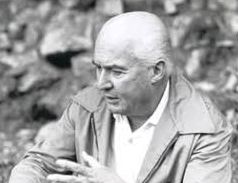
Carlo Carretto (1910–1988) was an Italian Catholic layman, member of the Little Brothers of Jesus, and spiritual writer best known for his deeply personal reflections on prayer, solitude, and the presence of God in ordinary life. His writings helped bring the spirituality of the desert fathers and Charles de Foucauld to a wide modern audience.
Early Life and Formation
Carlo Carretto was born April 2, 1910, in Alessandria. As a young man he was deeply involved in Catholic Action in Italy and became a prominent lay leader.
During the upheavals surrounding World War II, Carretto experienced a growing interior call to a more radical spiritual life. In 1954, he left his public leadership role and joined the Little Brothers of Jesus, the religious community inspired by Charles de Foucauld.
Life in the Sahara
After joining the community, Carretto was sent to live in the Sahara Desert in Algeria, where he spent about ten years in a remote hermitage.
This period of solitude and hidden life became the crucible of his spirituality. Like Foucauld, he embraced:
– Silence
– Manual labor
– Poverty
– Prayer in obscurity
– Deep trust in God’s presence
It was during and after this desert experience that his most influential writings emerged.
His Theology
Carretto’s theology is best described as desert-centered, incarnational, and radically trusting. He writes less as a systematic theologian and more as a witness to lived contemplative faith.
1. God Found in Silence and Solitude
At the heart of Carretto’s theology is the conviction that God is most deeply encountered in silence, prayer, and interior poverty.
Influenced by the desert tradition, he taught that modern Christians are often too distracted and must rediscover:
– Solitude
– Stillness
– Simplicity
– Hiddenness
For Carretto, the desert is both a physical place and an interior condition of radical openness to God.
2. The Spirituality of Nazareth
Following Charles de Foucauld, Carretto emphasized the hidden life of Jesus at Nazareth as the model for Christian spirituality.
Key themes include:
– Holiness in ordinary work
– The sanctity of hidden life
– Fidelity in small things
– God is present in daily routines
He repeatedly insisted that most Christians are called not to heroic public holiness but to quiet faithfulness.
3. Radical Trust in God (Abandonment)
One of Carretto’s most powerful theological notes is abandonment to God’s providence.
He stresses:
– Surrender rather than control
– Trust rather than anxiety
– Faith in God’s nearness even in dryness
– Perseverance in prayer without consolation
His tone is often deeply pastoral, addressing believers who feel discouraged or spiritually dry.
4. Love for the Church Despite Its Flaws
Carretto is well known for his mature and sometimes paradoxical ecclesiology. In one of his most quoted lines, he essentially says: How much we must love the Church despite its weaknesses.
He was realistic about the Church’s human failures but insisted that:
– The Church remains Christ’s body
– Criticism must be rooted in love
– Reform begins with personal conversion
– Communion is more important than perfection
This balanced approach has made his work enduringly relevant.
5. Prayer as Relationship, Not Technique
Carretto consistently resisted overly methodical or technical approaches to prayer.
For him, prayer is primarily:
– Loving presence
– Faithful waiting
– Simple conversation with God
– Persevering relationship
This simplicity has made his works especially accessible to ordinary believers.
6. The Desert as Universal Symbol
While rooted in his Sahara experience, Carretto taught that everyone must pass through some form of interior desert:
– Periods of dryness
– Loss of certainties
– Spiritual emptiness
– Purification of motives
These experiences, he believed, are not failures but invitations to deeper faith.
Major Works
Carretto’s most influential books include:
Letters from the Desert
I, Francis
Why O Lord?
The God Who Comes
Letters from the Desert remains his best-known spiritual classic.
Death and Legacy
Carlo Carretto died October 4, 1988, in Spello.
He is remembered as one of the most accessible modern voices of desert spirituality. His writings continue to resonate especially with readers seeking:
– Simplicity in prayer
– Faith during dryness
– Trust in God’s hidden presence
– Holiness in ordinary life