
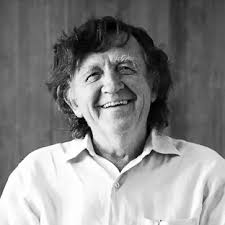
James Finley (b. 1943) is an American contemplative teacher, clinical psychologist, and spiritual writer known for integrating Christian mysticism with modern psychology and trauma awareness. A former Trappist monk and student of Thomas Merton, Finley has become one of the most respected contemporary interpreters of the Christian contemplative tradition for modern seekers.
Early Life and Monastic Formation
James Finley was born in 1943 in Akron. As a young man, he entered the Abbey of Our Lady of Gethsemani in Kentucky, where he lived as a Trappist monk from 1961 to 1966.
During his time at Gethsemani, Finley studied under Thomas Merton, who became a profound spiritual influence and mentor. This early formation in the contemplative tradition would shape Finley’s entire theological and psychological vision.
After leaving the monastery, Finley eventually pursued graduate work in psychology and became a clinical psychologist specializing in trauma and contemplative psychotherapy.
Teaching and Ministry
Finley later became associated with the Center for Action and Contemplation in Albuquerque, founded by Richard Rohr, where he has served as a core faculty member of the Living School for Action and Contemplation.
He is also widely known for:
– Retreats on Christian contemplation
– Spiritual direction
– His podcast Turning to the Mystics
– Workshops on trauma and spirituality
His gentle, psychologically sensitive teaching style has made him especially influential among those seeking healing-oriented spirituality.
His Theology (Primary Emphasis)
James Finley’s theology is best described as contemplative, mystical, and psychologically integrative. He stands firmly in the lineage of the Christian contemplative tradition (especially Merton) while translating it into language accessible to modern people shaped by trauma, anxiety, and secular culture.
1. The Indwelling Presence of God
At the heart of Finley’s theology is the conviction that God is intimately present within the depths of every person.
He often teaches that:
– Our deepest self is already one with God in love
– Contemplation is awakening to this already-given union
– The spiritual journey is primarily one of realization, not acquisition
This places him squarely within the Christian mystical tradition.
2. The Infinite Love at the Heart of Reality
Finley consistently describes God not primarily in abstract doctrinal terms but as infinite, intimate love sustaining every moment of existence.
Key emphases include:
– God’s presence is immediate and tender
– Divine love is unconditional
– Grace precedes all human effort
– The spiritual path is a deepening trust in this love
His language is intentionally pastoral and experiential.
3. Contemplative Prayer as Awakening
Following Merton, Finley teaches that contemplative prayer is a quiet, receptive resting in God beyond discursive thinking.
He frequently emphasizes:
– Silence
– Cconsent
– Gentle returning
– Non-striving awareness
For Finley, contemplation gradually transforms our identity at the deepest level.
4. Trauma-Informed Spirituality
One of Finley’s most distinctive contributions is his integration of trauma psychology with contemplative theology.
He recognizes that many people:
– Carry deep emotional wounds
– Experience dysregulation in silence
– Struggle with shame-based identity
– Cannot simply “be still” without support
Thus, he teaches that contemplative practice must be:
– Psychologically sensitive
– Titrated gently
– Grounded in safety
– Compassionate toward wounded parts of the self
This has made his work especially valuable in therapeutic and recovery contexts.
5. Nondual Christian Mysticism (Carefully Framed)
Like Merton and some contemporary contemplatives, Finley sometimes speaks in language that approaches nondual awareness, but he carefully roots it in Christian mystical tradition.
He emphasizes:
– Unity with God without loss of personhood
– Participation in divine life
– The paradox of union and distinction
– Love as the ground of being
His approach is typically more cautious and pastorally nuanced than some modern nondual teachers.
6. The Transforming Power of Compassion
Finley repeatedly teaches that genuine contemplation manifests as increased compassion toward oneself and others.
Signs of authentic spiritual growth include:
– Greater tenderness
– Reduced harsh self-judgment
– Increased patience
– Deeper solidarity with suffering
For him, contemplation and compassion are inseparable.
Major Works
Finley’s most influential books include:
Merton’s Palace of Nowhere
The Contemplative Heart
Christian Meditation
His podcast Turning to the Mystics has also become a major teaching platform.
Legacy and Influence
James Finley is widely regarded as one of the most important contemporary interpreters of the Christian contemplative tradition, particularly for modern psychologically aware audiences.
His lasting contributions include:
– Translating Merton for today’s seekers
– Integrating trauma psychology and contemplation
– Emphasizing God’s intimate, unconditional love
– Offering a gentle, pastoral, contemplative path
He is often seen as a bridge figure between classical Christian mysticism and contemporary therapeutic spirituality.