
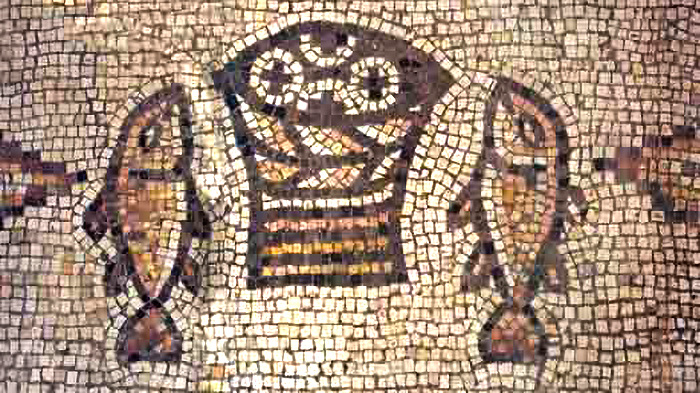
After Jesus had fed a crowd of more than five thousand with five loaves and two fishes, he asked his apostles to gather up the fragments that were left over, scattered here and there on the ground. They did as he asked and ended up filling twelve baskets with leftovers.
Recently, I attended a series of lectures by Walter Brueggemann. He is widely respected for his biblical scholarship, he feeds crowds from some healthy baskets, but he is perhaps even more deeply regarded because of his concern for the poor and his challenge to us to reach out to them with justice and generosity. After he had fed us, the crowds, here are some of the fragments that were gathered up:
- There is today a real danger of excessive privatization of our faith. The church must advocate too for the public conscience, not just for the private conscience.
- Where truth operates you see poverty turn into abundance; death turn into life; war turn into peace; and hunger turn into food.
- You can always recognize a “Pharaoh”: If you’ve seen one, you’ve seen them all! Pharaohs all have bad dreams, accumulate things, need ever larger bins to store their possessions, are permeated with anxiety, and are de-absolutized as soon as God enters the situation. Where do we have bad dreams?
- A truth-filled God always conspires against Pharaoh. God, eventually, comes to a crisis and redefines it.
- Scripture ultimately speaks of bodily pain and painful slavery. Redemption, just as at the original Exodus, will always begin with a cry of distress and end with a dance of joy. Bodies that hurt must come to voice and that voice must say that this pain is abnormal and shouldn’t be borne any longer. Painful slavery and a truth-filled God will eventually make for you a path through the waters where Pharaoh cannot follow. Therefore we must never allow our pathologies to become normal, nor accept slavery for the security it brings.
- The Book of Deuteronomy is one of the greatest social documents ever written, it links faith to public life, to economics, and to justice. It directs faith always to the poor, towards “widows, orphans, and strangers.” Deuteronomy might be the most subversive document in the entire Old Testament. Among other things, it teaches uncompromisingly that laissez-faire economics needs some clear moral checks. In the temptations of Jesus in his dialogue with the devil, he quotes scripture three times and each time it is a passage from Deuteronomy.
- Deuteronomy keeps reminding us that we once all were slaves and that it is not good to have amnesia. We should not absolutize the present and imagine it has always been this way. All of us should remember where we came from, not least today in our debates about immigration.
- If we do not heed the words of Deuteronomy about taking care of the poor we will have to deal with the scroll of Jeremiah who assures us that the world as we know it will come to and end because it cannot be sustained in its falseness.
[Excerpt from Ron Rolheiser’s “Fragments from some Prophetic Loaves and Fishes” July 2010]
