All the people were hanging on his words. Luke 19:48

The more we bump into the folks who are so-called “other,” the more we are stretched and the more we are pulled out of bias. We have new truths, because we have tangible evidence of the beautiful, powerful creativity of our God who made all of this diversity for us to enjoy.  

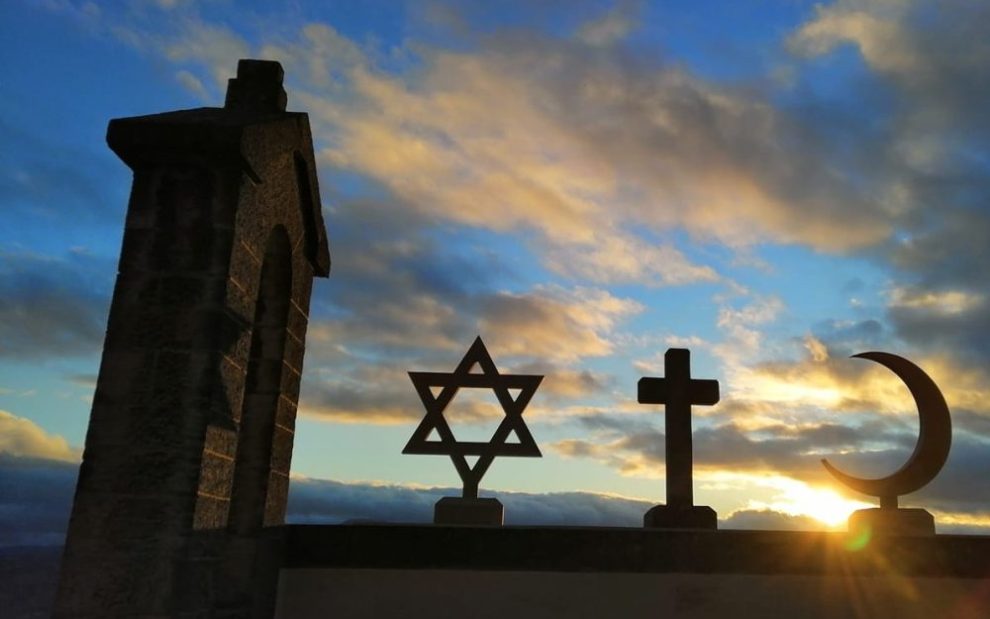
Dr. Jacqui Lewis writes: “The one we follow into mission and ministry—Jesus the Christ—was an avowed boundary crosser, a reformer of the religious and secular culture of his time. We are in good company when we lead the way on radical inclusion of those different from ourselves. In some contexts that might mean a black church reaching out to Korean neighbors, a Latino congregation starting a ministry to immigrant families from North Africa, or a Chinese church hosting an afterschool program for African American junior high students. We believe the commitment to inclusion and diversity is a high calling, issued to all who count themselves as Christians, no matter what our ethnicity or culture.”

When we don’t have intense and sustained personal contact with “the other,” our prejudices and false assumptions go unchallenged. Think of the child who is told by people he trusts that people of another race, religion, culture, sexual orientation, or class are dirty and dangerous. 

You can immediately see the self-reinforcing cycle: those people are dirty or dangerous, so I will distrust and avoid them, which means I will never have sustained and respectful interactive contact with them, which means I will never discover that they are actually wonderful people to be around. 

In this way, the prejudice cycle spins on, unchallenged across generations. As prejudice persists, it becomes embedded in cultures and institutions, creating systems of racism and hatred, marginalizing groups who are stigmatized, dehumanized, scapegoated, exploited, oppressed, or even killed.   

I especially love the way Jesus challenges contact bias. Jesus reached out to the other at the table and put the other in the spotlight by giving the other a voice. On page after page of the Gospels, Jesus doesn’t dominate the other, or avoid the other. Instead, he incarnates into the other, joins the other in solidarity, protects the other, listens to the other, serves the other, and even lays down his life for the other…. In each case, he moves victims of scapegoating and exclusion from the margins to center stage so their voices are heard.[Excerpt from Brian McLaren’s,“Why Don’t They Get It?” 2019]
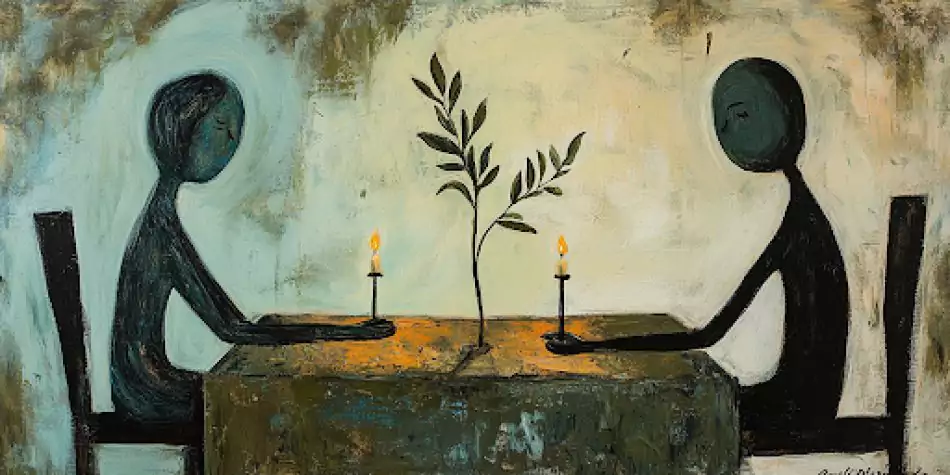

“If this day you only knew what makes for peace” Luke 19:42

Perhaps the deepest imperative within the entire moral life is that of being non-violent. It undergirds everything else: Thou shalt not violate others! So reads the most basic of all commandments. But, for all its importance, it is a certain moral minimum. Beyond being non-violent, we are asked to be, positively, peacemakers. However, all efforts at peace-making must be predicated on non-violence. Violent efforts that try for peace are themselves part of the problem.

All our actions for peace must be rooted in the power of love and the power of truth and must be done for the purpose of making that power known and not for making ourselves known. Our motivation must always be to open people to the truth and not to show ourselves as right and them as wrong. Our best actions are those which admit our complicity and are marked by a spirit of genuine repentance and humility. Our worst actions are those that seek to demonstrate our own righteousness, our purity, and our moral distance from the violence we are protesting.

Action done in public always carries with it the great danger of presumption. Hence it should always be done in the spirit of humility and invitation. Judgement, arrogance, and exclusiveness, which so often mark our protest, are signs of spiritual immaturity and protest characterized by such things will have the effect of hardening hearts and cementing people in their present opinions.

Genuine peacemaking springs from genuine hope. 1960’s and 70’s peace activist, Bill Stringfellow, once scolded a peace group by telling them something to this effect: “I notice in your conversations a drastic omission, the resurrection. The victory of God over death is already assured and our modest task in peace-making is simply to live in a way that reveals that fact. We do not have to triumph over death by our own inspiration, efforts, and strategy. We do not have to defeat death all over again. Psalm 58 tells us: ‘Surely there is God who rules over the earth!’  We must never forget that. That hope, and not anger, must direct protest. Moreover, that hope, belief in the resurrection, is not a feeling or a mood, it is a necessary choice for survival.”[Excerpt from Ron Rolheiser’s, “Some Rules for Peacemaking” October 1994]

I chose you from the world, to go and bear fruit that will last, says the Lord. John 15:16

There’s a real difference between our achievements and our fruitfulness, between our successes and the actual good that we bring into the world.

What we achieve brings us success, gives us a sense of pride, makes our families and friends proud of us, and gives us a feeling of being worthwhile, singular, and important. We’ve done something. We’ve left a mark. We’ve been recognized. And along with those awards, trophies, academic degrees, certificates of distinction, things we’ve built, and artifacts we’ve left behind comes public recognition and respect. We’ve made it. We’re recognized. Moreover, generally, what we achieve produces and leaves behind something that is helpful to others. We can, and should, feel good about our legitimate achievements.

How have my achievements, my successes, the things that I’m proud to have done, positively nurtured those around me?  How have they helped bring joy into other people’s lives? How have they helped make the world a better, more-loving place? How have any of the trophies I’ve won or distinctions I’ve been awarded made those around me more peaceful rather than more restless? This is different than asking: How have my achievements made me feel? How have they given me a sense of self-worth? How have my achievements witnessed to my uniqueness?

And so the truth is that we can achieve great things without being really fruitful, just as we can be very fruitful even while achieving little in terms of worldly success and recognition. Our fruitfulness is often the result not so much of the great things we accomplish, but of the graciousness, generosity, and kindness we bring into the world. Unfortunately our world rarely reckons these as an achievement, an accomplishment, a success.

Henri Nouwen also points out that when we distinguish between our achievements and our fruitfulness, we will see that, while death may be the end of our success, productivity, and importance, it isn’t necessarily the end of our fruitfulness. Indeed, often our true fruitfulness occurs only after we die when our spirit can finally flow out more purely. We see that this was true too for Jesus. We were able to be fully nurtured by his spirit only after he was gone. Jesus teaches this explicitly in his farewell discourse in John’s Gospel when he tells us repeatedly that it’s better for us that he goes away because it’s only when he’s gone that we will be able to truly receive his spirit, his full fruitfulness.  The same is true for us. Our full fruitfulness will only show after we have died. [Excerpt from Ron Rolheiser’s “Achievement versus Fruitfulness” September 2017]

At our age it would be unbecoming to make such a pretense. 2 Maccabees 6:24

One of the most debilitating aspects of life today is that we do not admit to each other the cost of struggle. Our real fears are seldom allowed to surface. Yet we all struggle. Our lives are full of pain, little comes easy for us, and we make a living, remain healthy, remain attractive and achieve success only at great cost. Fear is always present. The fear of failure, of slipping, of having others see that life and success are not automatic, that life is had at the edges of sickness, unattractiveness, boredom, failure and sadness.

Rarely do we genuinely share how we really feel, what our fears are, and how difficult it is to be who we are. Rarely do we admit anyone into our inner space where fear, struggle and inadequacy make themselves felt. We all go through life posturing strength, pretending; lying really, giving off the impression that all is easy and that friendship, health, achievement and attractiveness are easeful and automatic. But that is dishonest and debilitating. Dishonest because it isn’t true.

We go through life trying to impress others into liking us. Rather than sharing ourselves as we really are – vulnerable, tender, struggling, full of fear – we try to be so sensational that there can be no possible reason not to love us. Like the inhabitants of Babel, we try to build a tower that is so impressive that we overpower others. The result for us, as the result then, is counterproductive. Because of pretence, we go through life “speaking different languages,” that is, unable to find a common meeting ground upon which to understand each other. Understanding takes place through compassion and compassion is itself the fruit of shared vulnerability.

When fears and struggle are hidden, when achievement, health, attractiveness and friendship are projected as automatic, then our talents, intelligence, wit, charms, beauty, and artistic and athletic abilities cannot be seen for what they are intended to be, namely, beautiful gifts which enrich life. They are projected, then, as objects of envy and they become forces which create jealousy and further wound. When there is no shared vulnerability, life becomes what we can achieve, and our talents are possessions to be defended.

Scripture reminds us that here, in this life, we see each other as less than fully real – “as through a glass, darkly, an enigma.” We contribute to the enigma, we make ourselves less real, precisely to the extent that we do not admit to each other that it is hard for us. It is only when we see each others’ fears and struggles that we become real to each other. The path home, out of exile, lies in vulnerability. The threads of compassion and a concomitant intimacy will appear automatically when we present ourselves as we really are, without false props, as tender. [Excerpt from Ron Rolheiser’s “Becoming the Real Thing” September 1985″

I am the light of the world, says the Lord; whoever follows me will have the light of life. John 8:12

People are forever predicting the end of the world. In Christian circles this is generally connected with speculation around the promise Jesus made at his ascension, namely, that he would be coming back, and soon, to bring history to its culmination and establish God’s eternal kingdom.

This was rampant among the first generation of Christians. So, they lived with this expectation, believing that the world, at least as they knew it, would end before their deaths. However, as the years moved on and Jesus did not return their understanding began to evolve so that by the time John’s Gospel is written, probably about seventy years after Jesus’ death, they had begun to understand things differently.

They now understood Jesus’ promise that some of his contemporaries would not taste death until they had seen the kingdom of God as being fulfilled in the coming of the Holy Spirit. Jesus was, in fact, already back and the world had not ended. And so they began to believe that the end of the world was not necessarily imminent.

But that didn’t change their emphasis on vigilance, on staying awake, and on being ready for the end.  But now that invitation to stay awake and live in vigilance was related more to not knowing the hour of one’s own death.

We need to be awake spiritually, not slouching. But the end of the world shouldn’t concern us, nor should we worry excessively about when we will die. What we should worry about is in what state our dying will find us. As Kathleen Dowling Singh puts in her book, The Grace in Aging: “What a waste it would be to enter the time of dying with the same old petty and weary thoughts and reactions running through our mind.” [Excerpt from Ron Rolheiser’s “The End of the World ” November 2016]

When you hear of wars and insurrections, do not be terrified; for such things must happen first, but it will not immediately be the end. Luke 21:9

The renowned spirituality writer Tomas Halik, in a recent book entitled “The Afternoon of Christianity: The Courage to Change”, makes this suggestion. As the world makes less and less explicit space for Jesus, we need to search for him more and more in those places where he is “anonymously present.” The invitation here is to better respond to the signs of the times, given that we are living now in what he calls “the afternoon of Christianity.” What is the afternoon of Christianity?

Halik distinguishes three periods in the history of Christianity. He sees the morning of Christianity as the time before AD 1500, the pre-modern period, the time before secularization. The noonday of Christianity, for him, is the time of secularization and modernity, basically from the 19th century until our own generation. The afternoon of Christianity, for him, is our time today, the post-modern world, where we are witnessing a breakdown of much of the world as we once knew it with the effects of this on faith and religion. And for Halik, the effect of all of this is that the Christian faith has now outgrown previous forms of religion.

Christianity today finds itself in a certain cultural homelessness, in a time where so many social structures that once supported it are collapsing, so that the Christian faith is now needing to seek a new shape, a new home, new means of expression, new social and cultural roles, and new allies. The hope is that (paradoxically) the very dynamism and diversity that frightens many Christians is the incubation phase of the Christianity of the future.

Here is how Halik puts it: “I believe that the Christianity of tomorrow will be above all a community of a new hermeneutic, a new reading, a new and deeper interpretation of the two sources of divine revelation, scripture and tradition, and especially of God’s utterance in the signs of the times.”

We must let the signs of the times lead us to a deeper understanding of both Scripture and tradition, especially so that we might bring together in better harmony the Christ of cosmic evolution with the resurrected Jesus; and then recognize that they are both not just present in what is explicit in our Christian faith and worship, they are also anonymously present in the evolution of our culture and society.

Consequently, we need to search for Jesus Christ not just in our Scriptures, our churches, our worship services, our catechetical classes, our Sunday schools, and our explicit Christian fellowship, though of course we need to search there. This isn’t a time of dying, it’s a time of kairos, a time when we are being invited to open our eyes. [Excerpt from Ron Rolheiser’s “Looking to the Future as we enter the ‘Afternoon of Christianity’ ” April 2025]

For all creation, in its several kinds, was being made over anew, serving its natural laws, that your children might be preserved unharmed. Wisdom 19:6

There is a popular myth that warms the heart. It speaks of justice and vindication and is the stuff of great legends. In it, we separate the great heroes and heroines from lesser mortals. 

It runs something like this: Evil stalks the earth, intimidating the good. There is invariably a bad man, a bully, who remains unchallenged because it seems nobody is strong enough to stand up to him. He has his way for a long time. Who can oppose him? But there lives someone, the true hero (a male in the classical legend), who, while actually being stronger than the bad man, for reasons that are not yet clear, puts up with the bully and accepts from him every kind of insult and humiliation. Nobody understands why and the hero’s reticence to act is seen as a sign of weakness. The bully is strong and the hero is weak. But, at the end of the day, the hero has his vindication. The time comes when the evil man pushes him too far and then, long after lesser mortals would have acted, he stands up, assumes his full strength, and completely humiliates and annihilates the evil man. Moreover his final vindication is not just the humiliation of his enemy but the recognition by the people that he, the seemingly weak one, was the strong one all along.

There is something inside us that would like to see Christ in this sentimental way: the reluctant hero, The Coward of the County, the strongest man of all who is reticent about using his muscle … until he is pushed too far!

What is interesting however is that Christ never used his muscle in this way, even when he was pushed too far! No amount of goading, humiliation, accusations of cowardice and weakness (“If you are the Son of God, come off of that cross!”) turned him into that hero of myth who warms our hearts with a last minute vindication, proving that he was all the while superior.

His death didn’t warm any hearts and his vindication, the resurrection, initially didn’t either. Even his closest apostles didn’t understand. Even after the resurrection, when his disciples met him on the road to Emmaus, they were still lamenting that their hero had died without flexing his muscles, without showing at the end that he was the stronger. Now he was trying to explain it to them: “Wasn’t it necessary to suffer like that, to not use the world’s muscle power, to not confuse the ways of God with the ways of humanity?” 

Yes, isn’t it necessary that God should love so lavishly? Isn’t it necessary that a God who is love beyond all measure and understanding should give himself over that freely? Isn’t it necessary that if you give yourself over freely, and mean it, you will sweat blood in a garden?  Isn’t it necessary that fathers and mothers who truly love their children should have to put up with so much? Isn’t it necessary that God should not be as defensive as human beings, even when pushed by evil? Isn’t it necessary that God should approach us in vulnerability rather than muscle us into submission?  And yes, isn’t it necessary that the power of God be tied to a wisdom, a love, and a patience that runs considerably deeper than our adolescent and sentimental understanding of it? [Excerpt from Ron Rolheiser’s “Wasn’t Necessary” April 1996]

All men were by nature foolish who were in ignorance of God, and who from the good things seen did not succeed in knowing him who is, and from studying the works did not discern the artisan. Wisdom 13:1

In his travels, the eighteenth-century explorer, Captain James Cook, once spent several years in the Polynesian Islands. He learned the native language and was befriended by the people. One day, they took him to witness a human sacrifice. The tribe still practiced a certain animism and would sometimes offer a person as a sacrifice to their gods. Cook, a sophisticated English gentleman, was understandably appalled. He wrote in his diary that he expressed his indignation to the chief, telling him: This is awful! You’re a primitive people. In England we would hang you for that!

The irony in Cook’s reaction shouldn’t be missed – and it isn’t missed by anthropologists. When we kill someone in God’s name, it doesn’t matter whether we call it human sacrifice or capital punishment. Either way, we are sacrificing a human life and justifying it in God’s name.

Now I say all this more in sympathy than in judgment because hypocrisy isn’t all of a kind. There is a hypocrisy where the blindness is more willful, and there is a hypocrisy where the blindness is more innocent. Thomas Aquinas once distinguished between two kinds of ignorance. For Aquinas, there is culpable ignorance and there is invincible ignorance, that is, sometimes we don’t see because we don’t want to see, and sometimes we don’t see simply because we can’t see.

In culpable ignorance we do know better. We refuse to look at something because we don’t want to see the truth. In culpable ignorance, we don’t see the parallel between human sacrifice and capital punishment because we already intuitively sense the connection and we don’t want to see it, and so refuse to look.

In invincible ignorance we don’t know any better. Our shortcomings have to do with the limits of our humanity, our background, and our experience. Like Captain Cook, in all sincerity, we simply don’t see the parallel between human sacrifice and capital punishment, even as thousands of our own young people die cruel senseless deaths in trying to find the passage of life from puberty to adulthood.

All of us, liberal or conservative, have blind spots in terms of how we see and assess various social justice issues, be that climate change, poverty, abortion, immigration, refugees, racism, women’s equality, or gender issues. Standing before these complex issues, are we willing to look them square in the face, or are we unwilling to really look at them because we already intuit what we might see? [Excerpt from Ron Rolheiser’s “Hypocrisy’s Two Faces” December 2023]

Wisdom is an aura of the might of God and a pure effusion of the glory of the Almighty. Wisdom 7:24-25

What’s life’s deep secret? Do we ever really understand life? Do we ever really get things right? What lies at the center of life? These are the deeper questions that gnaw away inside of us and we are never really sure how to answer them.. Do we ever really understand what our lives are all about?

Yes and no! I suspect that most of us go through life bouncing back and forth between knowing and not knowing, between feeling steady and feeling insecure, between having days when we feel we’re getting things right and having days when everything seems out of sorts. As the Sufi mystic Rumi, once put it, we live “with a secret we sometimes know, and then not know.”

And what is the secret of life itself? In the Gospel of Mark, Jesus says: “To you is given the secret of the Kingdom of God, but to those outside, everything is in riddles.” To whom is he referring? Who is “you”? What is the secret? What puts you inside? What puts you outside and makes the Gospel a riddle?

The answers to these questions are clear: You are “inside” or “outside” the true circle of understanding, not on the basis of being Jew or Gentile, of being man or woman, or of going or not going to church. Rather you are inside or outside the circle of true understanding on the basis of “getting” or “not getting” the secret. And what is the secret?

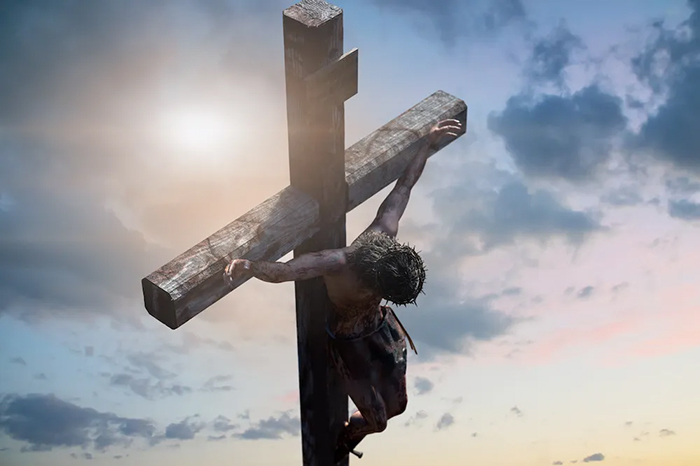
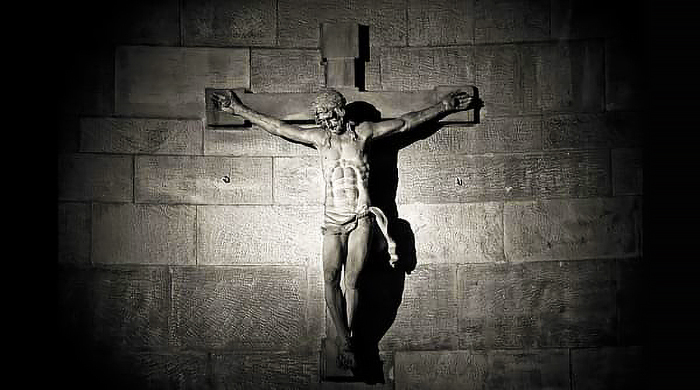
In essence, the secret to life is the cross of Christ or, as various scripture scholars and spiritual writers put it, the brokenness of Jesus on the cross, the wisdom of the cross, the invitation that lies inside the cross, and the willingness to live out the demands of the cross. How would one summarize this secret of life?

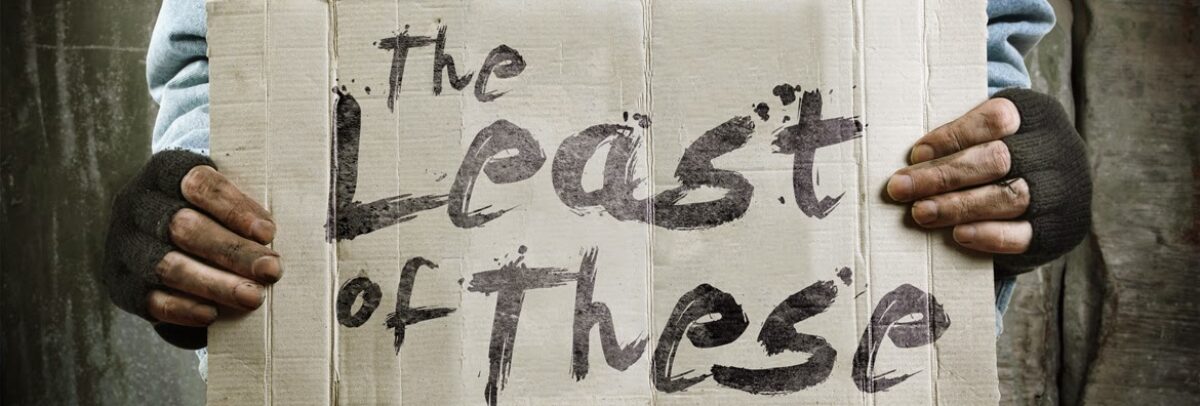
It’s living with the understanding of God’s unconditional love and forgiveness, God’s loving presence inside of human twistedness, vulnerability as the path to intimacy, God’s identification with the poor and the excluded, the necessary connection between suffering and glory, the paradoxical nature of love and life (which can only be received by giving them away), the centrality of self-sacrifice as the key to love and fidelity, and the importance of giving our lives over without resentment (of not sending the bill whenever we carry someone’s cross).

Understanding this at any level is the beginning of wisdom and living out life’s secret.[Excerpt from Ron Rolheiser’s “Getting and Not Getting the Secret” January 2007]

Then he said to him, “Stand up and go; your faith has saved you.” Luke 17:19

Kathleen Norris, commenting on her own faith-journey, makes an interesting comment regarding the ambivalent way in which faith and church have come down to us. Her words:
“As its Latin root, the word `religion’ is linked to the words ligature and ligament, words having both negative and positive connotations, offering both bondage and freedom of movement. For me, religion is the ligament that connects me to my grandmothers, who, representing so clearly the negative and positive aspects of the Christian tradition, made it impossible for me to either to reject or accept the religion wholesale. They made it unlikely that I would settle for either the easy answers of fundamentalism or the over-intellectualized banalities of a conventional liberal faith. Instead, the more deeply I’ve re-claimed what was good in their faith, the more they set me free to find my own way.” (Norris, Dakota, A Spiritual Geography, N.Y., Houghton-Mifflin, 1993, p. 133.)

That’s an excellent insight, given the struggle many have today in regards to their own religious background. This isn’t, of course, everybody’s experience. Some of us have less to resent. For myself, religiously I drew a luckier straw. Religion and church were mediated to me with less shadow. I had good parents, a good parish, a good school, good nuns who taught me, and good priests who ministered the sacraments to me.

Not everyone has been so lucky. More than a few of my friends, as well as many others that I have encountered in my ministry, have had a very different experience. They were handed the same faith that I was, but often with as much shadow as light. Sometimes what was handed them was warped by harshness, guilt, authoritarianism, or an unhealthy patriarchy. They were given the truth, but not with any balance or purity.

Hence the dilemma of many (often bitter) Christians today: “I’ve been given faith and church so strongly that it’s in my very DNA. I can never leave the church, yet I can’t simply accept wholesale the tradition that’s been handed me either. I can’t buy the whole package, no matter how I try. So I am left in this painful ambivalence – I can’t take the full plunge and I can’t walk away either!”

Thus religion is indeed a ligament, offering bondage and freedom, both at the same time. Many of us have been given the Christian tradition (faith and church) in such a way that, as Norris so aptly puts it, we now find ourselves unable either to simply reject it wholesale or to buy unqualifiedly the flawed version of it that was handed to us. Where does that leave us? Where any free, adult church or family member should want to be, stamped indelibly with the DNA of the family, yet free enough to offer criticism in the face of the family’s faults and history.[Excerpt from Ron Rolheiser’s “Receiving Our Faith Tradition” August 2001]

HTML Snippets Powered By : XYZScripts.com
string(0) ""