When you have done all you have been commanded, say, “We are unprofitable servants; we have done what we were obliged to do.” Luke 17:10

Nikos Kazantzakis. Reflecting on the double pull of Christ and the world, he once wrote: “Every person partakes of the divine nature in both spirit and flesh. That is why the mystery of Christ is not simply a mystery for a particular creed: it is universal. The struggle between God and human nature breaks out in everyone, together with the longing for reconciliation. Most often The stronger the soul and the flesh, the more fruitful the struggle and the richer the final harmony. The Spirit wants to have to wrestle with flesh that is strong and full of resistance. It is a carnivorous bird which is incessantly hungry; it eats flesh and, by assimilating it, makes it disappear. Struggle between flesh and spirit, rebellion and resistance, reconciliation and submission, and finally the supreme purpose of the struggle/union with God: this was the ascent taken by Christ, the ascent which he invites us to take as well, following in his bloody tracks.”

The tension, as Kazantzakis, writes it up here, reflects the language and concepts of his Greek background. Hence, there is more than a little classical dualism (body versus soul) in his expression. But the struggle he describes, despite the limits of his Greek dualism, stills capture the heart of the issue. All sensitive persons should expect a life and death struggle within their souls and the harmony that needs to be established there between world and God, flesh and soul, earth and transcendence, will be long, painful, full of competing voices, and will often times, seemingly, pit life against life.

What is said too is that, just because it is natural to feel that the world and God (flesh and soul, full life and church) are opposed to each other and seemingly demand that we choose one over the other, does not mean that they are, in fact, irreconcilable. The point is not to choose between them, but to hold them both in a way that fully respects their respective values. That will not be easy, nor quick, but God wants to wrestle with resistance  – and the more bitter the struggle, the richer the final harmony. [Excerpt from Ron Rolheiser’s “Wrestling with God” December 1997]


If today you hear his voice, harden not your hearts. Psalm 95:8

“The person who will not have a softening of the heart will eventually have a softening of the brain!” That warning, issued by G.K. Chesterton more than a half century ago, is particularly relevant for today, a time when virtually everything conspires against tenderness and softness.

Everywhere, today, the atmosphere is one of professionalism, efficiency, toughness, competitiveness, and lean strength. Workplaces, and at times even our homes and church circles, leave little room for softness, be it inefficiency, sentiment, or fat.  Even to insert a call for any tenderness and softness to somehow tone this down is to endanger one’s status and respect. Our world has a very restricted place for what is unprofessional, sentimental, inefficient, fat, soft and fragile. Toughness and achievement are what get respect.

For this reason, we often experience our places of work and even our homes as being cold and somewhat brutal. But when we feel this coldness, what we are actually experiencing is our own intimidation. Our fear of being seen as soft, fat, childish, and as unable to handle pressure and meet certain standards of toughness and efficiency pushes us to make every kind of sacrifice rather than let ourselves be so judged.  This shouldn’t be so, but, in fact, most often is. Ideally, we shouldn’t allow ourselves to be thus intimidated, but, most often, we do. The fact is that we generally do live and work within an atmosphere that is cold and unfeeling.

Given this, perhaps the most important prayer moments we can have each day are those moments which soften the heart, moments which bring us back to eagerness of spirit, hospitality, compassion, and childlike joy. To have a tender moment is to pray.  Praying is more than just saying prayers. We are asked to “pray always.” This implies that we need to be praying even when we aren’t formally saying prayers. We share a common heart and a common struggle. To become aware of that is to soften the heart.  The world can be hard and, if we aren’t careful, if we do not massage the tender moment as prayer, we will harden too, becoming as untender, cold, and inhospitable as the world itself. [Excerpt from Ron Rolheiser’s “Fear of Tenderness Stifles the Soul” June 1989]

Amen, I say to you, unless you turn and become like children, you will not enter the Kingdom of heaven. Matthew 18:3

Unless you change and become like little children you will not enter the Kingdom of Heaven. So what does Jesus have in mind when he holds up the heart of a child as an ideal? The quality of heart, seen in a child, that Jesus most challenges us to imitate is that of acknowledging powerlessness and helplessness. A child is powerless. It cannot provide for itself, feed itself, or take care of itself. For a child, if mum and dad do not get up and make breakfast, there will be no breakfast! A child knows dependence, knows that life comes from beyond itself, that it is not self-providing and self-sufficient.

But how can this be undone? How can we “change and become like little children”? Nature, God, and circumstance often do it for us. Here is an example: Several years ago, I went to the funeral of a ninety year-old man. While he had always been an honest man, a good man, a family man, and a man of faith, he had also, at least up until the years shortly before his death, been a particularly strong man, fiercely independent, proud of his self-sufficiency, and not infrequently hard on others and cantankerous in his dealings with them. His son, a priest, preached the funeral mass and said this in his homily:

Scripture tells us that the sum of years of a man’s life is seventy, eighty for those who are strong. But my dad lived for ninety years. Why those extra ten years? Well, it’s no mystery: In my dad’s case, God needed ten extra years to mellow him. He wasn’t ready to die at eighty; he was still too strong, too independent, too self-reliant. But the last ten years did their work on him: He lost his wife, his health, much of his independence, his place in society, and his firm grip on life. And that mellowed his soul. He died ready to grasp a stronger hand.

We have a choice: We can do this process deliberately, on purpose (so to speak), or we can fiercely guard our strength and sense of self-sufficiency and wait for nature, God, and circumstance to do it for us. [Except from Ron Rolheiser’s “The Heart of a Child” August 2008]

I thank you, Lord, with all my heart; in the presence of the Angels to you I sing. Psalm 138:1

As a child, I was taught that I had a guardian angel, a real angel given me by God to accompany me everywhere and protect me from danger. Are we still meant to believe in guardian angels? If yes, in what exactly are we meant to believe? Are angels real personified beings or simply another word for God’s presence in our lives?

Conservative Christians generally assert the existence of angels as a dogmatic teaching. Angels are real.  Liberal Christians tend to doubt that or at least are agnostic about it. For them, ‘angel’ more likely refers to a special presence of God. So, do we have guardian angels? At birth or at baptism does God assign a particular angel to journey with us throughout our lives, giving us invisible, heavenly guidance and protection?

Yes, we do have a guardian angel, irrespective of how we might imagine or conceive of this. God is closer to us than we are to ourselves and God’s solicitous love, guidance, and protection are with us always. At the end of the day, it matters little whether this comes through a particular personified spirit (who has a name in heaven) or whether it comes simply through God’s loving omnipresence. God’s presence is real – and we are never alone, without God’s love, guidance, and protection. [Excerpt from Ron Rolheiser’s “Do We Have Guardian Angel’s?” October 2021]

There was a rich man who dressed in purple garments and fine linen and dined sumptuously each day. Luke 16:19

A number of years ago I attended a funeral. The man to whom we were saying goodbye had enjoyed a full and rich life. He’d reached the age of 90 and was respected for having been both successful and honest.  But he’d always been a strong man, a natural leader, a man who took charge of things.  He’d had a good marriage, raised a large family, been successful in business, and held leadership roles in various civic and church organizations. He was a man who commanded respect although he was sometimes feared for his strength.

His son, a priest, was presiding at his funeral. He began his homily this way: “Scripture tells us that seventy is the sum of a man’s years, eighty for those who are strong. Now, our dad lived for ninety years. Why the extra ten years? Well, it’s no mystery really. It took God an extra ten years to mellow him out! He was too strong and cantankerous to die at eighty! But during the last ten years of his life he suffered a series of massive diminishments. His wife died, he never got over that. He had a stroke, he never got over that. He had to be moved into an assisted living complex, he never got over that. All these diminishments did their work. By the time he died, he could take your hand and say: ‘Help me’. He couldn’t say that from the time he could tie his own shoelaces until those last years. He was finally ready for heaven. Now when he met St. Peter at the gates of heaven he could say: ‘Help me!’ rather than tell St. Peter how he might better organize things.”

This story can help us understand Jesus’ teaching that the rich find it difficult to enter the kingdom of heaven while little children enter it quite naturally. We tend to misunderstand both why the rich find it hard to enter the kingdom and why little children enter it more easily. The lesson here isn’t that riches are bad.  Riches, be that money, talent, intelligence, health, good looks, leadership skills, or flat-out strength, are gifts from God. They’re good. It’s not riches that block us from entering the kingdom. Rather it’s the danger that, having them, we will more easily also have the illusion that we’re self-sufficient. We aren’t. 

Moreover the illusion of self-sufficiency often spawns another danger: Riches and the comfort they bring, as we see in the parable of the rich man who has a beggar at his door, can make us blind to the plight and hunger of the poor. That’s one of the dangers in not being hungry ourselves. In our comfort, we tend not to see the poor. And so it’s not riches themselves that are bad. The moral danger in being rich is rather the illusion of self-sufficiency that seems to forever accompany riches. Little children don’t suffer this illusion, but the strong do. That’s the danger in being rich, money-wise or otherwise. [Excerpt from Ron Rolheiser’s “Our Struggle with Riches” September 2017]

I am the way and the truth and the life, says the Lord; no one comes to the Father except through me. John 14:6

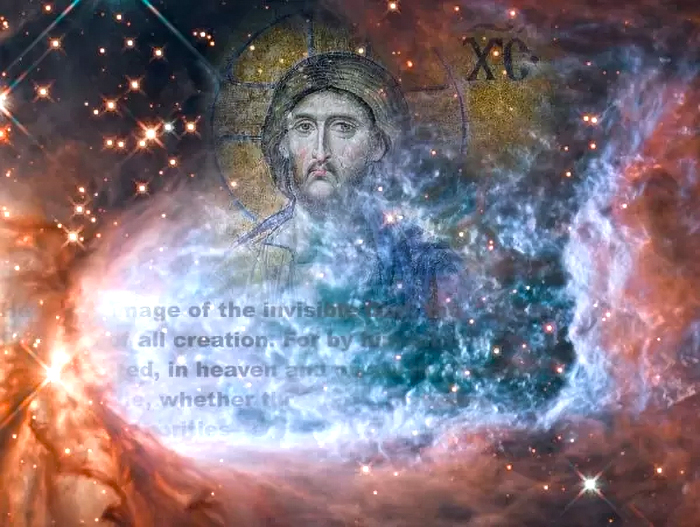
Perhaps the most neglected part of our understanding of Christ, though clearly taught in scripture, is the concept that the mystery of Christ is larger than what we see visibly in the life of Jesus and in the life of the historical Christian churches. Christ is already part of physical creation itself and is integral to that creation. We see this expressed, for example, in the Epistle to the Colossians, describing the reality of Christ, the author writes: “He is the image of the invisible God, the first-born of all creation, for in him all things were created in heaven and on earth; everything visible and everything invisible … all things were created through him and for him. He exists before all things and in him all things hold together…” 

The mystery of Christ is wider, deeper, and more encompassing than what can be seen simply within the visible life of Jesus and the visible history of the Christian churches. If all things were created through Christ and for Christ, then our planet, earth, and all of physical creation have value in themselves and not just in relation to us.

There are huge implications from this for how we view other religions. As Christians we must take seriously Jesus’ teaching that Christ is the (only) way to salvation and that nobody goes to the Father except through Christ. So where does that leave non-Christians and other persons of sincere heart, given that at any given time two-thirds of the world is not relating to the historical Jesus or the Christian churches?

Unless we understand the mystery of Christ as deeper and wider than what we can see visibly and historically, this quandary will invariably lead us to either abandon Jesus’ teaching about being normative or lead us into an exclusivity that goes against God’s universal will for salvation. If, by the mystery of Christ, we mean only the visible Jesus and the visible church, then we are caught in a dilemma with no answer.

If, however, by the mystery of Christ, we also mean the mystery of God becoming incarnate inside of physical creation, beginning already in the original creation, continuing there as the soul that binds the whole of physical creation together, and being there as both the energy that lures creation towards its Creator and the consummation of that creation, then all things have to do with Christ, whether they realize it or not, and all authentic worship leads to the Father, whether we can see this or not. [Excerpt from Ron Rolheiser’s “Christ as Cosmic” September 2011]

The Kingdom of God is at hand; repent and believe in the Gospel. Mark 1:15

Today’s reflection verse should wake us up to realize this is no ordinary message from Christ. It’s a living summons. The Kingdom of God has broken into our world in the person of Jesus Christ. It is not merely something we await in the future—it is something we live in the present. It is active. It is near.

To evangelize today is to participate in this holy movement. The Gospel of the Kingdom is not just good news—it is the news that changes hearts, communities, and destinies. It brings freedom to the captive, light to those in darkness, and eternal hope to the weary. And it is ours to share.

This is the mission that Christ has entrusted to His Church. It is not an option, not a side project—it is the beating heart of our identity as Catholics. And now is the time for us to proclaim it with courage and joy.

The Kingdom doesn’t grow by dominance. It grows through love. Through humble acts of witness. Through bold proclamation, tender service, and the unwavering fire of believing hearts. Every time we speak Jesus’ name with love and truth, the Kingdom advances.

So let us take heart. This is not about having all the answers. It’s about announcing through love the One who is the answer. It’s not about arguing—it’s about inviting. It’s not about pressure—it’s about Presence. [Except from Pierre-Alain Giffard’s “The Kingdom is at Hand – But what does that Really Mean?” May 2025]

He said to them in reply, “My mother and my brothers are those who hear the word of God and act on it.” Luke 8:21

The single most important agenda item for our churches for the next fifty years will be the issue of relating to other religions, Islam, Hinduism, Buddhism, Taoism, Indigenous Religions in the Americas and Africa, and various forms, old and new, of Paganism and New Age. Simply stated, if all the violence stemming from religious extremism hasn’t woken us yet then we are dangerously asleep.  We have no choice. The world has become one village, one community, one family, and unless we begin to understand and accept each other more deeply we will never be a world at peace.

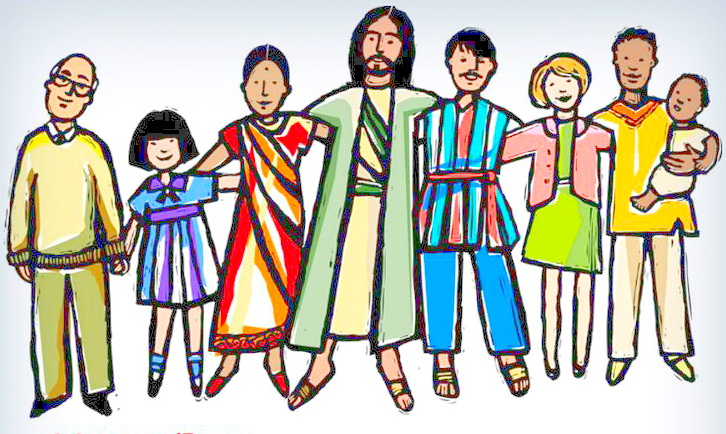
Our God calls us to recognize and welcome all sincere believers into our hearts as brothers and sisters in faith. Jesus makes this abundantly clear most everywhere in his message, and at times makes it uncomfortably explicit: Who are my brothers and sisters? It is those who hear the word of God and keep it. … It is not necessarily those who say Lord, Lord, who enter the Kingdom of Heaven but those who do the will of God on earth. Who can deny that many non-Christians do the will of God here on earth?

But what of Christ’s uniqueness? What about Christ’s claim that he is the (only) way, truth, and life and that nobody can come to God except through him? Christian theology (certainly this is true for Roman Catholic theology) has always accepted and proactively taught that the Mystery of Christ is much larger than what can be observed in the visible, historical enfolding of Christianity and the Christian churches in history. Christ is larger than our churches and operates too outside of our churches. He is still telling the church what Jesus once told his mother: “I must be about my Father’s business.”

The God whom Jesus incarnated wills the salvation of all people and is not indifferent to the sincere faith of billions of people throughout thousands of years. We dishonor our faith when we teach anything different. All of us are God’s children. There is in the end only one God and that God is the Father of all of us – and that means all of us, irrespective of religion.[Excerpt from Ron Rolheiser’s “Standing on New Borders” July 2018]

Let your light shine before others, that they may see your good deeds and glorify your heavenly Father. Matthew 5:16

We are all familiar with a refrain that echoes through many of our Christian prayers and songs, an antiphon of hope addressed to God:  Grant that we may be one with all the saints in singing your praises! But we have an over-pious notion of what that would look like. We picture ourselves spending eternity feeling grateful for having made a team whose talent level should have excluded us. But that is a fantasy, pure and simple, mostly simple.

We are one with the saints in singing God’s praises when we are one with them in the way we live our lives; when, like them, our lives are transparent, honest, grounded in personal integrity, with no skeletons in our closet.

We are one with the saints in singing God’s praises when we radiate God’s wide compassion; when we, like God, let our love embrace beyond race, creed, gender, religion, ideology, and differences of every kind. 

We are one with the saints in singing God’s praises when we tend to “widows, orphans, and strangers’, when we reach out to those most vulnerable, when we feed the hungry, give drink to the thirsty, visit the sick and imprisoned, when we work for justice.

We are one with the saints in singing God’s praises when we live in hope, when we ground our vision and our energies in the promise of God and in the power that God revealed in the resurrection of Jesus.

We are one with the saints in singing God’s praises when, rather than living inside of envy, resentment, bitterness, vengeance, impatience, anger, factionalism, idolatry, and sexual impatience, we live instead inside charity, joy, peace, patience, goodness, long-suffering, fidelity, mildness, and chastity.

We are one with the saints in singing God’s praises only when we live our lives as they lived theirs. [Excerpt from Ron Rolheiser’s “On Being One With the Saints in Praising God” March 2010]

No servant can serve two masters. He will either hate one and love the other, or be devoted to one and despise the other. You cannot serve God and mammon.” Luke 16:13

When we are rich, we have a congenital incapacity to see the poor and, in not seeing them, we never learn the wisdom of the crucified. That’s why it’s hard, as Jesus said, for a rich person to enter the kingdom of heaven.

We see – but we don’t see! We feel for the poor – but we don’t really feel for them! We reach out – but we never reach across. The gap between the rich and poor is in fact widening, not narrowing. It’s widening worldwide, between nations, and it’s widening inside of virtually every culture. The rich are becoming richer and the poor are being left ever further behind.

What principles should guide us in terms of an attitude towards wealth Underlying everything else, we must always keep in mind Jesus’ warning that the possession of wealth is dangerous, that it is hard for a rich person to enter the kingdom of heaven.

And so the challenge for all of us who are rich in any way is to continually give our wealth away. We need to do this, not because the poor need what we give them, though they do; we need to do this so that we can remain healthy. Philanthropy, of every kind, is more about the health of the one giving than the health of the one receiving. The generous rich can inherit the kingdom, the miserly rich cannot.  The poor are everyone’s ticket into heaven – and to human health.

Finally, this too must always be kept in mind as we view wealth, both our own and that of the very rich. What we have is not our own, it’s given to us in trust. God is the sole owner of all that is and the world properly belongs to everyone. What we claim as our own, private property, is what has been given to us in trust, to steward for the good of everyone. It’s not really ours.

Here’s how Bill Gates Sr. puts it: “Society has an enormous claim upon the fortunes of the wealthy. This is rooted not only in most religious traditions, but also in an honest accounting of society’s substantial investment in creating fertile ground for wealth-creation. Judaism, Christianity, and Islam all affirm the right of individual ownership and private property, but there are moral limits imposed on absolute private ownership of wealth and property. Each tradition affirms that we are not individuals alone but exist in community – a community that makes claims on us. The notion that ‘it is all mine’ is a violation of these teachings and traditions. Society’s claim on individual accumulated wealth is … rooted in the recognition of society’s direct and indirect investment in the individual’s success. In other words, we didn’t get there on our own.” Indeed, none of us did! If we remember that we will more easily be generous. [Excerpt from Ron Rolheiser’s “Our Attitude Towards Wealth” August 2012]

HTML Snippets Powered By : XYZScripts.com