
“Heaven and earth will pass away, but my words will not pass away” Luke 21:33

Fr. Rolheiser writes that he is old enough to have known another time when things were different when many of life’s pleasures weren’t available, and people made due, celebrating what there was to celebrate and not over-expecting. Back then, few expected or demanded the whole pie. Heaven was seen as something for later. There is today too little talk, in our churches and in the world, about the “vale of tears” and the incompleteness of our present lives. Spiritualities of the resurrection and psychologies of self-actualization, whatever their other strengths, no longer give us permission to be in pain, to be unwhole, ill, unattractive, aged, unfulfilled, or even just alone on a Friday night. Unless every pleasure that we yearn for can be tasted, we cannot be happy. Because of this, we over-expect. We stand before life and love in a greedy posture and with unrealistic expectations, demanding the resolution of all our eros and tension. However, life in this world can never give us that. We are pilgrims on earth, exiles journeying towards home. The world is passing away. We have God’s word for it. And we need God’s word for it! Too much in our experience today militates against the fact that here in this life, all symphonies remain unfinished Somehow, we have come to believe that a final solution for the burning tensions within us lies within our present grasp. I am not sure who or what gives us this idea. In a culture (and, at times, in a church) that tells us that no happiness is possible unless every ache and restlessness inside of us is fulfilled, how hard it is to be happy.  Yet we must remember the Creator did not just make us for life after death; He also intended some life after birth! We are meant to rest joyfully in God’s great gifts – life, love, youth, health, friendship, and sexuality – even as they are limitedly given in this life. Those who live this philosophy in life, I am sure, are much more restful on Friday nights!


“For everyone who calls on the name of the Lord will be saved” Romans 10:13

St. Andrew, whom the church celebrates today, is the disciple best known for bringing people to Jesus. He was born in the village of Bethsaida on the Sea of Galilee during the early first century. He was an ordinary man, a fisherman by trade. He is identified as one of the two who heard John speak and followed the Lord. He was the first disciple of Jesus, but right from the beginning of his discipleship, he was challenged by the older sibling-younger sibling dynamic. He spent his entire discipleship serving in the shadow of his younger brother, Simon Peter. Andrews was quite comfortable serving in the background as a thoughtful and humble leader. He truly lived the saying Charity begins at home.  Immediately he found Jesus, Andrew understood that he had a task at hand. Jesus was worth knowing! This finding was to be shared with others. Like Andrew, we have a special mission to go into all the world and preach the gospel to all creation. He went far and wide, preaching the faith of the Lord Jesus. In Ministry, we may face similar challenges as he did, but we must learn from him. And we can be like this shadow-servant: faithful, obedient, humble, discerning, responsive, trusted, willing, and courageous. Then only shall we also be worthy to receive the crown of glory. St. Andrew, pray for us! (Excerpt from Dr. Pamela Mandela’s article on St. Andrew)

“They will seize and persecute you” Luke 21:12

The twentieth century was the bloodiest on record—and the one with the most martyrs – and much of this carnage can be traced to immigration issues. People initially came to North and South America from Europe for various reasons. Some were fleeing religious persecution; some were seeking a way out of poverty and starvation; some were coming to work to send money back to support their families; some were doctors or clergy coming to minister to others; and, yes, some too were criminals bent on crime. Reading the daily news, it would seem that not much has changed, except the shoe is now on the other foot. We, original invaders, are now the indigenous tribes, concerned and protective of what we consider as rightfully ours, fearful of the outsiders, and mostly naïve as to why they’re coming. This isn’t just the case in North America. Most of Europe is experiencing the same pressures, except in their case, they’ve had a longer time to forget how their ancestors once came from elsewhere and mostly displaced the indigenous peoples who were already there. Admittedly, this isn’t easy to resolve, politically or morally. No country can open its borders indiscriminately to everyone who wants to enter. Yet, our scriptures, Jewish and Christian, are unequivocal in affirming that the earth belongs to everyone and all people have the same right to God’s good creation. That moral imperative can seem unfair and impractical, but how do we justify the fact that we displaced others to build our lives here but now find it unfair that others are doing the same thing to us? The remedy cannot be found in persecuting or trying in one way or another to drive them away. As people of faith, we must persevere in love and embrace the cultures in ways that we wish the previous ones had welcomed us. In the end, love is the only thing that counts.

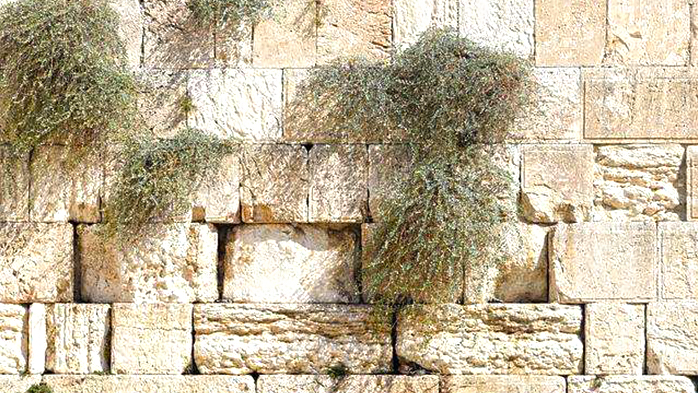
“There will not be left a stone upon another stone” Luke 21:6

Claire King writes that there must be days when God looks down upon us with tenderness and amusement. We, too, must have encountered that same look as someone’s child or grandchild. Do you recall when you loved so fiercely that you spent hours or days working on something you could give to the one you loved? And you felt such pride in the work and joy in the giving? Whether it landed a prime space on the refrigerator door, tucked away in a jewelry box, or displayed in a scrapbook, you created it with your hands and tenacious ingenuity. There are things we have to have. It starts when we are children, wanting that toy every kid in the world is getting for Christmas. Then, that pair of jeans or cool shirt every kid is wearing. As we age, our needs become more high-end: the newest electronic device, the latest car, the biggest house, and the most fabulous vacation. Everyone has it or is getting it. Jay Cormier writes that Jesus warns us about wanting and collecting “stuff.” Whatever happened to all of that stuff, anyway? It was replaced by other stuff. We are obsessed with building bigger and more beautiful temples, forgetting that the holiness of God is found in the quiet within. We are so busy creating the perfect lifestyle that we miss out on living lives of meaning and purpose. God calls us to seek more precious and lasting gifts than this world can offer—treasures like compassion, reconciliation, justice, and peace. What is required first, however, is to give up the attitudes and avarice that make possessing the things of God difficult, if not impossible. Do not become obsessed, Jesus says, with the “stones” that will one day collapse and become dust, but seek the lasting things of the soul, the things of God, the real treasures of this life. “All that you see here, the days will come when there will not be left a stone upon another stone that will not be thrown down.” Heavenly Father, help us remember that time is an illusion; only love remains.    

“She, from her poverty, has offered her whole livelihood” Luke 21:4

Poverty is what can make us grateful for everything we have. One new blouse does not get lost among all the other hangers in the cupboard. One new book becomes a treasure, not just one more kind of recreation. No new toys, no new clothes, no new furniture makes us treasure what little of each of them we do have. Perhaps it is true that only poverty can give us a sense of what it is to be grateful for what you have and even more thankful for what you get for nothing. In our reflection reading today, Jesus, surrounded by his disciples, watches people putting offerings into the treasury. This was a place in the women’s courtyard, where there were collection boxes for the offerings of the faithful. Just then, something happens whose significance Jesus wants his disciples to notice: a poor widow puts in two coins of very little value. He describes this as the greatest offering of all, praising the giving of alms for this purpose, particularly by people who give part of what they need. This tiny offering moves our Lord because, in her case, it implies a big sacrifice. This goes to the heart of Jesus’ teaching on almsgiving as the practice of charity in the spirit of uprightness or justice. This focus is on caring for others in genuinely compassionate and just ways and doing so with grace and generosity. It’s all about loving our neighbors from the heart — in practical, generous ways — because of the love and grace God has shown us so that his righteousness and peace may fill the earth. The poor widow demonstrated true generosity, which is the essence of almsgiving. She taught us that we can move God’s heart if we give him all we can, which will always amount to very little, even if we offer our very lives.

“Whatever you did for one of these least” Matthew 25:40

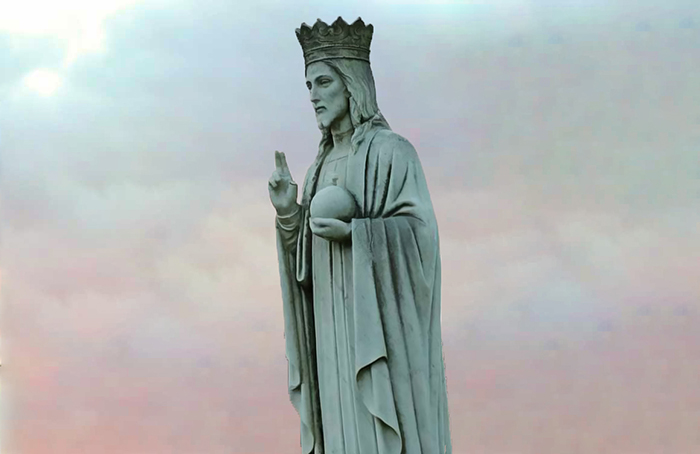
On this Sunday when we celebrate the Solemnity of Christ the King of the Universe, my mind is drawn to the words he speaks to the disciples on the impact our lives should have as exemplified by Saint Teresa of Calcutta (Mother Teresa). Inspired by the work of the Missionaries of Charity in Calcutta, a young woman once asked Blessed Mother Teresa if she could join the order. “Stay where you are,” she replied. “Find your own Calcutta. Find the sick, the suffering, and the lonely right where you are: in your home and your family, your workplace, and your school. Everywhere, wherever you go, you find people who are unwanted, unloved.” What is our commitment to works of mercy? Ministering to our fellow human beings means ministering to the Lord Jesus himself, whose image we can see in the faces of the poor. Today’s passage from the Gospel of Matthew has Jesus speaking to his disciples about their actions as his followers. Saint Teresa of Calcutta (Mother Teresa) says we must commit to works of mercy in our lives. “To help us deserve heaven, Christ set a condition: that at the moment of our death, you and I, whoever we might have been and wherever we have lived, Christians and non-Christians alike, every human being who has been created by the loving hand of God in his own image shall stand in his presence and be judged according to what we have been for the poor, what we have done for them. Christ said, ‘I was hungry, and you gave me food.’ He was hungry not only for bread but for the understanding love of being loved, of being known, of being someone to someone. He was naked not only of clothing but of human dignity and of respect through the injustice that is done to the poor, who are looked down upon simply because they are poor. He was dispossessed not only of a house made of bricks but because of the dispossession of those who are locked up, of those who are unwanted and unloved, of those who walk through the world with no one to care for them. Do we go out to meet those? Do we know them? Do we try to find them?”

“all the people were hanging on his words” Luke 19:48

Words give us meaning. Fr. Rolheiser writes that we can’t make or remake reality, but the words we choose to name our reality can lift us from the humdrum of everyday experience. Jesus said to his disciples in response to their grumbling about his teaching on the bread of life, which led to their leaving him: “Do you want to walk away too?” Peter answers: “Lord, to whom else can we go? You have the message of eternal life.” Peter’s words, on the surface, express an unwanted humility and helplessness that sometimes beset us all: “I have no alternative! I’m so invested in this relationship that now I have no other options. I’m stuck with this!” That’s a humble place to stand, knowing that one no longer has another practical choice. But those words also express a much deeper quandary, namely, where can I find meaning if I cannot find it in faith in God? All of us have, at some point, asked ourselves that question. If I didn’t believe in God and had no faith or religion, what would give meaning to my life? Where can we go if we no longer have an explicit faith in God? A lot of places, it seems. There’s a stoicism that offers its own kind of salvation by drawing life and meaning simply from fighting chaos and disease. For some, meaning outside of explicit faith is found in leaving a lasting legacy on this earth, having children, achieving something monumental, or becoming a household name. And there are still others for whom deep meaning is found simply in being good for its own sake and in being honest for its own sake. But is this really the true meaning of life? Can anything other than faith and God quiet the restless fires within us? Well, it seems that there are places to go, and many go there, these places of positive energy, love, creativity, generosity, and honesty are also places where people seeking God outside of explicit faith can still have them meeting Him.

“And one of them, realizing he had been healed, returned, glorifying God in a loud voice; and he fell at the feet of Jesus and thanked him” Luke 17:15-16

I read an article on the fact that expressing gratitude, even when you don’t think there is a lot to be grateful for, will make you grateful and happier. If you are a frequent reader of Daily Virtue, you know that most of my reading references come from articles written by Fr. Ron Rolheiser, for which I am eternally grateful, and this post comes from one such article on gratitude. The article tells us that some people are more naturally grateful than others, which comes from having a particular gene. We can actively choose to practice gratitude, which will make us happier. The brain takes that grateful attitude, even when you can’t see much to be thankful for, and processes it into happiness. Choosing to focus on good things makes you feel better than focusing on the bad. It also brings out the best in others around us. How do we make gratitude a routine, something that is part of our everyday living? We start with interior gratitude, which then becomes exterior expressions to others. Gratitude is the main point of the gospel on this Thanksgiving Day. This gospel story only appears in Luke as he stresses the theme of universalism. All can be saved, which was not the belief of the Jews at that time. Luke has already told the parable of the Good Samaritan. Remember how Jews despised Samaritans as not being really faithful. Now, there is another good Samaritan. This one is good not so much for what he did but because he realizes what God has done and responds in gratitude. Ten were healed, but the story tells us one was saved. The incident is about how the healing gratitude became the moment of salvation. Luke wants us to see how Jesus’ mission was to all, even those not like us. Thanksgiving is at the basis of faith in God. It is the profound realization that all I am and have is from God, and my whole life must be lived as a response to that to win my salvation. When you think about it, we all have much to be grateful for. We are incredibly blessed. To be thankful is to be a person of faith because we recognize where everything comes from. It is expressed in how we live our lives, recognizing God’s gift to us and becoming “gift” to others.

“I tell you, to everyone who has, more will be given, but from the one who has not, even what he has will be taken away” Luke 19:26

While being the Gospel that’s hardest on the rich, Luke’s Gospel is also the Gospel that makes most clear that riches aren’t bad in themselves. Notice that the first two servants doubled their wealth precisely in the measure that they risked it. This means that the one who truly has the divine life knows how to make it a gift, and that, in turn, will make the original gift increase. And the opposite holds: “From the one who has not, even what he has will be taken away.” This means that if you try to cling to the divine life, you will, in short order, lose it. God is rich. But God is prodigiously generous with that richness. God’s generosity, as we learn from the parables of Jesus, is so excessive that it’s scandalous. It upsets our measured sense of fairness. Fr. Ron Rolheiser points out that riches, be that money, talent, intelligence, health, good looks, leadership skills, or flat-out strength, are gifts from God. They’re good. It’s not riches that block us from entering the kingdom. Instead, it’s the danger that, having them, we will more easily also have the illusion that we’re self-sufficient. We aren’t. As Thomas Aquinas points out by the way he defines God as Esse Subsistens, a Self-sufficient Being, only God does not need anyone or anything else – but the rest of us do. Riches are good, but only if they’re shared. The moral danger in being rich is taking on the illusion of self-sufficiency that seems to forever accompany riches. Riches and their comfort can close our eyes to the plight and hunger of people experiencing poverty. In our comfort, we tend not to see the poor. That’s the danger of being wealthy, money-wise or otherwise.

“Behold, half of my possessions, Lord, I shall give to the poor, and if I have extorted anything from anyone, I shall repay it four times over.” Luke 19:8

The gospels point out that, before his conversion, Zacchaeus was a short man, someone lacking in height, but after his conversion, the tall man gave back what the small man had stolen. Meeting Jesus made Zacchaeus grow bigger in stature. Fr. Rolheiser writes that this is what goodness does to us; it makes us grow taller. It’s interesting to note that the word “Gospel” means “good news,” not “good advice.” The gospels are not so much a spiritual and moral theology book that tells us what we should be doing but are more an account of what God has already done for us, is still doing for us, and the extraordinary dignity that this bestows on us. Of course, the idea is that since we are gifted in this way, our actions should reflect that dignity rather than what’s less lofty and pettier inside us. Morality is not a command; it’s an invitation, not a threat, but a reminder of who we truly are. We become taller and less petty when we remember what kind of family we ultimately come from. We all have two souls, two hearts, and two minds. Inside each of us, there’s a soul, heart, and mind that’s petty, that’s been hurt, that wants vengeance, that wants to protect itself, that’s frightened of what’s different, that’s prone to gossip, that’s racist, that perennially feels cheated. We are always both grand and petty. The world isn’t divided between big-hearted and small-minded people. Instead, our days are divided up between those moments when we are big-hearted, generous, warm, hospitable, unafraid, wanting to embrace everyone and those moments when we are petty, selfish, over-aware of the unfairness of life, frightened, and seeking only to protect ourselves and our own safety and interests. To walk tall means to walk within our God-given dignity. Nothing else, ultimately, gives us as large an identity. The teaching of the Gospel doesn’t shame us with our pettiness but invites us to what’s already best inside us.

HTML Snippets Powered By : XYZScripts.com