
Ecological Spirituality
By Reverend Joseph A. Tetlow

The experience of a desire for a direct relationship with God is hardly new. However, it can be confused with other experiences. Experiencing holy rites and believing truths can be religion; doing good and keeping laws can be morality; yearning for absolutes, for transcendence, can be noble humanism. Experiencing God, however, is spirituality. The Holy Spirit has summoned us to remember that God has called us by our names and known us from our mothers’ wombs.
Spirituality Changing Through the Ages
The followers of Jesus Christ have experienced God differently through each of the Christian ages. In the earliest days, Christian martyrs intimately shared in Jesus’ suffering and triumph over death. In the Middle Ages, Christians found God working in the self through prayer and asceticism, particularly in monastic life, and in their livelihoods through humankind’s success in ordering agriculture and architecture. Today, challenged by rapid technological change and the cultural drift of the past decades, the Church’s spirituality must take its shape from our return to the most fundamental truths revealed to us in Christ Jesus.
Ultimately, the Church’s experience of God today grows from our renewed awareness that we shall live forever with the Risen Christ, inspirited flesh. We shall rise again on the last day. The sacramental promise of eternal life reminds us that when we receive Communion, we are eating bread, fruit of the earth and work of human hands, now most intimately bound to the body, blood, soul, and divinity of the Son of God. Here lies the most fundamental revealed truth that gives shape to an ecological spirituality today. All the earth shall be made new and brought to fulfillment through Christ.
This realization, sharpened and made poignant by the environmental and ecological problems we face today, gives us a new awareness of Earth itself. Within this new awareness, the Church unfolds the riches of revelation into a renewed spirituality.
Ecological Spirituality
Ecological spirituality begins, as any spirituality must, by authenticating moral practice. No one is holy who is not first good. Hence, disciples who are spiritually alive actively seek to discern God’s will and act as collaborators with God. Today, this must include a reassessment of what Genesis means when it tells humankind to subdue the earth and have dominion over all living things on it. Can we be collaborators with our Creator if we wantonly pollute air, pile up atomic waste, denude our forests, and foul our rivers and lakes? No. A serious spirituality begins with a deep conversion from callous tearing of whatever we want from the earth to a caring stewardship.
In the distant past, human technological capacity and the tools available allowed us to make the earth more fruitful, but there was no capacity to inflict lasting damage to the balance of nature. An earthy spirituality was expressed during that time in St. Francis’ delight in God’s creation, of which we are an intimate part, along with brother sun and sister moon. The spiritual experience of God was summed up in St. Benedict’s dictum, to work is to pray. All people needed was a good intention to serve and praise God, and that attitude turned work into spirituality. Many men and women found God while working in everyday life: plowing, weaving, baking, and working wood.
During the past century, however, humankind found ways of manipulating the very forces that shape nature- gravity, the atom, and the gene. We no longer simply mine coal, work wood, and spin cotton; now, we transform the forces of nature as we create atomic fuel and weapons through engineering and new forms of life through genetics. Our powerful instrumental control over nature alters our sense of how we belong in and to nature. The extent of earthly changes- depletion of ozone, deforestation, contamination from toxic and nuclear wastes, global warming indicates that we are acting, not as stewards of a renewable earth, but as masters of a pliant earth. Ecological spirituality sharply challenges our behavior. We are of the earth. We must treat it as we do our home. There is no true spirituality without obedience to this moral mandate.
How We Belong to Creation
Spirituality goes beyond moral action and transmutes it. Ecological spirituality begins in the acknowledgment, grateful and joyful, that all creatures owe their existence to God. Humans are not somehow separate from the rest of creation. We share it intimately with other creatures. We acknowledge God as Creator of us all.
This ecological spirituality grows from a change in the way we think about God’s creative work. For centuries, Christians viewed God’s action in the world in terms of sin and redemption. First, we sinned, and then God redeemed us. The pattern was holy and helpful. A new awareness of the whole of creation expands this view, and we now tend to think of God’s action in the world this way: God creates and, when we reject grace, saves us from our sin. By understanding creation as part of God’s plan for our salvation, we more readily understand that God remains first, Creator and Lord at every moment of history.
Scientific thought shifted during the past decades from cosmology, the study of the way nature works, to Cosmo-genesis, the study of the way every existing thing in the universe originates from the Big Bang. As those ideas grew familiar, we as Jesus’ disciples expanded our spirituality to include a new understanding of creation. Who made me? we asked as children, and answered, God made me. This is surely true but not the full truth. God is Creator of all things, but it is not true that God’s creating is just in the past. To realize that God is making me in the present is a transforming spiritual insight.
Furthermore, anyone who understands creation knows that God makes everything out of nothing. But we can sensibly realize, as well, that God is making each human person out of the concrete chaos of chemicals and gravitational forces, movements of history and human activities, in which that person comes to be. Wouldn’t a spiritual person tend to be interested in those forces and activities?
Obviously, ecological spirituality has deep roots in this renewed understanding of ongoing creation. Scientists have taught Christ’s disciples to see that the universe has prepared for human life for billions of years. Some scientists think it has been waiting for us. Some – even among the most rigidly mechanistic who believe that physical laws utterly determine everything- go further. They think that the universe calculated from the Big Bang on to bring forth human life, almost as though the universe thought humanity. We need not stretch the meaning of consciousness that far. We can say that all the forces of evolution unfolded into human life as God created each creature moment by moment until the instant when the Creator summoned the first intelligent and free person to life.
The Immanent God Revealed
This spirituality clearly requires that we renew our relationship with God. The people of God have always known that nature reveals God; Israel sang that the heavens declare the glory of God. Nonetheless, the chosen people tended to imagine God as far above humankind as the heavens were above the earth. Christians, in our turn, feel reverence and awe at God the infinite, transcendent One, the One outside of time who began time and will end time. The universe, all possible universes, could not contain God, who transcends all creaturehood.
In ecological spirituality, as we absorb the reality of ongoing creation, we learn to perceive God the immanent One. God gives us good gifts, all that we are and have, and we begin in thanksgiving. This is sound spirituality. But we go on to remember that God remains present in the gifts. Indeed, God works busily in them as well as through them. In some brief histories of time, scientists put God at the very beginning of time and at its very end. In between, they must believe in an impersonal universe, one that runs like a clock. Such a universe, humanity found easy to ravage and despoil. Nothing personal it was, after all, just an object, a thing.
We remember now that we know God as our ongoing Creator, One infinitely removed from chance, or fate, or the force. In this ecological spirituality, we perceive God working busily in all creatures. Hence, we experience the universe as personal, charged with the divine presence.
When we turn again to find God in nature, we recognize that all that exists reflects the divinity and participates in the divinity. All that exists stands before God the way a mirror stands in a field, facing the sun and full of its light. Stand in front of such a mirror, and its brilliance will blind you, the light blazing from the mirror’s heart. And yet, that light is the sun’s light, every lumen of it. In this spirituality, we return to recognize that if there is justice in the human heart, it is a share in God’s justice; if there is love among us, it is a share in God’s love.
A Christ-Centered Universe
There is more to an ecological spirituality than this, for we know that in the beginning all things were created through Christ. In Christ, all the eons of time have brought humankind to life on the earth. As the Son chose to remain with humanity in the Spirit, we must say that all the eons of time are now bringing to life on earth the mystical Body of Christ, who is our Head.
Ecological spirituality requires that we keep in focus that the second person of the Trinity has come and remains with humanity through the Church. What we do to our human flesh, then, we are somehow doing to the Christ, and what we do to our environment, our earthly home, we are doing to our flesh. For even this earth, in whose atmosphere we are punching holes and whose depths we are poisoning with wastes, also groans awaiting its redemption. For all things are to be made new in Christ, in whom we live and move and have our being.
We must think of humankind as the self-aware and reflective part of the universe. We are the universe’s self-revelation of what life all tends toward (some scientists call this the universal anthropic principle). In a certain sense, humankind is the last species on the earth evolving according to its own inner dynamic. We have touched every other creature’s evolution, at least in some way. Some we have obliterated, many we can still discover. Notice that human understanding and human desiring give shape to the fate of the earth.
Ecological spirituality elicits this awareness in us: God in eternity passionately desired intelligent freedom to adorn the earth. We are that adornment. God in eternity has hopes for the earth: that it flourish and grow steadier and more beautiful. We are that plan. Can we have any deeper reason for caring for our planet and for every single person on it?
Real Sin
This spirituality will seem unreal and romantic unless we look resolutely at what we have done and are doing. For too long, in our narrow self-absorption, we have thought of sin only in our intimate private lives. Sin was between the individual and God or perhaps between a whole nation and God. A true ecological spirituality demands that we broaden that horizon vastly.
Here is the truth about the Original Sin: humankind is relentlessly destructive. The human imagination is so diseased by sin that we defeat our own interests time and time again. We have depleted the fisheries from which we eat, poisoned the rivers from which we drink, and fouled even the air we breathe. Worst of all, we live denying these facts, which gives the full measure of our sinfulness. In this sinful denial, people could run so many cattle over vast areas of grass that they destroy the grass. We could cut down so many trees that we deforest our own woods.
Our sin destroys. New Age theologies dislike this thought; few of us like to remember this for long. But ecological spirituality confronts us with the truth that God is just. Working in the splendid laws that he is enacting for our good- atomic processes, nutritional requirements, drugs’ effects -God justly lets us suffer the consequences of our deliberate and calculated disruption of proper relationships with our selves, our earth, and God’s self.
Now we know: Humankind’s problem is not the romantic one of nature bloody in tooth and claw. Our fault lies in that we pervert the very laws God is decreeing in the universe to our own harm and to the harm of our home the earth. Struggling with and overcoming sin means ending those disruptions.
This struggle, central to ecological spirituality, demands a radical asceticism. Now we must learn that we serve God by acknowledging and acquiescing in the stern requirements of the laws of nature. All creation works as God teaches it to work; all things follow those laws that God is etching in the depths of their being. In human beings, God’s spirit etches the desires to make all beautiful and equitable, safe and song-filled. We must, at great peril, attend to those desires.
The source of hope is not that we expect to end by our own efforts the wrongs and evils we have perpetrated. We do, however, have hope. For ecological spirituality keeps us mindful of the whole of God’s plan for creation.
At the end of time, wielding a power of which we can only dream, God in Christ will make all things new. Jesus Christ will come to earth again in power and glory, and unite all things in his divine Self. And we shall rise again. As every lily of the field now is, so shall each of us be, a splendid song of praise to God our Creator and Lord.
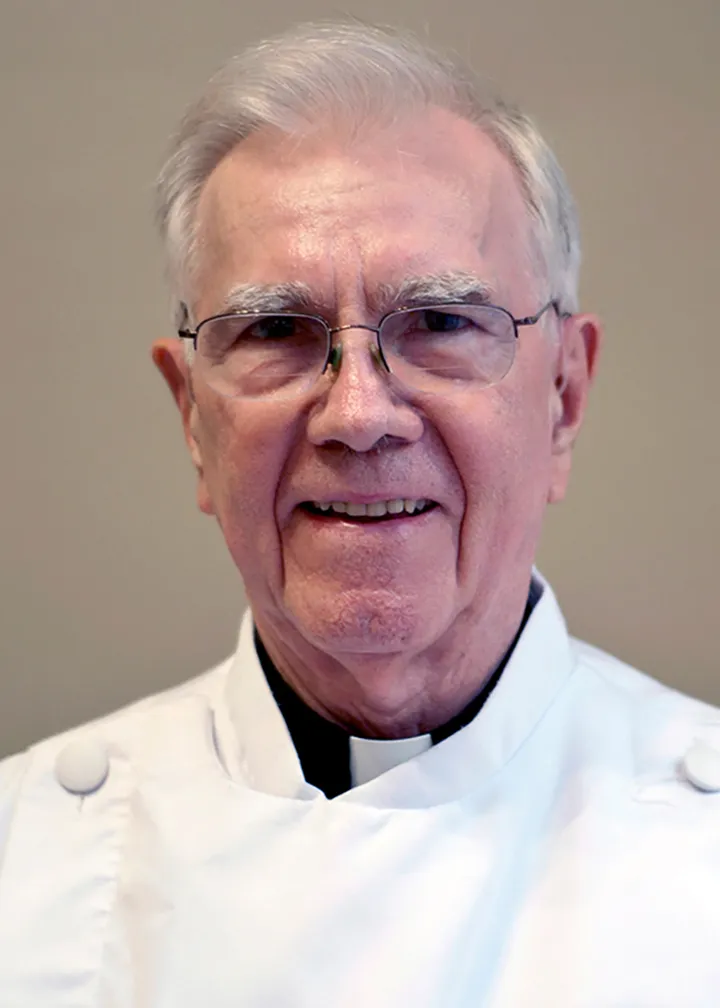
Reverend Joseph A. Tetlow is a visiting distinguished professor in the Department of Theological Studies at St. Louis University. He has been president of the Jesuit School in Berkeley and dean of Loyola University in New Orleans.
Jim Gaffigan reminds us that we all feel like ‘frauds’ in the spiritual life
by James Martin, S.J. September 16, 2025
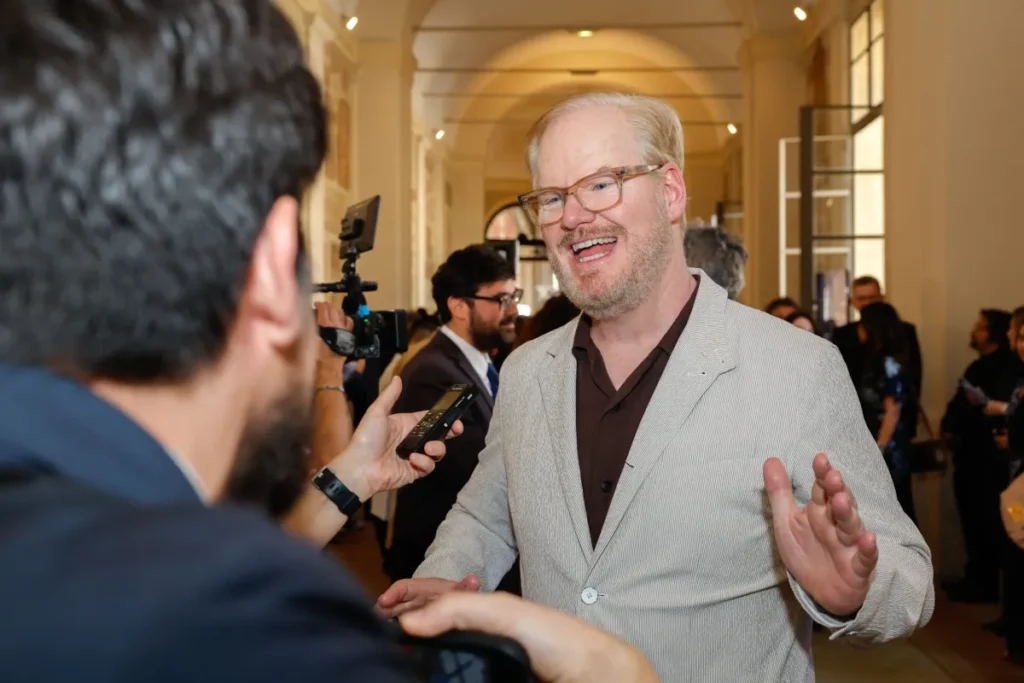
Last year, I was happy to be asked by the Vatican’s Dicastery for Culture and Education to help arrange an audience with Pope Francis for a group of comics and comedians. At the beginning of this process, some friends at the dicastery sent me a list of possible comics in the United States, which I shared with my colleagues at America, who helped me winnow it down.
Then, along with the help of Stephen Colbert and his “bookers,” we were able to contact about 15 U.S. comedians, all of whom agreed to fly to Rome and spend a morning with the then-Holy Father, as well as over 100 comedians from 15 countries. (Not all the comics, by the way, were Catholic: It was both an ecumenical and interfaith gathering.) Among those at the audience were two comics who have appeared on “The Spiritual Life,” Stephen Colbert and Whoopi Goldberg.
Another comedian in the group was Jim Gaffigan. (His wife Jeannie and several of their children also made the trip to Rome.) It was a delight spending time with the Gaffigans, and I was moved by how deeply both take their Catholic faith. And given how publicly he has discussed his Catholic faith, Jim was a natural guest for “The Spiritual Life.”
Not surprisingly, Jim is very funny on the podcast. He’s also very deep. In our conversation, we discuss the development of his faith; his understanding of comedy as a spiritual tool (which helps to bring joy to others, a theme that Pope Francis touched upon in his moving remarks to the comedians); and the idea of God’s mercy as a sign of God “rooting for you,” an image I had never heard before but really liked.
He also spoke about the painful season in their family’s life when Jeannie was diagnosed with a brain tumor and underwent a series of painful medical treatments. Jim said that his faith did not provide easy answers but rather offered the “scaffolding” upon which he and his wife could lean. “It was also kind of this beautiful gift because it gave me an opportunity to show up for my wife. And as imperfect as I did it…I viewed it as this incredible gift because I did, in this trying difficult time, get an opportunity to do what I should have done,” he said.
But it was his labeling himself as a “fraud” that I thought might resonate most strongly with listeners (as it did with me). “I am a fraud,” he said bluntly. “I’ve been going to church off and on my entire life, and still to this day, I am following the crowd when it comes to kneeling or standing at church. I’m like, all right, we’re going down.”
Of course, Jim is not a fraud in his spiritual life; rather, he’s doing the best he can, as we all are.
But it is normal to feel that way: to look at other believers and think that they somehow have it all “wrapped up” when it comes to living a spiritual life. Now, on the one hand, it’s helpful to notice people who are acting more charitably and generously than you are and see that as a kind of goad in the Christian life. To take a homey example, if your coworker is much nicer to people in your office than you are, then maybe it’s time to change.
But all of us are “frauds” to some extent because we’re all sinners and therefore all falling short of what God asks of us. In the end, we have to strike a balance between humility (knowing that we are not perfect) and confidence (knowing that God gives us the grace to do the best that we can in our lives). Even after many years as a Jesuit, I look at some of my brother Jesuits and say, “Boy, he is way holier/kinder/more generous than I am!” But by the same token, there may be aspects of Christian discipleship where they may think that of me. (Maybe!)
It is good to return to the popular Jesuit phrase that is often used during the First Week of St. Ignatius Loyola’s Spiritual Exercises, when we see how much God has given us even though we are sinners. Often, a recognition of the blessings God has offered us makes us deeply aware of our sinfulness. During a spiritual direction practicum one summer, Bill Creed, S.J., an experienced spiritual master, expressed that idea with a memorable image: “In the sunshine of God’s love, we naturally see our shadows.”
And the phrase, beloved by Jesuits but not used specifically in the Exercises, sums this up: We are all “loved sinners.”
Jim Gaffigan is known to millions for his wry sense of humor and his often hilarious takes on everyday life. He feels like a bit of a “fraud” as a Catholic, but he’s not. Jim’s just a loved sinner, like the rest of us. But he’s especially fun to listen to and I know you’ll enjoy hearing his humor, his wisdom and his faith on the latest episode of “The Spiritual Life.”