
Daily Virtue Post

“And the Word became flesh and made his dwelling among us, and we saw his glory, the glory as of the Father’s only Son, full of grace and truth.” John 1:14

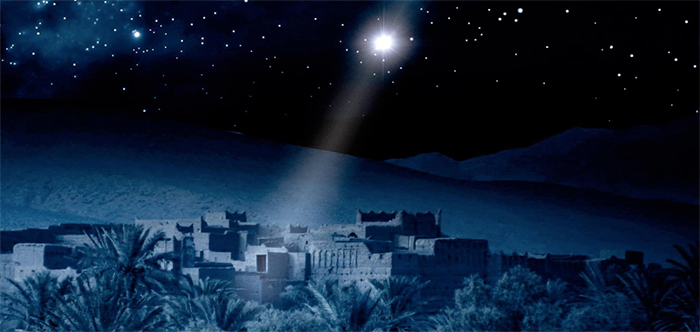
The word became flesh and dwelt among us. Fr. Ron Rolhesier says we should see this as a wild and unbelievable statement! The infinite heart, center, creator, and sustainer of the universe is born as a baby and lives as a human person on this earth, and through that, we are given God’s power to save. We’ve domesticated the incarnation, but the real Christmas story staggers the mind. How’s this a Christmas story? Imagine the universe: Light travels at 186,000 miles per second. Hence, light traveling to the earth from the moon already takes more than a second to get here. Light traveling from the sun takes more than 8 minutes to reach Earth. But those bodies are close to us. The distance from the sun to the Earth is immense, but it is minuscule in terms of the universe. If one looks up at the stars at night, of those stars visible to the naked eye, the ones nearest to us are so far away that light traveling from them to Earth takes more than 4 years to get here. Those farthest away but still visible to the naked eye are so distant that light traveling at 186,000 miles per second takes 800,000 years to get here. That’s unimaginable. More incredulous still: Science today, using X-ray telescopes, has sighted planets whose light has not yet reached Earth. These planets are so distant that light traveling from them to Earth will take 6 trillion light years to get here. The human mind cannot stretch to imagine that. Yet this is just the universe we know. There may be, in fact, billions of galaxies and universes. Imagine this story: Given that there are perhaps hundreds of billions of galaxies with trillions of light years separating them, and given that on each of the planets within these galaxies, there are hundreds of trillions of phenomena every second, can we imagine that at the center of all of this, there is one heart, one creator, one sustainer, one God who made all of this and who right now watches over it so that every individual and every detail is passionately cared about, so that “no hair falls from a human head and no sparrow from the sky” without this God knowing and caring? And most incredulous of all: Can we imagine and believe that this heart, this God, this center of everything, was carried for nine months by a peasant woman in Palestine and born into our world as a baby and then lived here, taught us, and gave us, his believers, all the powers he, himself, had as God? The word became flesh. That’s true, even for 2024. So, let’s have kisses and drinks all around.

“Blessed be the Lord, the God of Israel; for he has come to his people and set them free” Luke 1:68

Zechariah, the priest, was a faithful man. He was faithful to what God set before him. His job as a priest included serving in the temple in Jerusalem twice a year. It would have been an important occasion to leave his little country parish, go to the big city of Jerusalem to the temple, and enter the holy of holies and offer a sacrifice on behalf of the people of God. This shows us that God often speaks to His people when they are busy doing their daily tasks. For example, when God called Moses to lead Israel out of Pharaoh’s bondage, he was tending sheep. When God called David to run an errand that would result in the death of the mighty Goliath in the Valley of Elah, he, too, was tending sheep. When Elijah was looking for a successor to carry on his ministry, he found him plowing a field. And when God called Gideon to deliver Israel from the tyranny of the Midianites, he was threshing wheat. When Jesus called His disciples to change the world, they mended their nets. They simply were doing what was set before them. God has given us spiritual gifts as Christians. When we come to Christ and ask God to empower us with the Holy Spirit, He gives gifts of the Spirit. Romans 12:6 says, “Having gifts that differ according to the grace given to us, let us use them.” The gifts of God don’t come fully formed. We need to take God’s gift and start using it. And we become better at what God calls us to do by doing it a lot. It isn’t easy to steer a car when the engine isn’t running. And if we want to serve the Lord, we start by going out and doing something for Him. God will give us greater opportunities if we are faithful in the little things.

“Now I am sending my messenger, he will prepare the way before me” Micah 3:1

John Shea once wrote a haunting poem about John the Baptist. The poem begins with the Baptist in prison, hearing the dancing above his head and knowing that this is soon to culminate in his being beheaded. Thus thinks the Baptist: 
I can denounce a king, but I cannot enthrone one.
I can strip an idol of its power but I cannot reveal the true God.
I can wash the soul in sand, but I cannot dress it in white.
I can devour the word of the Lord like wild honey, but I cannot lace his sandal.
I can condemn sin, but I cannot bear it away.
Behold the Lamb of God, who takes away the sin of the world.
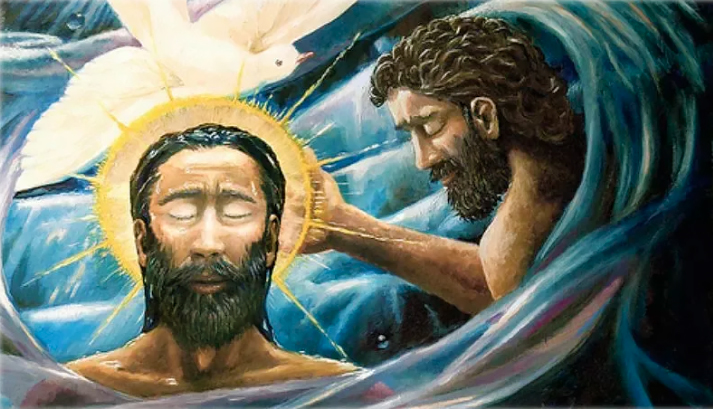
Fr. Ron Rolhesier writes that John the Baptist is aware of both his strength and his impotence. He can point out what’s wrong and what should be done, but after that, he’s helpless, with nothing to offer regarding the strength needed to correct the wrong. The gospels speak of two kinds of baptisms: the baptism of John and the baptism of Jesus, adding that John’s baptism is only a preparation for Jesus’ baptism. What’s John’s baptism? It’s a baptism of repentance, realizing what we are doing wrong, and a clear resolution to correct our bad behavior. What’s Jesus’ baptism? It’s an entry into grace and community in such a way that it empowers us internally to do what is impossible for us to do by our willpower alone. There’s a mystery to all energy. But we can empirically lay out its effect: spiritual energy works. Grace works. This has been proven inside the experience of thousands of people (many of them atheists) who have been able to find an energy inside them that clearly does not come from them and yet empowers them beyond their willpower alone. Ask any addict in recovery about this. Sadly, many of us who are solid believers still haven’t grasped the lesson. We’re still trying to live out our lives alone, by John’s baptism, that is, by our own willpower. That makes us wonderful critics but leaves us mostly powerless to actually change our own lives. What we are looking for and desperately need is a deeper immersion into the baptism of Jesus, that is, into community and grace. 

“But you, Bethlehem-Ephrathah least among the clans of Judah, from you shall come forth for me one who is to be ruler in Israel” Micah 5:1

On this fourth Sunday of Advent, we take time to reflect on the familiar patterns and practices of Catholic faith, life, and worship. It also presents an opportunity for shaping family life, developing customs, and practicing family piety, all of which can help us to assimilate the beauty and truth revealed in the comings of the Lord. Deacon Keith Fournier writes that they invite us to break from the monotony of daily life in order to participate in something bigger than ourselves. They connect us to the One who always comes to those who are prepared. They are occasions of grace. However, they must be chosen in faith and practiced in love. They must spring from the reservoir of a genuine belief in the Risen Lord Jesus Christ. We need to hear this clarion call to prepare the way for the Lord, which is the very message of Advent. We live in an intermediate time between the first and the second comings of Jesus Christ. Advent is our calling as we are a people who prepare the Way. Bernard of Clairvaux, a Franciscan friar, wrote of the three comings of Christ: We know that there are three comings of the Lord. The third lies between the other two. It is invisible, while the other two are visible. In the first coming, He was seen on earth, dwelling among men; in the final coming,” all flesh will see the salvation of our God, and they will look upon Him whom they have pierced.” The intermediate coming is a hidden one; in it, only the elect see the Lord within their own selves, and they are saved. In His first coming, our Lord came in our flesh and our weakness; in this middle coming, He comes in Spirit and in power; in the final coming, he will be seen in glory and in majesty. Because this coming lies between the other two, it is like a road on which we travel from the first coming to the last.

“Most blessed are you among women, and blessed is the fruit of your womb.” Luke 1:42

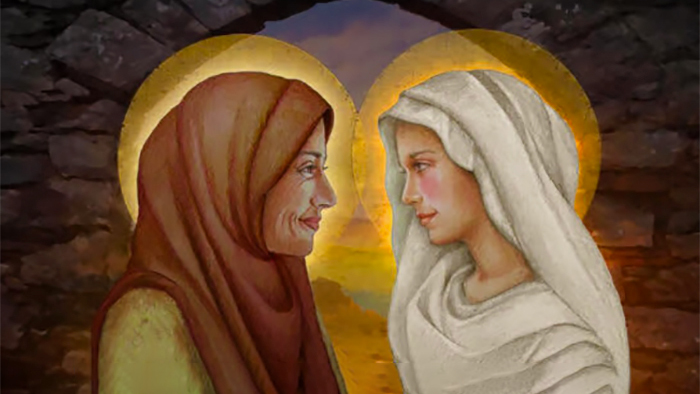
In the Church of the Visitation, behind the altar, there is a painting that depicts the scene of the Visitation. It’s a picture of two peasant women, both pregnant, greeting each other. Everything about it suggests smallness, littleness, obscurity, dust, small-town, insignificance. Fr. Ron Rolheiser writes that what you see is two rather plain-looking women standing in the dust of an unknown village. Nothing suggests that either of them or anything they are doing or carrying, is out of the ordinary or of much significance. Yet, and this is the genius of the painting, all that littleness, obscurity, seeming barrenness, and small-town insignificance makes you automatically ask the question: “Who would have thought it? Who could ever have imagined that these two women, in this obscure town, in this obscure place, in this obscure time, were carrying inside of themselves something that would radically and forever change the world? What these obscure peasant women were gestating and carrying inside of themselves would one day change history more than any army, philosopher, artist, King or Queen, or entertainment star ever would. Inside of themselves, they were gestating the Christ and the Prophet. These births changed the world radically. There is a lesson in that: Never underrate, in terms of world importance, someone living in obscurity who is pregnant with promise. Never underestimate the impact in history of silent, hidden gestation. We might well meditate on this image: Insofar as we have real significance, we all live in obscurity, pregnant with promise, silently, in a way hidden from the world, gestating that which will change time and history. If we understood this, there would be more peace in our lives and one of the raging fires inside of us would torment us much less. Invariably, we sit inside our own lives, and we feel unknown, small-time, undistinguished, and frustrated because almost all of our riches are still unknown to others. We have so much to give to the world, but the world doesn’t know about us.

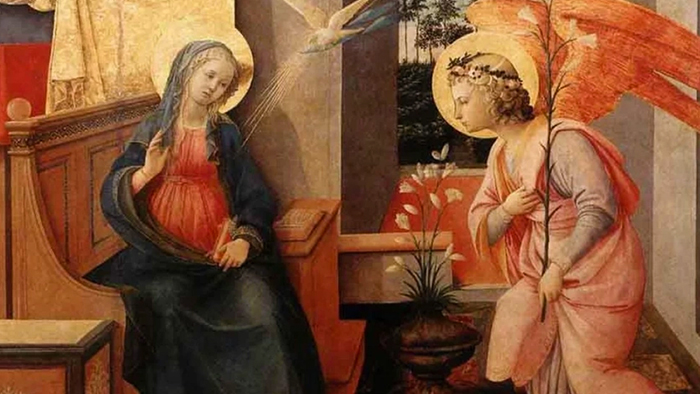
“Greetings favored one! The Lord is with you.” Luke 1:28

If you take some time to consider God’s plan for the arrival of the Messiah, it seems like He was doing everything He could to make it seem as improbable and impossible as possible!

  • God waits for nearly six hundred years of the nation of Israel being in exile, being almost totally wiped off the map before He sends the Messiah.
  • He doesn’t send the Messiah when Israel is at the pinnacle of its power (David, Solomon) but when it is at its lowest.
  • He does not come in power, but weakness. Not as a military commander, but as a baby.
  • He is born to a poor, unwed teenage girl from a town so small it would not have even appeared on a map. This girl is a virgin, so she cannot conceive naturally.
  • Her betrothed husband nearly divorces her on discovering the pregnancy. At the time of Jesus’ birth, there isn’t even the safety and comfort of a room for the delivery, but he is born in a stall for livestock, and shortly after his birth he is nearly killed by a murderous Herod.

It is like God is doing everything He can to show that, “Nothing will be impossible with God.” No matter how stacked the odds are against God, He always wins. Nothing is impossible for Him. And since God is the sovereign Lord over history, this means that He is working to make events happen as they do–He is intentionally make the circumstances more dire. But, why? So, he can show His marvelous power in the face of what is normally impossible for men. God is so set on displaying the power of His mighty arm that He will choose the most unlikely, impossible of circumstances simply to demonstrate His superior wisdom, power, and grace. So, dear friends, I ask you again: what feels impossible to you? Do you believe that you have an omnipotent Lord who is not limited? Let’s not dishonor God by hedging our bets as we pray. Let’s not subtly teach ourselves and our families that there are just some things that really are impossible for God. In Mary’s story we see something that feels personally, nationally/socially, and physically impossible be overcome by God’s power. Maybe you are left thinking that God could never restore your family, never could heal your marriage, never could bring your wayward children back home. Remember: nothing is impossible for God.

“So has the Lord done for me at a time when he has seen fit to take away my disgrace before others.” Luke 1:25

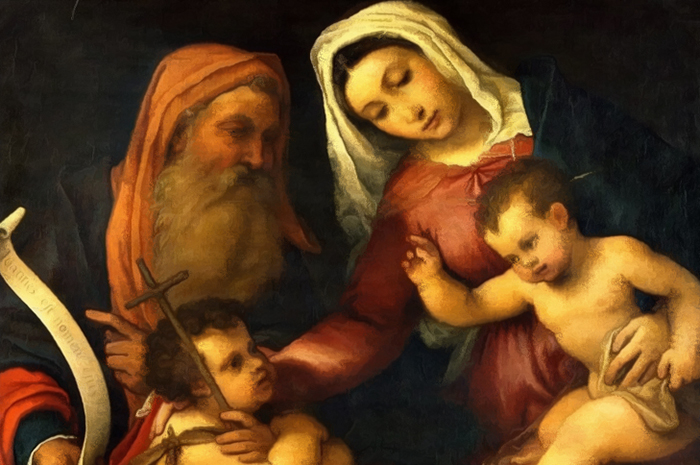
The Gospel reading today from Luke looks at two of the characters in Advent: Elizabeth and Zechariah, the parents of John the Baptist. It would be fair to say that they have a little more going for them in terms of being candidates in God’s service. Zechariah was a priest and came from a generation of priests. Elizabeth, too, came from a family of priests. The nature of being a priest would have meant that Zechariah was literate and able to read and write, a skill that would immediately have placed him as a leader in his community. Luke carefully stresses that Zechariah and Elizabeth “were upright in the sight of God, observing all the Lord’s commandments and regulations blamelessly,” not just the letter of the law, but its spirit too. And that is the key. God uses all types, including religious ones, but the heart matters, not the outward acts. I am struck by the mercy and love God shows. He chooses Elizabeth to be the mother of John the Baptist. Elizabeth was childless, and in the culture of the ancient Middle East, that was regarded as a terrible thing to be, even arousing suspicions that God was punishing you. And yet, into this sadness, God brings his mercy and compassion. Indeed, the very name “John” means “God has shown favor.” Lastly, I am struck by the way that joy and praise keep bubbling up to the surface. When Elizabeth meets Mary, the baby in her womb leaps with joy, and she is filled with the Holy Spirit. She bursts into praise – “Blessed are you among women… but why am I so favored that the mother of my Lord should come to me?” When John was born, we were told that her neighbors and relatives shared her joy; people were filled with awe and wonder, and the news spread throughout the hilly Judea. And that Zechariah, recovering his power of speech, also erupts in joy and celebration: “Praise be to the Lord, the God of Israel because he has come and redeemed his people.” There is something extraordinary about the infectiousness of their joy. They can’t help sharing their wonder, awe, and happiness with others. I wonder if we can do the same. Can we share our joy with others, the joy of a God who calls us, the joy of a God who meets us in thin places, the joy of a God who has shown us favor and gives us glimpses of the goodness of his kingdom? Like Elizabeth and Zechariah, let us marvel and wonder at God’s goodness and share our joy with others.

They shall name him Emmanuel, which means “God is with us” Matthew 1:23

How do we maintain the belief that God came down from heaven, took on human flesh, conquered all suffering, and altered the course of human history? Fr. Ron Rolheiser writes that it isn’t easy to believe amidst all the evidence that seems to contradict it, but its credibility is contingent upon it being correctly understood. Christmas is not a magical event, a Cinderella story without midnight. Rather, its very center speaks of humiliation, pain, and forced fleeing, which is not unlike that being experienced by millions of refugees and victims of injustice on our planet today. The Christmas story mirrors the struggle that’s being experienced within our own world and within our own tired hearts. Incarnation is not yet the resurrection. Flesh in Jesus, as in us, is human, vulnerable, weak, incomplete, needy, painfully full of limit, and suffering. Christmas celebrates Christ’s birth into these things, not his removal of them. Christ redeems limit, evil, sin, and pain. But they are not abolished. Given that truth, we can celebrate Christ’s birth without in any way denying or trivializing the real evil in our world and the real pain in our lives. Christmas is a challenge to celebrate while still in pain. The incarnate God is called Emmanuel, a name which means God-is-with-us. That fact does not mean immediate festive joy. Our world remains wounded, and wars, strikes, selfishness, and bitterness linger. In the words of Avery Dulles: “The incarnation does not provide us with a ladder by which to escape from the ambiguities of life and scale the heights of heaven. Rather, it enables us to burrow deep into the heart of planet earth and find it shimmering with divinity.”  George Orwell prophesied that our world would eventually be taken over by tyranny, torture, double-think, and a broken human spirit. To some extent, this is true. We’re far from being whole and happy, still deeply in exile. However, we need to celebrate Christmas 2024 heartily. Maybe we won’t feel the same excitement we once felt as children when we were excited about tinsel, lights, Christmas carols, special gifts, and special food. Some of that excitement isn’t available to us anymore.  But something more important is still available, namely, the sense that God is with us in our lives, our joys, and our shortcomings. The word was made flesh. That’s an incredible thing that should be celebrated with tinsel, lights, and songs of joy. If we understand Christmas, the carols will still flow naturally from our lips.

“The book of the genealogy of Jesus Christ, the son of David, the son of Abraham” Matthew 1:1

Jesus may have been immaculately conceived. However, as the gospels make clear, much of his origins is as jolting as any contemporary church scandal. For example, in giving us the origins of Jesus, the gospels point to as many sinners, liars, and schemers in his genetic and historical lineage as they do to saints, honest people, and men and women of faith. Beyond these less-than-saintly characters in Jesus’ lineage, we see that some of the institutions that shaped the Jewish faith were also less than saintly. Institutionalized religion back then suffered from many of the same problems it has today, including the corrupt use of power. Indeed, Israel itself (perhaps justifying the deed by referring to what Jacob had done to Esau) seized the land of Canaan from those who had a prior claim to it, claiming ownership by divine privilege. We see, too, that the lineage that gave us Jesus built itself up not just on the great and the talented but equally on the poor and insignificant. In the list of names that make up the ancestors of Jesus, we see some that are famous but also others who cannot claim specialness or significance. Jesus’ human blood, scripture tells us, was produced equally by the great and the small, the talented and the talentless. Renowned biblical scholar Fr. Raymond Brown tells us that God writes straight with crooked lines, that we shouldn’t accept an overly idealized Christ, and that our own lives, even if they are marked by weakness and insignificance, are important too in continuing the story of the incarnation. The God who wrote the beginnings with crooked lines also writes the sequence with crooked lines; some of those lines are our own lives and witness. A God who did not hesitate to use the scheming as well as the noble, the impure, and the pure men to whom the world harkened and women upon whom the world frowned – this God continues to work through the same mélange. If it is a challenge to recognize in the last part of Matthew’s genealogy that totally unknown people were part of the story of Jesus Christ, it may be a greater challenge to recognize that the unknown characters of today are an essential part of the sequence. Christianity isn’t just for the pure, the talented, the good, the humble, and the honest. The story of Jesus Christ was also written and keeps being written by the impure, by sinners, by calculating schemers, by the proud, by the dishonest, and by those without worldly talents. Nobody is so bad, so insignificant, so devoid of talent, or so outside the circle of faith that he or she is outside the story of Christ.

“By what authority are you doing these things?” Matthew 21:23

In today’s Gospel from Mathew, Jesus is asked by what “authority” he is doing the miraculous things people are seeing. Fr. Ron Rolheiser writes that there are, as we know, different kinds of power. There’s a power that flows from strength and energy. We see this, for example, in the body of a gifted athlete who moves with authority.  There’s power, too, in charisma, in a gifted speaker or a rock star. They, too, speak with a certain authority and power. But there’s still another kind of power and authority, one very different in kind from that of the athlete and the rock star. There’s the power of a baby, the paradoxical power of vulnerability, innocence, and helplessness. Powerlessness is sometimes the real power.  If you put an athlete, a rock star, and a baby into the same room, who among them is the most powerful? Who has the most authority? Whatever the power of the athlete or the rock star, the baby has more power to change hearts. The Gospel texts, which tell us that Jesus spoke with “authority,” never suggest that he spoke with “great energy” or “powerful charisma.” In describing Jesus’ authority, they use the word “exousia,” a Greek word for which we don’t have an English equivalent. What’s “exousia”? We don’t have a term for it. Still, we have a concept: “Exousia” might be described as the combination of vulnerability, innocence, and helplessness that a baby brings into a room. Its very helplessness, innocence, and vulnerability have a unique authority and power to touch your conscience. It’s for good reason that people watch their language around a baby. Its very presence is cleansing. However, a couple of other elements, too, undergirding the authority with which Jesus spoke. His vulnerability and innocence gave his words an extraordinary power, yes. Still, two other aspects also made his words powerful: His words were always grounded in the integrity of his life. As well, people recognized that his authority was not coming from him but from something (Someone) higher whom he was serving. There was no discrepancy between his words and his life. Moreover, his words were powerful because they weren’t just coming from him, they were coming through him from Someone above him, Someone whose authority couldn’t be challenged, God. You see this kind of authority in persons like Mother Teresa and Jean Vanier. Their words had a special authority. Mother Teresa could meet someone for the first time and ask him or her to come to India and work with her. Jean Vanier could do the same. A friend of mine shares how, when meeting Vanier for the first time, Vanier invited him to become a missionary priest. That thought had never before crossed his mind. Today, he’s a missionary. What gives some people that extraordinary power? “Exousia” is a selfless life and a grounding in an authority that comes from above. In persons like Mother Teresa and Jean Vanier, you see the powerlessness of a baby combined with a selfless life grounded in authority beyond them. When such persons speak, like Jesus’, their words have real power to calm hearts, heal them, change them, and, metaphorically and really, cast out demons from them.

HTML Snippets Powered By : XYZScripts.com