
Daily Virtue Post

“Can anything good come from Nazareth?” John 1:46

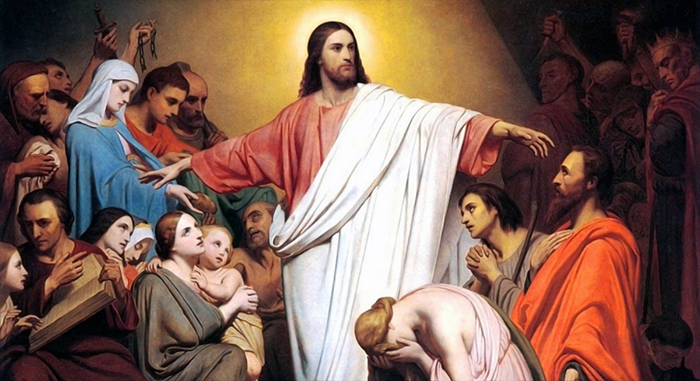
Does Christianity demand “niceness”? Benedictine Oblate Elizabeth Scalia writes that the question always brings her back to the Gospel of John and specifically to the calling of Nathaniel by Christ. Encouraged by his friends to meet the one “about whom Moses and the prophets wrote, Jesus, son of Joseph, from Nazareth,” Nathaniel snarks, “Can anything good come out of Nazareth?” My “nice” friends would be all over that. What a mean thing to say about someone he didn’t even know! What a hurtful and dismissive remark to the people of Nazareth, who are as good as anyone else and deserving of full respect. I concur, to a point. Depending on one’s leanings, that uncharitable snob, Nathaniel, was either an elitist one percenter or an aloof ninety-nine percenter, but either way, he wasn’t nice. Interestingly, Jesus didn’t seem to find Nathaniel’s demeanor too uncharitable for his company or even to mind his tossed-off derision. One can imagine him smiling and putting a friendly arm around Nathaniel’s shoulders as he responds, “Here is truly an Israelite in whom there is no deceit!” In a manner of speaking, he was saying Nathaniel was someone he could trust to speak the unwelcome word from time to time or, at the very least, not simply tell Jesus what he thought the rabbi wanted to hear. Jesus, it seemed, preferred someone who would speak a slightly edgy truth over someone who would be “nice” but dishonest. Being himself all Truth, dishonesty in the guise of niceness would not serve Christ then and does not serve us well in our faith journey today.

“Consider your ways!” Haggai 1:7

What would Jesus do? For some Christians, that’s the easy answer to every question.  At a deep level, Fr. Ron Rolheiser says that’s actually true. Jesus is the ultimate criterion. He is the way, the truth, and the life; anything that contradicts him is not a way to God. Yet, while Jesus is a non-negotiable criterion, he’s not simplistic. Looking at his life, we see that sometimes he did things one way, sometimes another way, and sometimes he started out doing something one way and ended up changing his mind and doing it in a different way. That’s why, I suspect, within Christianity, there are so many different denominations, spiritualities, and ways of worship, each with its own interpretation of Jesus. Jesus is complex. So, where does this leave us? Most of us submit our private interpretation to the canonical (“dogmatic”) tradition of our particular church and accept, though not in blind, uncritical obedience, the interpretation of that larger community, its longer history, and its wider experience, humbly accepting that it can be naïve (and arrogant) to bracket 2000 years of Christian experience so as to believe that our insight into Jesus is a needed corrective to a vision that has inspired so many millions of people through so many centuries.  Above all else, Jesus revealed this about God: God is good. What would Jesus do? Admittedly, the question is complex. However, we know we have the wrong answer whenever we make God anything less than fully good, whenever we set conditions for unconditional love, and whenever, however subtly, we block access to God and God’s mercy.

“in our servitude our God has not abandoned us” Ezra 9:9

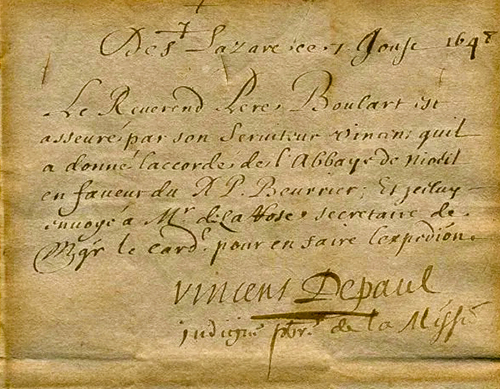
Father Patrick van der Vorst reflects on this day when we celebrate the Feast of Saint Vincent de Paul. He writes that it ties in beautifully with the reading for today, especially where the disciples are being sent out to proclaim the Good News from village to village. That is what the Saint Vincent de Paul Societies (SVP) are doing worldwide, in over 86 countries, proclaiming the Good News and providing love and care for the least among us all. Saint Vincent (1581-1660) was a very prolific writer. He wrote over 30,000 letters in his lifetime. Until 1645, he wrote the letters himself; during the last 15 years of his life, he dictated them. By the 18th century, 7,000 letters had already been published. The contents range from the very mundane, where Vincent shares that he has nothing to write and say, to very strongly worded letters in opposition to Jansenism, a then-popular movement on the rise throughout Europe. However, the bulk of his letters were written as beautiful Christian messages of charity, hope, and love. I share a picture of Saint Vincent’s letter on 7 July 1648. While it is always lovely to see the handwriting of the saints, it is mainly how he signs off (below his name), which is beautiful. He writes: ‘Vincens Depaul, Unworthy priest of the Mission.’ To all the Vincentian missionaries, Daughters of Charity, and lay Vincentians worldwide, a very happy Feast day. Saint Vincent, pray for us.

“My mother and my brothers are those who hear the word of God and act on it.” Luke 8:21

In reflecting on today’s passage from Luke, Fr. Ron Rolheiser asks, “Is Jesus distancing himself from his mother here? No. He’s pointing out the real link between them: among all the people in the gospels, Mary is the pre-eminent example of the one who hears the word of God and keeps it.” Fr. Rolheiser interestingly looks at how Mary gave birth to Christ as something we are called to do in our lives – giving birth to faith in Christ. “Looking at how Mary gave birth to Christ, we see that it’s not something that’s done instantly. Faith, like biology, also relies on a process with several distinct, organic moments. What are these moments? What is the process by which we give birth to faith in the world? Mary wants imitation, not admiration. Our task, too, is to give birth to Christ. Mary is the paradigm for doing that. From her, we get the pattern: Let the word of God take root and make you pregnant; gestate that by giving it the nourishing sustenance of your own life; submit to the pain that is demanded for it to be born to the outside; then spend years coaxing it from infancy to adulthood; and finally, during and after all of this, do some pondering, accept the pain of not understanding and of letting go. It began with Mary, but each of us is asked to make our own contribution to giving flesh to faith in the world.”

“No one who lights a lamp conceals it with a vessel or sets it under a bed; rather, he places it on a lampstand so that those who enter may see the light” Luke 8:16

Fr. Eric Hollas writes of the sometimes confusing speech of Jesus, who seems to speak in riddles. It’s a small wonder the disciples occasionally asked for clarification. In today’s Gospel, Jesus went one step further, and his words seem to defy any convention of fair play. Where’s the justice in taking from those who have little and giving to those who have much? Jesus is not speaking in economic terms, nor is he talking about justice. Light shared or hidden was the topic of his lesson, and that has little to do with how many gifts we have and everything to do with whether we use our gifts. Those who hear the word must become a light to others, for even the kingdom’s mysteries made known to the disciples must come to light. Jesus told us that he is “the light of the world. Whoever follows me will never walk in darkness but will have the light of life.” We know that even the smallest amount of light can dispel the darkness. Your light brings Christ’s light into the darkest of lives to show them the path to peace, hope, and love.

“For my thoughts are not your thoughts, nor are your ways my ways, says the LORD” Isaiah 55:8

The parable of the vineyard workers in today’s gospel reading shines a spotlight on the extravagant generosity of God. As the story goes, a landowner goes out several times during the day seeking workers for his vineyard. Each worker is given the same opportunity to work for the regular daily wage. This meant that the late hires received from the landowner the same compensation as the early arrivals. The story speaks of the unmerited and amazing generosity of our Lord. Yet many of us, when we first hear this story, side with the early workers who worked a full day but got the same wage as those who only worked an hour. How can that be fair? Our first reading today from Isaiah provides insight into our challenge in accepting that we cannot possibly think as God thinks. God can never be figured out or second-guessed if the Scriptures are to be believed. You can shake your fist at God or bend your knee to worship God, but you can never understand God. Fr. Ron Rolheiser writes that we like to compare God’s ways to our ways and, on that basis, find God unacceptable. We do this in sincere and well-intentioned ways; for example, we say things like: “If there were an all-loving and all-powerful God, this suffering would not exist!” “God could never permit this!” “This cannot make sense!” “An all-powerful God would do something about this!” These expressions and the attitudes that go with them seem enlightened, sympathetic, and courageous; certainly, most people would say that of Harold Kushner’s book, “When Bad Things Happen to Good People,” which says precisely those things. However, this notion of “understanding God” is problematic. Why? Simply put, a God whose thoughts are our thoughts and whose ways are our ways, a God who can be understood, is eventually not an object for reverence or worship. Such a God is too small, ordinary, and impotent to be an object of faith. Likewise, such a God can neither be fully Creator nor Redeemer and will be seen as an opium for those lacking intellectual courage. Does this mean we should stop trying to understand God and asking questions? No. Faith never demands that we stop asking hard questions. However, at the end of the day, whether you are staring at blessing or curse, graciousness or suffering, love or hate, life or death, you can only say this of God: “Holy, Holy, Holy!…God’s ways are not my ways!” Faith embraces this reality, trusts in God’s promises, and faithfully seeks to do His will. 

“they may look but not see, and hear but not understand” Luke 8:10

Fr. Ron Rolheiser writes that we do a lot of looking without seeing much. Seeing implies more than having good eyesight. Our eyes can be wide open, and we can see very little. He speaks of Paul and his conversion on the road to Damascus and how we always assume that it tells us that Paul was struck blind by his vision, but I think the text implies more. It tells us that Paul got up off the ground with his eyes wide open, seeing nothing.  That doesn’t necessarily equate with physical blindness. He may well have been seeing physically, but he wasn’t seeing the meaning of what he was getting himself into. Someone had to come and open his eyes, not just so that he could see again physically but especially so that he could see more deeply into the mystery of Christ. Seeing, truly seeing, implies more than having eyes that are physically healthy and open. We all see the outer surface of things, but what’s beneath isn’t as automatically seen. One of the key movements within our spiritual lives is the movement from fantasy to prayer, a movement that ultimately frees us from wanting to press to ourselves all that’s beautiful to appreciating beauty for its own sake. We can only really see and appreciate beauty when we stop lusting for it. Our longing for relevance makes us look out at the world with restless, dissatisfied eyes. We practice mindfulness and see the richness of the present moment only when our disquiet is stilled by solitude. Longing and hunger distort our vision. Gratitude restores it. It enables insight. The most grateful person you know has the best eyesight of all the people you know.

“and some women who had been cured of evil spirits and infirmities” Luke 8:2

Susan Pitchford writes that just before this passage, Jesus has been shown extravagant love by a woman who was “a sinner”: she anointed him with ointment, washed his feet with her tears, and dried them with her hair. Jesus, more impressed than his host, points out that this woman has received great forgiveness and, as a result, shows great love. The women who accompanied Jesus had also experienced deep healing, and the depth of their love naturally overflowed into generous giving. This is how it works. When we love deeply, we want to give extravagantly. And when we feel someone has pulled us from the abyss, our hearts overflow with gratitude, and there is nothing we wouldn’t give, nothing we wouldn’t do, to show it. Jesus said of the sinful woman that she loved much because she’d been forgiven much. That’s me, too, but I can’t weep over Jesus’ feet now. But I can accompany him, remembering something else he said: “Whatever you do to the least member of my family, you’ve done to me.”

“I did not come to call the righteous but sinners” Matthew 9:13

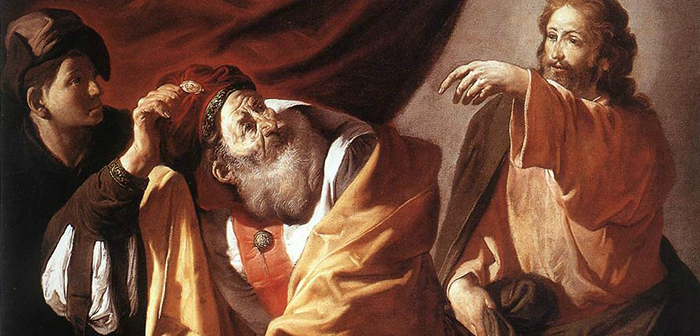
Today, we celebrate the feast of St. Matthew, and his laconic account details the transition from spiritual death to spiritual life. What was going through Matthew’s head when Jesus passed by, noticed him, and said, “Follow me”? As a tax collector, Matthew would have been held at arm’s length by his family and despised by his neighbors. His co-workers had a reputation for coming up with scams to line their own pockets, and Matthew might have done the same thing himself. But then Jesus arrives and offers his invitation, and Matthew follows. The next thing we hear, they are having a meal together with a host of other people like him! Jesus was compassionate. He saw who had been left out and rejected. He let them know that he wanted to be with them. It’s a simple but powerful message: “I want to know you. I’m happy to spend time with you. Let’s have dinner.” This affirmation can change lives. Think of all the people who were touched by Jesus’ genuine compassion. At least two were publicly known to have committed adultery: the woman at the well, who came at the hottest part of the day to avoid the gossip of the village’s wives, and the woman he saves from being stoned to death. Both were living with shame and rejection before Jesus approached them. Jesus never seemed anxious about his reputation. Instead, he looked people straight in the eye and loved them. He just accepted them.

“But wisdom is vindicated by all her children” Luke 7:35

I recently read an excellent reflection by L. Kazlas on the reality that we are all passing through this life on the same journey that I want to share with you today.
We are a pilgrim people, and heaven is our home. We journey through life with our family, friends, and one another in the Catholic church. Our lives are richer, fuller, and happier when we reach out to one another wherever we are to form a community and share our lives, both the good and the bad as well. That is what the gospel reading is about today, too, except the people of that time did not see it that way. John the Baptist did not eat bread and drink wine, and they thought he had a demon, but Jesus did eat bread and drink wine, and they thought he was a glutton and drunkard and a friend of the worst of the sinners. The way things look is not always what they seem to be. There are hidden truths in one another’s lives that only the Lord knows, so we should never judge one another by the surface facts of our lives. That is hard to do sometimes, but it is necessary to be a true community that lives in the Holy Spirit, eating, drinking, dancing sometimes, weeping sometimes, and supporting one another through our life’s journey. Our reflection verse today from Luke’s gospel speaks to the beauty of our church. Individually, we are less than perfect people, but together, we are the living, breathing body of Jesus Christ. The vindication for our imperfections is not from ourselves but from Jesus, the bridegroom of our church, who earned the right for us to be gathered together to celebrate eternal life with him and one another. Surely, we will meet one another in heaven one day, and someone will play the flute, and then we shall dance. But today, I pray that your spirit dances within you wherever you may go.

HTML Snippets Powered By : XYZScripts.com