
Daily Virtue Post

We have this confidence in him that if we ask anything according to his will, he hears us. 1 John 5:14

Karl Rahner once said that one of the secrets to faith is to always see your life against an infinite horizon. This meant that you always searched for the finger of God, some faith meaning, in every incident within your life.

Thus, for example, if something tragic happened to you (sickness, the death of loved one, an accident, the loss of your job, or economic disaster) you would always ask yourself: “What is God saying to me in this?” Conversely, if something good happened to you (you met a marvelous person, you fell in love, you had a huge success, or you made a lot of money) you would ask yourself the same question: “What is God saying to me in this?” The idea was that, in every event of life, God spoke, said something to you, and meant this event to have spiritual significance for your life.

Part of the idea was that nothing was purely secular. Hence, my parents, who were farmers, would have a priest come and bless their land, bless their house, and even bless their marriage bed. Then, if they had a good crop, it was not interpreted simply as good luck, a lucky year, but seen as God’s blessing: “For God’s good reason, we are being blessed this year.”  Conversely, if there was a poor crop, or no crop, it wasn’t written off as simple bad luck (“Rotten weather this year!”) but it was seen in the context of providence: “God wants us to live with less!” The idea was always that somehow God was behind things, if not actively arranging them at least speaking through them.

Sometimes, of course, they overdid it. Rather than seeing God as speaking through an event, they saw God as actually causing the event. Thus, God was literally seen to be sending sickness, death, drought, and pestilence upon the earth; or, conversely, deliberately privileging some people over others. Beyond making for an awful theology of God, this sometimes led to an unhealthy fatalism: “It’s in God’s hands. I won’t take my child to the doctor. If God wants her to live, she’ll live. If God wants to take her home to heaven, then so be it. It’s God’s will!” That is just bad theology. God speaks through thse events but is not the cause of them.

Divine providence might be defined as a conspiracy of ordinary accidents within which God’s voice can be heard. John of the Cross said as much when he wrote: The language of God is the experience that God writes into our lives. Karl Rahner, as we saw, suggests that it is a question of seeing against an infinite horizon.

My parents, and most of their generation, had some understanding of what this meant and searched always for the finger of God in their everyday lives. Sometimes they did this healthily and sometimes in less healthy ways. In either case, they prayed in a way that too often we do not.

When Scripture tells us to “pray always”, it doesn’t mean that we should always be saying prayers. Among other things, though, it does mean that we, like generations of old, should be looking at every event in our lives and asking ourselves: “What is God saying to me in all of this? What is providential for me in this event?” [Excerpt from Ron Rolheiser’s “Divine Providence” January 1999]

Who indeed is the victor over the world but the one who believes that Jesus is the Son of God? 1 John 5:5

We share the world with more than seven and a half billion people and each of us has the irrepressible, innate sense that we are special and uniquely destined. This isn’t surprising since each one of us is indeed unique and special. But how does one feel special among seven and half billion others?

We try to stand out. Generally we don’t succeed, and so, as Allan Jones puts it, “We nurse within our hearts the hope that we are different, that we are special, that we are extraordinary. We long for the assurance that our birth was no accident, that a god had a hand in our coming to be, that we exist by divine fiat. We ache for a cure for the ultimate disease of mortality. Our madness comes when the pressure is too great and we fabricate a vital lie to cover up the fact that we are mediocre, accidental, mortal. We fail to see the glory of the Good News. The vital lie is unnecessary because all the things we truly long for have been freely given us.”

All of us know what those words mean: We sense that we are extraordinary, precious, and significant, irrespective of our practical fortunes in life. Deep down we have the feeling that we are uniquely loved and specially called to a life of meaning and significance. We know too, though more in faith than in feeling, that we are precious not on the basis of what we accomplish but rather on the basis of having been created and loved by God.

And so we struggle to be content with ordinary lives of anonymity, hidden in God. Rather we try to stand out, to leave a mark, to accomplish something extraordinary, and so ensure that we will be recognized and remembered. Few things impede our peace and happiness as does this effort. We set for ourselves the impossible, frustrating task of assuring for ourselves something which only God can give us, significance and immortality. Ordinary life then never seems enough for us, and we live restless, competitive, driven lives. Why isn’t ordinary life enough for us?

The answer: We do all of these things to try to set ourselves apart because we are trying to give ourselves something that only God can give us, significance and immortality.

Scripture tells us that “faith alone saves.” That simple line reveals the secret: Only God gives eternal life. Preciousness, meaning, significance and immortality are free gifts from God and we would be a whole lot more restful, peaceful, humble, grateful, happy, and less competitive if we could believe that. A humble, ordinary life, shared with billions of others, would then contain enough to give us a sense of our preciousness, meaning, and significance.

Thomas Merton, on one of his less restless days wrote: “It is enough to be, in an ordinary human mode, with one’s hunger and sleep, one’s cold and warmth, rising and going to bed. Putting on blankets and taking them off, making coffee and then drinking it. Defrosting the refrigerator, reading, meditating, working, praying. I live as my Fathers have lived on this earth, until eventually I die. Amen. There is no need to make an assertion of my life, especially so about it as mine, though doubtless it is not somebody else’s. I must learn to live so as to gradually forget program and artifice.”

Ordinary life is enough. There isn’t any need to make an assertion with our lives. Our preciousness and meaning lie within the preciousness and meaning of life itself, not in having to accomplish something special. [Excerpt from Ron Rolheiser’s “Our Ache For Earthly Immortality” February 2018]

“Today this Scripture passage is fulfilled in your hearing.” Luke 4:21

Jesus’ words emphasizes living fully, embracing compassionate wisdom over tribalism, finding triumph in surrender (like the Passion), and recognizing the transformative power in both action and passive suffering, ultimately calling for deep trust in God’s ultimate victory (Resurrection) over evil, even amidst human pain and limitations. Jesus’ words were truth spoken to a disbelieving world.

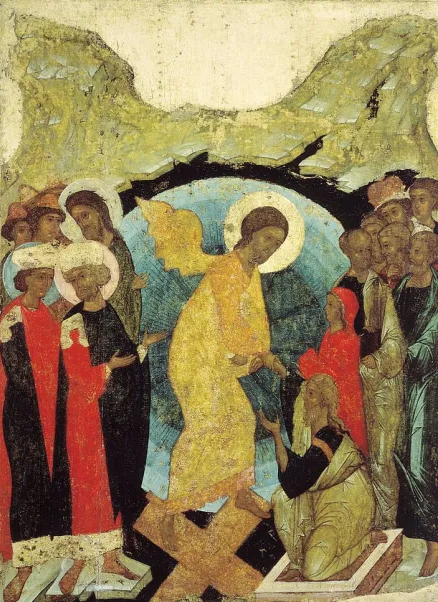
Take for example what he says before he dies on the cross. Jesus utters these words: “It is finished!” What’s “finished”? These words can be spoken in different ways: They can be words of defeat and despair (“It’s over, hopeless, I give in!) or they can be words of accomplishment and triumph (“I’ve done it, succeeded, I’ve held out!”).

At one level, what’s finished is Jesus’ own struggle with doubt, fear, and loneliness. What was that struggle? The painful, lonely, crushing discrepancy he habitually felt between the warmth and ideals inside his heart and the coldness and despair he met in the world. Everything inside of him believed that, in the end, always, it is better to give yourself over to love than to hatred, to affirmation than to jealousy, to gentleness of heart than to bitterness, to honesty than to lying, to fidelity than to compromise, to forgiveness than to revenge.

But there’s second level of meaning to his words. “It is finished” also means that the reign of sin and death is finished. An order of things (wherein we live our lives believing that, eventually, everyday joys give way to darkness and the underworld; that paranoia and sin unmask trust and goodness as naive; that the reality of the physical world and this life is all there is; that compromise and infidelity trump everything else, and that death is more real than hope) is also finished. It is exposed as unreal, as a lie, by love, fidelity, gentleness, trust, childlikeness, vulnerability, and the paradoxical power of a God who, in the deeper recesses of things, works more by underwhelming than by overpowering.

Mohandas Gandhi, in a remarkable passage, once wrote: “When I despair, I remember that all through history, the way of truth and love has always won. There have been murderers and tyrants, and for a time they can seem invincible. But in the end they always fall. Think of it, always.” Many things were finished on the cross, including rule of tyranny and murder. [Excerpt from Ron Rolheiser’s “Jesus’ Last Words” April 2006]

If we love one another, God remains in us,and his love is brought to perfection in us. 1 John 4:12

Jesus repeatedly enjoined his followers to “be compassionate as God is compassionate.” Each time God appears in Scripture, the first words are “Do not be afraid.” If something frightens you, you can be sure it’s not from God. Fear of the Lord is healthy since it is more about reverence. That fear is more that we might hurt God, not that God might hurt us.

Compassion is central to all authentic religions, it’s the penultimate invitation since it’s the medium that takes us to our last invitation, which is union with God.

In the Sermon on the Mount, Jesus says, “Be perfect as your heavenly Father is perfect” – an impossibility for human beings in the Greek-rooted sense in which we understand perfection, meaning “without flaws.” But in Hebrew thought, perfection means compassion. Luke’s Gospel reflects this by saying, “Be compassionate as your heavenly Father is compassionate.”

Scripture scholar Dr. Walter Brueggemann, said that proper prayer and proper practice were seen as the essence of religion in Old Testament times until the prophets came and said, “God doesn’t care so much about all these rules; God cares about the poor.” They said, “The quality of your faith will be judged by the quality of your justice; the quality of justice will be judged by the treatment of the three weakest groups – widows, orphans and strangers.”

Jesus explained that God lets the sun shine on the righteous and the unrighteous alike. If you tease that out, God loves the saints in heaven and the devils in hell equally; God loves Mary in heaven and Lucifer equally; God loves pro-life and pro-choice equally; God loves Catholics and Protestants equally; God loves Christians and Muslims equally; God loves us when we’re bad and when we’re good equally.

Fr. Richard Rohr said, “There isn’t a single thing you can do to make God love you more, and there isn’t a single thing you can do to make God love you less. That’s the way I want you to be compassionate. Your compassion must extend to everybody, not just to the worthy, or whoever gives you a room, and so on.”

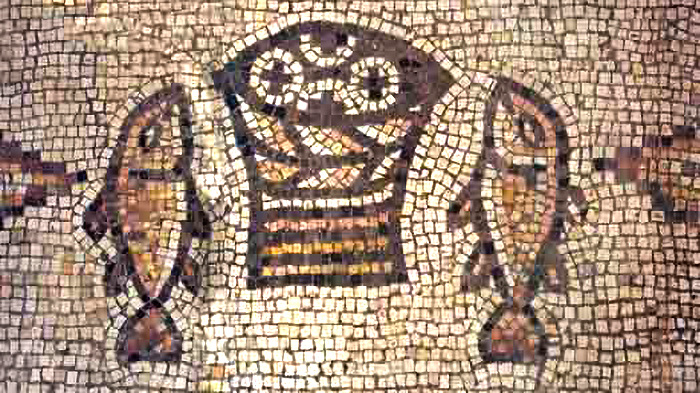
And they picked up twelve wicker baskets full of fragments and what was left of the fish. Mark 6:43

After Jesus had fed a crowd of more than five thousand with five loaves and two fishes, he asked his apostles to gather up the fragments that were left over, scattered here and there on the ground. They did as he asked and ended up filling twelve baskets with leftovers.

Recently, I attended a series of lectures by Walter Brueggemann. He is widely respected for his biblical scholarship, he feeds crowds from some healthy baskets, but he is perhaps even more deeply regarded because of his concern for the poor and his challenge to us to reach out to them with justice and generosity. After he had fed us, the crowds, here are some of the fragments that were gathered up:

  • There is today a real danger of excessive privatization of our faith. The church must advocate too for the public conscience, not just for the private conscience. 
  • Where truth operates you see poverty turn into abundance; death turn into life; war turn into peace; and hunger turn into food.
  • You can always recognize a “Pharaoh”: If you’ve seen one, you’ve seen them all! Pharaohs all have bad dreams, accumulate things, need ever larger bins to store their possessions, are permeated with anxiety, and are de-absolutized as soon as God enters the situation. Where do we have bad dreams?
  • A truth-filled God always conspires against Pharaoh. God, eventually, comes to a crisis and redefines it.
  • Scripture ultimately speaks of bodily pain and painful slavery. Redemption, just as at the original Exodus, will always begin with a cry of distress and end with a dance of joy. Bodies that hurt must come to voice and that voice must say that this pain is abnormal and shouldn’t be borne any longer. Painful slavery and a truth-filled God will eventually make for you a path through the waters where Pharaoh cannot follow. Therefore we must never allow our pathologies to become normal, nor accept slavery for the security it brings.
  • The Book of Deuteronomy is one of the greatest social documents ever written, it links faith to public life, to economics, and to justice. It directs faith always to the poor, towards “widows, orphans, and strangers.” Deuteronomy might be the most subversive document in the entire Old Testament. Among other things, it teaches uncompromisingly that laissez-faire economics needs some clear moral checks. In the temptations of Jesus in his dialogue with the devil, he quotes scripture three times and each time it is a passage from Deuteronomy. 
  • Deuteronomy keeps reminding us that we once all were slaves and that it is not good to have amnesia. We should not absolutize the present and imagine it has always been this way. All of us should remember where we came from, not least today in our debates about immigration.
  • If we do not heed the words of Deuteronomy about taking care of the poor we will have to deal with the scroll of Jeremiah who assures us that the world as we know it will come to and end because it cannot be sustained in its falseness.
    [Excerpt from Ron Rolheiser’s “Fragments from some Prophetic Loaves and Fishes” July 2010]

This is how you can know the Spirit of God: every spirit that acknowledges Jesus Christ come in the flesh belongs to God. 1 John 4:2

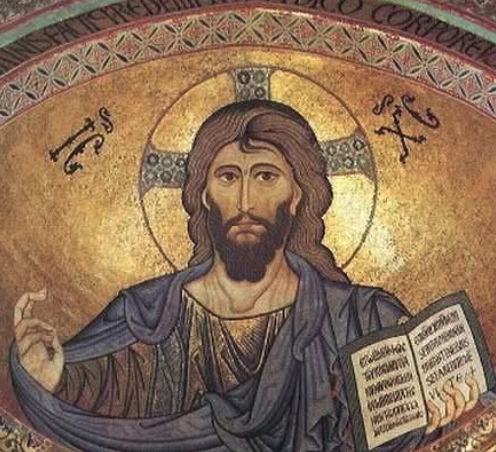
After the birth of Christ, we need not look to the extraordinary, the spectacular, the miraculous to find God. God is now found where we live, in our kitchens, at our tables, in our wounds and in each others’ faces. That is hard to believe and always has been. When Jesus was on earth, virtually no one believed he was the Messiah precisely because he was so ordinary, so unlike what they’d imagined God to be. 

It is curious that Scripture refuses to describe what Jesus looked like. It never tells us whether he was short or tall, with beard or without, had light or dark hair, or blue or brown eyes. Neither does it ever assign to him anything extraordinary in terms of psychological countenance.

Nikos Kazantzakis once wrote: “God is not found in monasteries, but in our homes! Wherever you find husband and wife, that’s where you find God: wherever children and petty cares and cooking and arguments and reconciliation are, that’s where God is, too. The God I’m telling about, the domestic one, not the monastic one, that’s the real God.”

In the First Letter of John, we read: “God is love and whoever abides in love abides in God and God abides in him/her.” Love is a thing that happens in ordinary life, in kitchens, at tables, in workplaces, in families, in the flesh. God abides in us when we abide there. The Christ-child is also to be found in church, in the sacraments and in private meditations. All of these are ordinary and the incarnation crawls into them and helps us, there, to abide in God.

True acknowledgment of Christ is tied to following his way of life, taking up our cross each day, walking the path that goes through suffering and service, rather than simply proclaiming his status.[Excerpt from Ron Rolheiser’s “Born Into The Ordinary” December 1986]

That the Gentiles are coheirs, members of the same body, and copartners in the promise in Christ Jesus through the gospel. Ephesians 3:6

A friend of mine, in his early forties, is the kind of person you want as a friend. Honest, gracious, generous to a fault, kind-hearted, full of humour, he brings colour and character into a room. But, although he’s loved by many people inside the church, he struggles with the church. Partly it’s indifference, partly it’s lack of faith, partly it’s because of how he perceives the church’s teaching on sex, and partly it’s because he grew up inside a generation that, for whatever reason, was neverproperly initiated into the church. Whatever the reasons, he rarely goes to church and feels himself an outsider to its life.

Until recently he didn’t think much about this. He was young and life was full of opportunities, friends, and things to experience and enjoy. Church and religion didn’t seem important to him. But now that he’s seen enough of life to recognize some its empty crevices and its incapacity to deliver the happiness he’d hoped for, he’s more humble and even a bit sad about his weak relationship to faith and the church.

When we talked about religion recently he simply said: “I’m not sure what I really believe, but, that’s me, that’s where I’m at.” Then, with a note of sadness, he added: “I guess if there’s a heaven, I won’t be part of it.”

As Christians, we believe that God took on flesh in Jesus, but we also believe that this was not just a one-shot, 33-year incursion, of God into human history. The mystery of the incarnation goes on. God is still taking on real flesh inside of us, the community of believers.

Scripture says: “We ARE the Body of Christ on earth.” We’re not a replacement for Jesus’ body, not a representation of it, or even his mystical body. We ARE his body and, as such, are meant to do all the things he did, including the forgiveness of sins and the binding of each other, through love, to the family of God. Jesus himself gave us this power: “Whose sins you shall forgive, they are forgiven. … Whatever you bind on earth will be bound in heaven; whatever you loose on earth will be loosed in heaven.”

Those statements, among others, have immense, almost unimaginable, implications. As a family of faith, we continue to give physical flesh to God on earth and so, like Jesus, have the power to forgive and to link anyone who is sincere to the family of God.

Stated in reverse, if, as members of the Body of Christ, we love someone, that person cannot go to hell unless he or she positively rejects our love and our efforts to connect him or her to the family of God. He or she must, of course, at some point, still make a personal choice to belong, but as long as our love is there, that person is solidly connected to the Body of Christ.

Love understands, forgives, and holds others in union in ways that take into account weakness, hurt, complexity, absence, and even sin. A loving mother knows that the family still includes a given child, even if that person is struggling in ways that don’t allow for him or her to be home and at the family table on a given night. Love binds, looses, forgives, and holds others in union even within the painful contingencies of immaturity, absence, anger, infidelity, and sin.

Every time I write about this, I’m flooded with letters, mostly from people who find it incredulous. Some object because, as they put it: “Only Christ can do this!” Point well taken, but, as scripture says: “We are the body of Christ.” Christ is doing this. More commonly the doubt expresses itself this way: “I’d like to believe this, but, if it’s true, it’s too good to be true!” But that’s simply a description of the incarnation! [Excerpt from Ron Rolheiser’s “Keeping Our Loved Ones Connected To The Body Of Christ” August 2005]

If you consider that God is righteous, you also know that everyone who acts in righteousness is begotten by him. 1 John 2:29

What’s right and what’s wrong? We fight a lot over moral issues, often with a self-assured righteousness. And mostly we fall into that same self-righteousness whenever we argue about sin. What constitutes a sin and what makes for a serious sin? Different Christian denominations and different schools of thought within them lean on various kinds of biblical and philosophical reasoning in trying to sort this out, often bitterly disagreeing with each other and provoking more anger than consensus.

Intending no offense to how our churches and moral thinkers have classically approached moral questions, I believe there’s a better way to approach them that, more healthily, takes into account human freedom, human limitations, and the singular existential situation of every individual. The approach isn’t my own, but one voiced by the Prophet Isaiah who offers us this question from God: What kind of house can you build for me? That question should undergird our overall discipleship and all of our moral choices.

 How do we enshrine the image and likeness of God inside our body, our intellect, our affectivity, our actions? What kind of “church” or “cathedral” is our very person? That’s the deeper question in terms of moral living. What kind of house can you build for me? At what level do I want live out my humanity and my discipleship? Do I want to be more self-serving or more generous? Do I want to be petty or noble? Do I want to be self-pitying or big of heart? Do I want to live out my commitments in a fully honest fidelity or am I comfortable betraying others and myself in hidden ways? Do I want to be a saint or am I okay being mediocre?

At a mature level of discipleship (and human maturity) the question is no longer, is this right wrong? That’s not love’s question. Love’s question is rather, how can I go deeper? At what level can I live out love, truth, light, and fidelity in my life? At what level do I want to carry my chastity, my fidelity, and my honesty? At what point in my life do I want to accept carrying more of the tension that both my discipleship and my humanity ask of me? What kind of person do I want to be? Do I want to be someone who is fully transparent or someone who has hidden goods under the counter? Do I want to live in full sobriety?” What kind of “temple” do I want to be?  What kind of house can I build for God?

This moral choice comes to us, as do all the invitations from God, as an invitation, not as a threat. It’s through love and not threat that God invites us into life and discipleship, always gently asking us: what kind of house can you build for me? [Excerpt from Ron Rolheiser’s “What Kind of House Can You Build for Me?” October 2020]

“I baptize with water” John 1:26

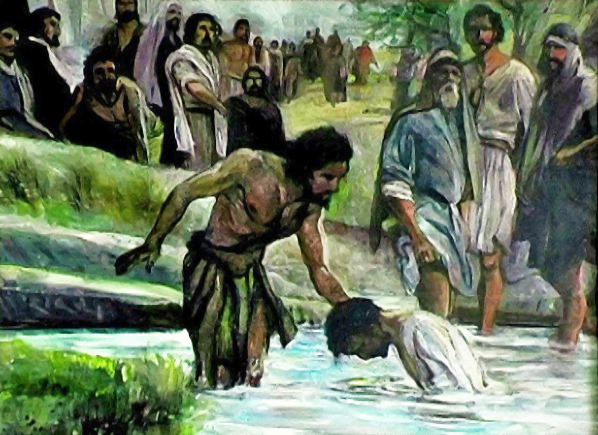
In his exchange with the Jewish leaders, John the Baptist is both aware of his strength and his impotency. He can point out what’s wrong and what should be done, but after that, he’s helpless, with nothing to offer in terms of the strength needed to correct the wrong.

In essence, that’s what we bring to any situation when we criticize something. We are able, often with brilliance and clarity, to show what’s wrong. That contribution, like John the Baptist’s, is not to be undervalued. The gospels tell us that, next to Jesus, there isn’t anyone more important than John the Baptist. But, like John, criticism too is only a half-job, a half-prophecy: It can denounce a king, by showing what’s wrong, and it can wash the soul in sand, by blasting off layers of accumulated rust and dirt, but ultimately it can’t empower us to correct anything. Something else is needed. What?

Anyone who has ever tried to overcome an addiction can answer that question. A clear head, a clear vision of what’s to be done, and a solid resolution to leave a bad habit behind is only a half-job, a first step, an important one, but only an initial one. The tough part is still ahead: Where to find and how to sustain the strength needed to actually change our behaviour and give up a bad habit? Anyone who has ever given up an addiction will tell you that, in the end, they didn’t do it by willpower, or at least certainly not by willpower alone. Grace and community were needed and they were what ultimately provided what willpower alone could not. 

The gospels speak of this as a baptism and they speaks of two kinds of baptisms: the baptism of John and the baptism of Jesus, adding that John’s baptism is only a preparation for Jesus’ baptism. What’s John’s baptism? It’s a baptism of repentance, a realization of what we are doing wrong and a clear resolution to correct our bad behaviour. What’s Jesus’ baptism? It’s an entry into grace and community in such a way that it empowers us internally to do what is impossible for us to do by our willpower alone.

There’s a mystery to all energy. But what we can lay out empirically is its effect: spiritual energy works. Grace works. This has been proven inside the experience of thousands of people (many of them atheists) who have been able to find an energy inside them that clearly does not come from them and yet empowers them beyond their willpower alone. Ask any addict in recovery about this. 

Sadly, many of us, who are solid believers, still haven’t grasped the lesson. We’re still trying to live out our lives by John’s baptism alone, that is, by our own willpower. That makes us wonderful critics but leaves us mostly powerless to actually change our own lives. What we are looking for, and desperately need, is a deeper immersion into the baptism of Jesus, that is, into community and grace. [Excerpt from Ron Rolheiser’s “Willpower Alone is Not Enough” September 2012]

And Mary kept all these things, reflecting on them in her heart. Luke 2:19

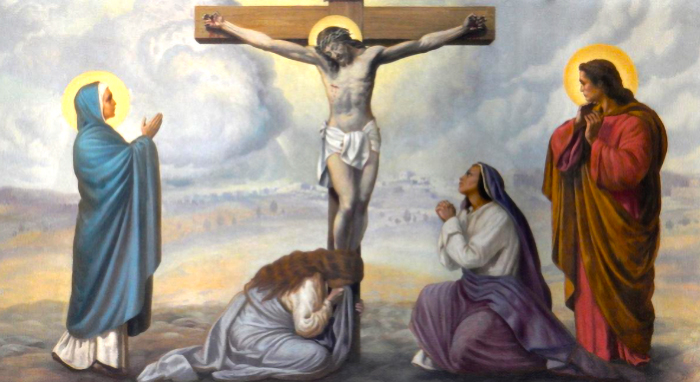
One of the most popular images in all of scripture (an icon that’s been endlessly painted, sung, put into litanies, written up into poetry, and used to triggered every kind of pious feeling) is the image of Mary, the mother of Jesus, standing silently under the cross as her son dies.

As Jesus was dying, the Gospels tell us that Mary, his mother, stood under the cross. What’s in that image? What’s in this picture that invites us to more than simple admiration, piety, or sympathy?

This is a mystical image and it is anything but pious. In the Gospels, after Jesus, Mary is the most important person to watch. She’s the model of discipleship, the only one who gets it right. And she gets it very right under the cross. What’s she doing while standing there?

In essence, what Mary was doing under the cross was this: She couldn’t stop the crucifixion (there are times when darkness has its hour) but she could stop some of the hatred, bitterness, jealousy, heartlessness, and anger that caused it and surrounded it. And she helped stop bitterness by refusing to give it back in kind, by transforming rather than transmitting it, by swallowing hard and (literally) eating bitterness rather than giving it back, as everyone else was doing.

And that’s not easy to do. Everything inside us demands justice, screams for it, and refuses to remain silent in the presence of injustice. That’s a healthy instinct and sometimes acting on it is good. We need, at times, to protest, to shout, to literally throw ourselves into the face of injustice and do everything in our power to stop the crucifixion.

Like Mary, we have to say: “I can’t stop this crucifixion, but I can stop some of the hatred, bitterness, jealousy, brute-heartlessness, and darkness that surround it. I can’t stop this, but I will not conduct its hatred.” And that’s not the same thing as despair. Our muted helplessness is not a passive resignation but the opposite. It’s a movement towards the only rays of light, love, and faith that still exist in that darkness and hatred. And, at that moment, it’s the only thing that faith and love can do.

So this is the image: Sometimes darkness has its hour and there is nothing we can do to stop it. Sometimes the blind, wounded forces of jealousy, bitterness, violence, and sin cannot, for that moment, be stopped. But, like Mary under the cross, we are asked to “stand” under them, not in passivity and weakness, but in strength, knowing that we can’t stop the crucifixion but we can help stop some of the hatred, anger, and bitterness that surrounds it. [Excerpt from Ron Rolheiser’s “Mary Under the Cross” April 2006]

HTML Snippets Powered By : XYZScripts.com
string(0) ""