There is a popular myth that warms the heart. It speaks of justice and vindication and is the stuff of great legends. In it, we separate the great heroes and heroines from lesser mortals.
It runs something like this: Evil stalks the earth, intimidating the good. There is invariably a bad man, a bully, who remains unchallenged because it seems nobody is strong enough to stand up to him. He has his way for a long time. Who can oppose him? But there lives someone, the true hero (a male in the classical legend), who, while actually being stronger than the bad man, for reasons that are not yet clear, puts up with the bully and accepts from him every kind of insult and humiliation. Nobody understands why and the hero’s reticence to act is seen as a sign of weakness. The bully is strong and the hero is weak. But, at the end of the day, the hero has his vindication. The time comes when the evil man pushes him too far and then, long after lesser mortals would have acted, he stands up, assumes his full strength, and completely humiliates and annihilates the evil man. Moreover his final vindication is not just the humiliation of his enemy but the recognition by the people that he, the seemingly weak one, was the strong one all along.
There is something inside us that would like to see Christ in this sentimental way: the reluctant hero, The Coward of the County, the strongest man of all who is reticent about using his muscle … until he is pushed too far!
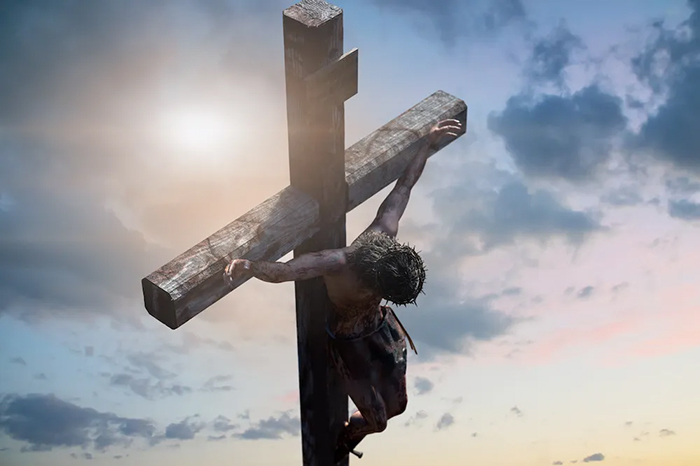
What is interesting however is that Christ never used his muscle in this way, even when he was pushed too far! No amount of goading, humiliation, accusations of cowardice and weakness (“If you are the Son of God, come off of that cross!”) turned him into that hero of myth who warms our hearts with a last minute vindication, proving that he was all the while superior.
His death didn’t warm any hearts and his vindication, the resurrection, initially didn’t either. Even his closest apostles didn’t understand. Even after the resurrection, when his disciples met him on the road to Emmaus, they were still lamenting that their hero had died without flexing his muscles, without showing at the end that he was the stronger. Now he was trying to explain it to them: “Wasn’t it necessary to suffer like that, to not use the world’s muscle power, to not confuse the ways of God with the ways of humanity?”
Yes, isn’t it necessary that God should love so lavishly? Isn’t it necessary that a God who is love beyond all measure and understanding should give himself over that freely? Isn’t it necessary that if you give yourself over freely, and mean it, you will sweat blood in a garden? Isn’t it necessary that fathers and mothers who truly love their children should have to put up with so much? Isn’t it necessary that God should not be as defensive as human beings, even when pushed by evil? Isn’t it necessary that God should approach us in vulnerability rather than muscle us into submission? And yes, isn’t it necessary that the power of God be tied to a wisdom, a love, and a patience that runs considerably deeper than our adolescent and sentimental understanding of it? [Excerpt from Ron Rolheiser’s “Wasn’t Necessary” April 1996]
