For most of us, I suspect, the word ego has a negative connotation. To accuse someone of having a big ego is to accuse him of being overfull of himself, inflated, grandiose, and lacking in humility. We almost always oppose the words ego and humility. To have a big ego is to not be humble.
But that can be simplistic and untrue. To have a strong, large ego isn’t necessarily a bad thing. In fact, it is a needed thing, especially if we are ever to achieve anything of worth. Nobody does anything great without a strong ego, and that doesn’t mean that he or she isn’t humble.
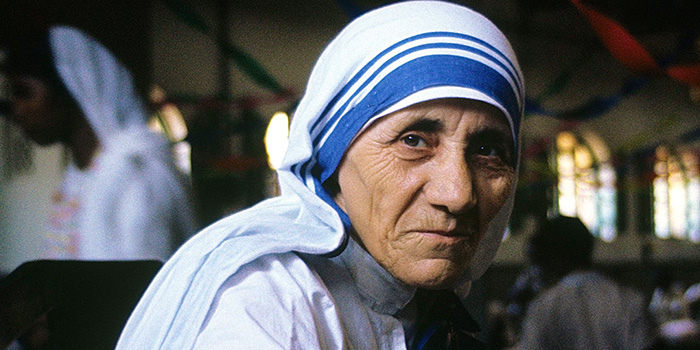
Few people would ever think of Mother Theresa as having had a big ego. We think of her as humility incarnate. Yet, clearly, she had a huge ego – a powerful self-image that allowed her to stand before the whole world convinced of her truth, convinced of her worth, and convinced of her importance. She could stand before anyone in the world secure in the knowledge that her person and her word were important. It takes a powerful ego to do that, one more powerful than most of us possess. Indeed that was one of the keys to her greatness. She was aware that she was a unique and blessed instrument of God in this world and she was secure enough to act on that.
And yet she was humble. She was aware as well, always, that everything that made her unique and special and powerful did not come from her, but from God. She was simply a channel of somebody else’s power and grace. She had a huge ego, but she wasn’t an egoist. She was never full of herself, only full of God.
Spirituality, in general, has been slow to admit the importance of ego and has often been in outright denial of the role it plays in greatness, especially spiritual greatness. Somehow we cannot admit that saints like Francis of Assisi, Theresa of Avila, John of the Cross, or Therese of Lisieux had huge egos – powerful self-images that made them secure in the sense of their unique importance. Instead we project on to them a false idea of humility which isn’t true to them and which hurts us.
It hurts us because, for so many of us, the bigger problem in our lives, including our spiritual lives, is precisely that our egos are too weak. Because our self-image is weak, unlike Mother Theresa, we are too inhibited to reach out, to speak our truth and to express our love. We have too many internal voices (no doubt, originally external voices) that habitually paralyze us with the words: “Who do you think you are!
We struggle to be vulnerable, to not be paranoid and protect ourselves. Why? Precisely because we aren’t secure enough inside, because our egos and our sense of self-worth are shaky. Francis of Assisi, Theresa of Avila, Therese of Lisieux, and John of the Cross never needed to protect themselves. They were secure enough to be vulnerable. They had strong egos. [Excerpt from Ron Rolheiser’s “Humility, Ego, and Greatness.”]
