
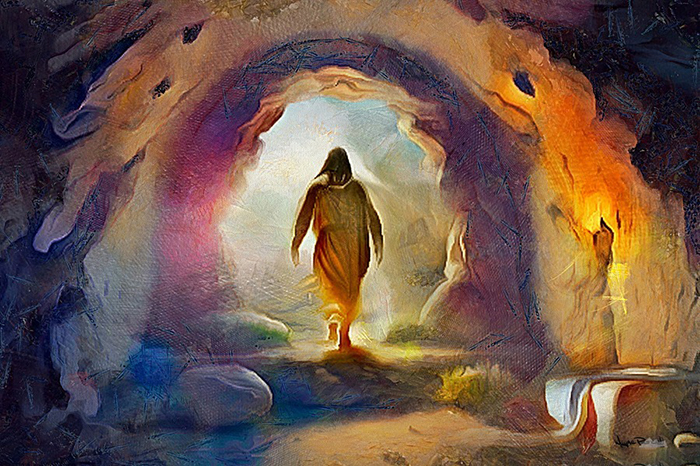
What is a meta-narrative, a bigger story, within which we need to understand our own story? And how is that the basis for hope in this earthly life?
Pierre Teilhard de Chardin was both a world-class scientist and a Christian mystic. He articulated a vision in which a Christian could bring together in one harmonious vision, the scientific theories regarding the origins of the universe, the unfolding of evolution through 15 million years, the purpose and role of Christ in history, and how cosmic and faith history will eventually culminate in the fullness of time, where, through Christ, God will bring all things into one in him. And on that day, goodness will forever triumph over evil, love will triumph over division, peace over chaos, empathy over selfishness, gentleness over cruelty, and forgiveness over vengeance.
Except for the resurrection, we have no guarantees about anything. Lies, injustice, and violence may triumph in the end. Chaos, cruelty, and death may well be the last word. That’s certainly how it looked the day Jesus died.
However, the resurrection of Jesus is God’s last word on this. In the resurrection, God assures us that no matter how things look, no matter how much evil seems to have the upper hand, no matter how powerless innocence, goodness, and gentleness may look sometimes, no matter how many times our world crucifies Christ, no matter how many times we might blow up the world with an atomic bomb, no matter hopeless it all looks, the ending of our story has been written, and it is a happy ending, an ecstatic one. [Excerpt from Ron Rolheiser’s “The Resurrection: The Ultimate Meta-Narrative,” April 2025]
