
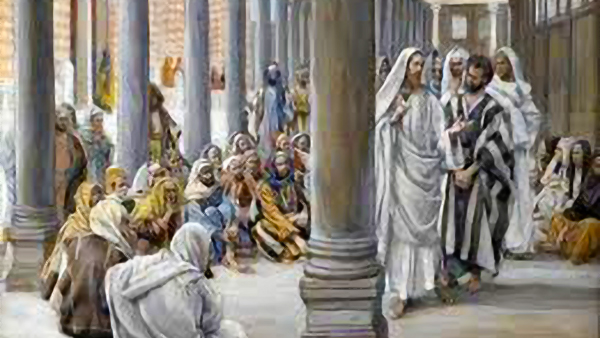
Jesus says, “Do not think that I have come to abolish the Law and the prophets; I have come to fulfill them.” What he is saying here is basically this: I have not come to do away with the Ten Commandments; I have come to invite you to something higher.
Unfortunately, we tend to think of living a moral life mostly in terms of keeping the Commandments and avoiding sin. What we call “moral theology” has classically been focused on ethical issues, what’s right and what’s wrong? But that’s not what we hear from Jesus as a moral teacher. His Sermon on the Mount (perhaps the greatest moral code ever written) focuses instead on an invitation to do what’s higher. It assumes we are already living the elementary essentials of morality, the Ten Commandments, and instead invites us to something beyond those essentials, namely, to be the adult in the room who helps the world carry its tension.
Jesus invites us to a “virtue that goes deeper than that of the scribes and the Pharisees.” It’s easy to miss the point here because, almost without exception, we tend to think that Jesus is referring to the hypocrisy of some of the scribes and Pharisees. He isn’t. Most of the scribes and Pharisees were good, honest, sincere people who practiced a high virtue. For them, living a good moral and religious life meant keeping the Ten Commandments (all of them!) and being a man or woman who was scrupulously fair to everyone. It meant being a just person.
So, what’s lacking here? If I am a person who keeps all the Commandments and am fair and just in all my dealings with others, what is lacking in me morally? Why isn’t that enough?
He points out that the demands of justice still permit us to hate our enemies, to curse those who curse us, and to execute murderers (an eye for an eye). He invites us to something beyond that, namely, to love those who hate us, to bless those who curse us, and to forgive those who kill us. That is the essence of moral theology. And note that it comes to us as an invitation, inviting us always to something higher. It’s not concerned about what’s a sin and what isn’t (thou shalt not). Rather, it’s a positive invitation beckoning us to reach higher, to transcend our natural impulses, to be more than someone who just keeps the commandments and avoids sin. [Excerpt from Ron Rolheiser’s “An Invitation to Something Higher” January 2025]
