
One of the marks of a Christian heart is the desire for inclusivity, the desire to ultimately be in communion with as many people as possible, to have everyone in heaven with you without demanding that they become just like you to get there. Sadly, we tend to harbor the opposite attitude, though we are slow to admit this.
Too often we have an unconscious mantra which says: I can only be good, if someone else is bad. I can only be right, if someone else is wrong. My dogma can only be true, if someone else’s is false. My religion can only be right, if someone else’s is wrong. My Eucharist can only be valid, if someone else’s is invalid. And I can only be in heaven, if someone else is in hell.
However, scriptures make it clear that God’s salvific will is universal and that God’s deep, constant, passionate longing is that everyone, absolutely everyone, regardless of their attitude and actions, be somehow brought into the house. God, it seems, does not want to rest until everyone is home, eating at the same table.
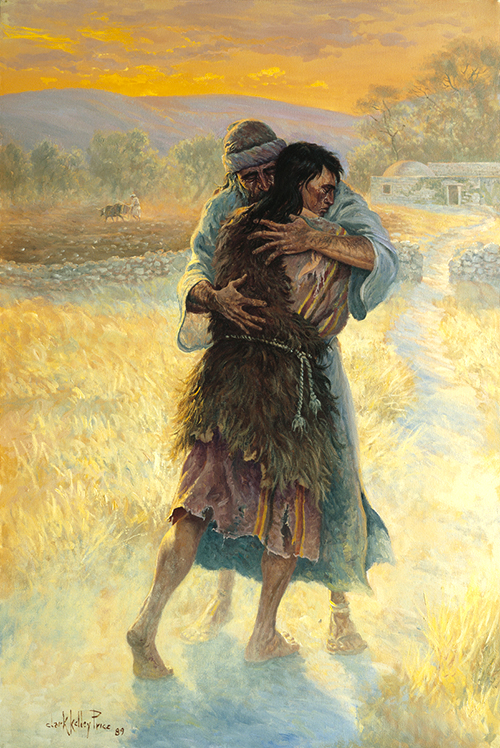
This same dynamic holds true for the shepherd who leaves the 99 sheep to search for the lost sheep. For a Hebrew at that time, the number 99 did not designate wholeness, but the number 100 did. The shepherd is like the mother with the alienated daughter, he cannot rest until his family is once again made whole. We see the same longing, passion, and sadness in the Father of the prodigal son and older brother. He cannot rest, nor be at peace, until both his sons are back in the house. He is overjoyed when his wayward son returns but the story ends with him still outside the house, trying to coax his other son, outside because of anger, to also come inside. His heaven includes both his sons.
Our heaven too must be a wide one. Like the the shepherd who has lost a sheep, and like the father of the prodigal son and older brother, we too shouldn’t rest easy when others are separated from us. The family is only happy when everyone is home.
What ultimately characterizes a genuine faith and a big heart is not how pure our churches, doctrines, and morals might be, but how wide is the embrace of our hearts. [Excerpt from Ron Rolheiser’s “How Large is your Heaven?” December 2010]
