
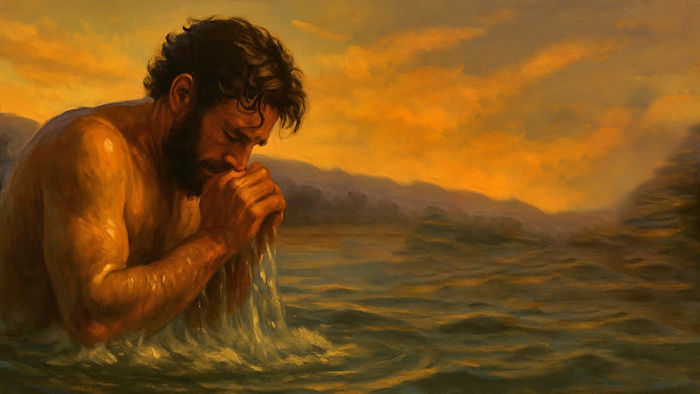
Naaman was a Syrian (an enemy of Israel) and a Gentile who suffered from leprosy. He was the army commander of the Arameans who had captured a little girl in their raid of Israel who became Naaman’s wife servant. This girl tells her mistress that her husband could be healed by the prophet Elisha.
Naaman asks his king and gets his approval to go and meet Elisha. Upon his arrival, after presenting a letter from his king to the king of Israel, Naaman expects a grand gesture from Elisa to cure his leprosy. But he is told to simply wash himself in the dirty Jordan River. But Naaman is angered by this and plans to leave when his servant’s reason with him and help change his mind.
Once Naaman realizes the direction from the prophet Elisha is his opportunity to be cured, he does as Elisha commanded and plunges seven times into the Jordan as sees his leprosy washed away. Fr. Ron Rolheiser highlights this as a lesson in stripping away pride. True healing often requires us to abandon our intellectual, spiritual, or personal pride and accept God’s grace in simple, unglamorous ways.
When Naaman witnesses the healing, he exclaims, “Now I know that there is no God in all the earth, except in Israel.” This statement marks a radical shift from believing in territorial, limited gods to recognizing the one, universal God. His “healing” is as much about spiritual insight as it is about physical health.
Rolheiser notes that Naaman’s declaration is a testament to the universality of God’s grace, which breaks through national, religious, and personal barriers when met with a humble heart. It also emphasizes that God’s power and love are not restricted to the “insiders” or the righteous, but are available to anyone, even those outside the formal faith community.
