
“Therefore, stay awake, for you know neither the day nor the hour” Matthew 25:13

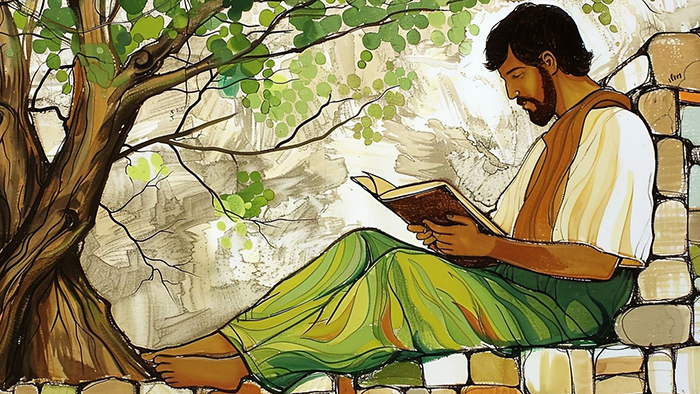
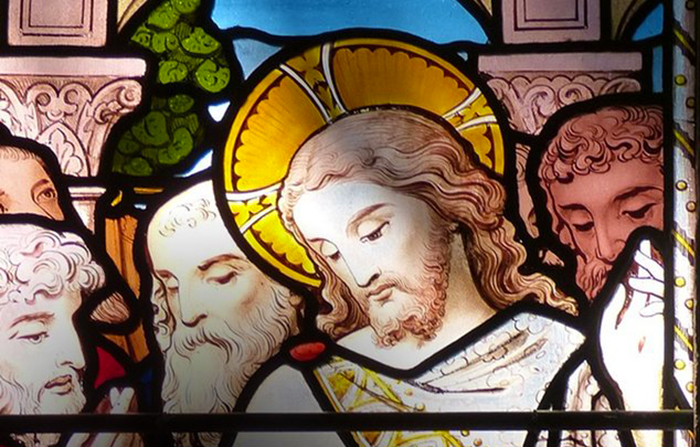
Wake up! Wake up before death wakes you up. In a less dramatic expression, that’s a virtual leitmotif in the Gospels. Jesus always tells us to wake up, stay awake, be vigilant, and be more alert to a deeper reality. What is meant by that? How are we asleep to depth? How are we to wake up and stay awake? How are we asleep? Fr. Rolheiser writes that we all know how difficult it is for us to be inside the present moment, to not be asleep to the real riches inside our own lives. The distractions and worries of daily life tend to so consume us that we habitually take for granted what’s most precious to us, our health, the miracle of our senses, the love and friendships that surround us, and the gift of life itself. We go through our daily lives not only with a lack of reflectiveness and lack of gratitude but with a habitual touch of resentment as well, a chronic, grey depression, Robert Moore calls it. We are very much asleep, both to God and to our own lives. How do we wake up? Having an awareness of our mortality does wake us up, as does a stroke, a heart attack, or cancer, but that heightened awareness is easier to sustain for a short season of our lives than it is for twenty, thirty, forty, or fifty years. Nobody can sustain that kind of awareness all the time. None of us can live seventy or eighty years as if each day was their last day. Or can we? Spiritual wisdom offers a nuanced answer: We can and can’t! On the one hand, the distractions, cares, and pressures of everyday life will invariably have their way with us, and we will, in effect, fall asleep to what’s deeper and more important inside of life. But it’s for this reason that every major spiritual tradition has daily rituals designed precisely to wake us from spiritual sleep, akin an alarm clock waking us from physical sleep. It’s for this reason we need to begin each day with prayer. What happens if we don’t pray on a given morning is not that we incur God’s wrath, but rather that we tend to miss the morning, spending the hours until noon trapped inside a certain dullness of heart. The same can be said about praying before meals. We don’t displease God by not centering ourselves in gratitude before eating, but we miss out on the richness of our actions. Liturgical prayer and the Eucharist have the same intent among their other intentions. They’re meant to regularly call us out of a certain sleep. None of us live each day of our lives as if it were their last day. So we should ensure that we have regular spiritual rituals and spiritual alarm clocks to jolt us back awake—so that it doesn’t take a heart attack, a stroke, cancer, or death to wake us up.

“It is not lawful for you to have your brother’s wife” Mark 6:18

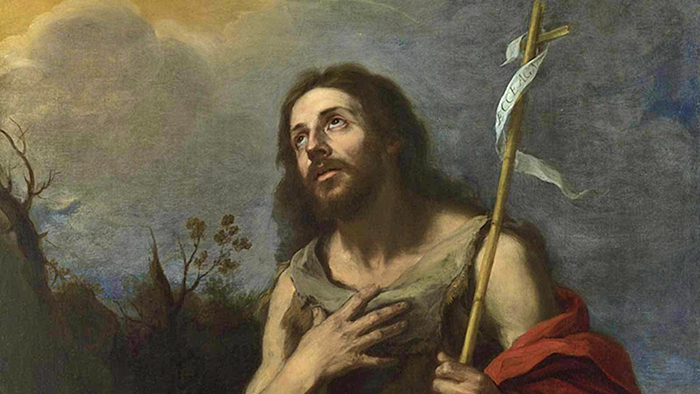
Scripture tells us that as John the Baptist grew up he became strong in spirit. My growing up was somewhat different. The virtue of courage is not contingent upon birth, temperament, or mental toughness, though these can be helpful. Courage is a gift from the Holy Spirit and that’s why one’s temperament and background may only serve as an explanation and not as an excuse for a lack of courage. Fr. Rolheiser writes that he highlights the above because our situation today demands courage from us, the courage for prophecy. We desperately need prophets today, but they are in short supply and too many of us are not particularly eager to volunteer for the task. Bryan Massingale, a strong prophetic voice on the issue of racism, submits that the reason we see so little real progress in dealing with racial injustice is the absence of prophetic voices where they are most needed, in this case, among the many good white people who see racial injustice, sympathize with those suffering from it, but don’t do anything about it. Several years ago, a visiting professor at our school, an Afro-American man, was sharing with our faculty some of the near daily injustices he experiences simply because of the color of his skin. At one point I asked him: “If I, as a white man, came to you like Nicodemus came to Jesus at night and asked you what I should do, what would you tell me?” His answer: Jesus didn’t let Nicodemus off easily just because he confessed his fears. Nicodemus had to do a public act to bring his faith into the light, he had to claim Jesus’ dead body. Hence, his challenge to me: you need to do a public act. He’s right; but I’m still praying for the prophetic courage to do that. And aren’t we all?

“May the Lord of peace himself give you peace at all times and in every way” 2 Thessalonians 3:16

We long for peace but fail to understand why we cannot find it. When watching the news at night, most of what we see reflects what is inside of us. There is an intrinsic, never-to-be-neglected connection between what seems radically private and what’s political and social. Thus, there can be no peace on the big stage when there is greed, jealousy, unwillingness to forgive, and unwillingness to compromise within our private hearts. Fr. Ron Rolheiser writes that when the outer body gets sick, it nearly always signals a breakdown in the internal immune system. Hence, given the state of our world today, one can be pretty sure that there is not much in the way of antibodies (charity, joy, peace, patience, goodness, long-suffering, faith, mildness, gentleness, and chastity) within the body of humanity, namely, within our private lives. When we cannot get along with each other within our own marriages and families, we should not be surprised that countries do not get along with each other. When we cannot move beyond past hurts in our own lives, we should not expect the issues causing violence in Northern Ireland, Israel, Bosnia, Iran, and Africa to be resolved simply by better politics. When we spend billions of dollars a year on cosmetics and clothing that serve to build up our appearance and make us less vulnerable, we have no right to self-righteously demand that governments cut their budgets for defense. When nearly all of us have borrowed money to have, right now, the things we cannot yet afford but want, then we should have some understanding of why our countries have all overspent and are hopelessly in debt. Waging peace requires more than simply confronting the powers that be. What must be confronted is our own greed, hurt, jealousy, inability to forgive, compromise, and respect. Peace is the opposite of internal discord or longing for something we lack. When we are not at peace, it is because we are experiencing chaos or sensing some unfinished business inside us. To be at peace, something has to have an inner consistency so that all of its movements are in harmony with each other, and it must also have a completeness so that it is not still aching for something it is missing.

“Therefore, brothers, stand firm and hold fast to the traditions that you were taught, either by an oral statement or by a letter of ours” 2 Thessalonians 15

The heart has its reasons, says Pascal, and sometimes those reasons have a long history. Personal contact, friendship, and theological dialogue with other denominations and faiths help open our minds and hearts. Fr. Ron Rolheiser writes that we are still dealing with the fruit of centuries of bitter misunderstanding, which doesn’t disappear so easily, especially when it’s institutionally entrenched and nurtured as a prophetic protection of God and truth. We have suffered through five hundred years of misunderstanding. The effects of the historical break within Christianity and its reaction are present today. They are still seen everywhere, from high church offices to debates within the academy of theology to suspicions inside the popular mind. It is sad how we’ve focused so much on our differences when at the center, at the heart, we share the same essential faith, the same essential beliefs, the same basic moral codes, the same Scriptures, the same belief in an afterlife and the same fundamental tenet that intimacy with Jesus Christ is the aim of our faith. Granted, there are some real differences among us, mainly in terms of how we understand certain aspects of the church and certain issues within morality rather than how we understand the deeper truths about the nature of God, the divinity of Christ, the gift of God’s Word, the gift of the Eucharist, and the inalienable dignity and destiny of all human beings. Within the hierarchy of truth, this essential core is what’s most important, and on this essential core, we agree. That’s the real basis of our common discipleship. The issues that divide us focus primarily on church authority, ordination to ministry, whether to emphasize word or sacrament, how to understand the presence of Christ in the Eucharist, the number of sacraments, the place of sacramentals and devotions within discipleship, and how scripture and tradition interplay with each other. The earliest Christian Creed had but a single line: Jesus is Lord! All Christians still agree on that, and so we remain brothers and sisters, separated only by five hundred years of misunderstanding.

“Woe to you, scribes and Pharisees, you hypocrites. You lock the Kingdom of heaven before men” Matthew 23:13

I came across this post from a doctoral student in systematic theology at the University of Notre Dame, Justin Bartkus. I am sharing today a critical thing to remember of challenges we can face in passing on the faith. “Several years ago, I found myself at a coffee shop, seated across from a proud and energetic father of three young kids. I was interviewing him as part of a research study on how parents view the importance of religion in raising their children. I asked him, one of the stauncher Catholics we interviewed, whether it would bother him if his children eventually did not remain Catholic. His response was firm and passionate: ‘I would hope they do, yes, but my children are not outcomes.’ In their zeal to assert their correctness in the ‘whats’ of religion, namely the ritual observances and adherence to formulae, the Pharisees are forgetful of the how required of them by God’s grace: to act always in tenderness, vulnerability, and gentleness. And so it is for us. Absent these virtues of grace, we will inevitably immolate people into an ash heap of outcomes, locking doors before them and making them subservient to our expectations rather than to God’s wise and timely providence. It is much more challenging to be humble than correct, infinitely more sanctifying to preach the truth in patience than condemn in wrath. Even if the ‘whats’ of religion is necessary for holiness, its entire work lies in the “how” of the catechetical method.

“Jesus then said to the Twelve, ‘Do you also want to leave?'”

Today we continue to follow Jesus’ teaching on what we celebrate today as the Eucharist. Jesus previously said in chapter 6 of John’s Gospel to his followers, “Unless you eat the flesh of the Son of Man and drink his blood, you do not have life within you.” Bishop Robert Barron writes that today, we have the final outcome of the story. We hear that “many of Jesus’ disciples who were listening said, ‘This saying is hard; who can accept it?’” Notice that we are talking about Jesus’ followers. And yet they find this teaching impossible to take. If Jesus’ words were meant in a symbolic sense, they wouldn’t have had this shocking effect. If what he meant was simply, This bread is a symbol of my body, why would there be such a strong reaction? The Jewish Scriptures deal in poetic metaphor all the time. The point is that they had understood him in this context only too well. Given every opportunity to explain himself better, Jesus does nothing of the kind. Instead, he upbraids them for their lack of faith. This is why the Catholic tradition has insisted, against all attempts to soften these words of Jesus, that he should be taken straightforwardly. Jesus then asks his disciples a troubling question: “Do you also want to leave?” Father Patrick van der Vorst writes that this question comes after many of his followers had abandoned him. Today’s reading serves as a reminder that we all have a choice to make every day. Jesus doesn’t want us to stay with him against our will. However, if we do decide to stay, like the Twelve, he has plenty of work for us to do. Jesus didn’t force them into doing anything; he simply asked, and they responded. Christ will indeed take us to incredible places if we remain with him. He doesn’t force us to lead catechism classes, become eucharistic ministers, arrange flowers for the church, attend a seminary, or pray with our families. It is all our free choice. As summer slowly draws to a close, maybe today is a good day to think of what we want to say “yes” to when work and schools start again in September. If we continue to say yes to what he proposes to us, we embark on an exciting and adventurous path towards the greatness he has in store for each of us. Our faith is indeed a rich, wonderful adventure, one to which we are asked to say yes to every day, and not walk away.

“How do you know me?” John 1:48

Today, we celebrate the Apostle Saint Bartholomew. He is mentioned only in the lists of the apostles. Some scholars identify him with Nathanael, a man of Cana in Galilee who was summoned to Jesus by Philip. So, is it Bartholomew or Nathanael? We are confronted again with the fact that we know almost nothing about most of the apostles. John writes that when Nathanael asked how Jesus knew him, Jesus said, “I saw you under the fig tree.” Whatever amazing revelation this involved, it brought Nathanael to exclaim, “Rabbi, you are the Son of God; you are the King of Israel.” Jesus countered, “Do you believe because I told you that I saw you under the fig tree? You will see greater things than this.” Nathanael did see greater things. He was one of those to whom Jesus appeared on the shore of the Sea of Tiberias after his resurrection. Little is known about the life stories of most of the apostles. However, the unknown ones were also foundation stones, the 12 pillars of the new Israel, whose 12 tribes now encompass the whole earth. Their personalities were secondary to their great office of bearing tradition from their firsthand experience, speaking in the name of Jesus, and putting the Word Made Flesh into human words for the enlightenment of the world. Their holiness was not an introverted contemplation of their status before God. It was a gift that they had to share with others. The Good News was that all are called to the holiness of being Christ’s members by the gracious gift of God. The simple fact is that humanity is meaningless unless God is its total concern. Then humanity, made holy with God’s holiness, becomes the most precious creation of God.

“The whole law and the prophets depend on these two commandments” Matthew 22:40

In today’s gospel reading, the Pharisees ask Jesus, “Teacher, which commandment in the law is the greatest?” Many people struggling to understand God and the commandments might say, Why be good and try to keep the commandments if God loves us anyway? Simply put, we don’t try to be good so that God loves and rewards us. God loves us no matter what we do. Heaven is never a reward for a good life. Fr. Ron Rolheiser asks if these are these glib statements. He says the answer is “no” because God’s love, as Jesus assures us, is always unmerited and unconditional; nothing we do can ever make God love us, just as nothing can stop God from loving us. God loves just as God does everything else perfectly. God loves everything and everybody perfectly. Part of Christian belief is that God’s love is what keeps everything in existence. If God stopped loving anything, it would cease to be. That raises an interesting question: If God loves everything and everyone perfectly, does God then also love Satan? Indeed, does God love Satan as much as he loves Jesus’ mother, Mary? The answer can only be “yes.” God loves Satan as much as God loves Mary. The difference is not in how God loves them but in how they, each in turn, love God. God loves each of them in the same way, namely, perfectly. But obviously, Mary’s response is very different from Satan’s. In that difference, we see what creates hell: a certain attitude in the face of love. However, notice that in neither case is the love either merited or deflected. God loves us, pure and simple. God cannot be offended. God’s love cannot be driven away. God does not reward or punish us on the basis of whether we have been good or bad. God simply loves us. Then why be good? Why keep the commandments? What difference does our response make? It’s our response that makes a difference, but not in terms of giving God offense, driving God away, or making God punish or reward us. It makes a difference in how we stand and feel in the face of love.

“Many are invited, but few are chosen” Matthew 22:14

Jesus preached the Kingdom of God, the New Age, the Final Age, the reign of justice on this earth, new life, the resurrection, and eternal life; heaven is already here, except that it’s also still coming. Fr. Ron Rolheiser writes the problem was not that his hearers didn’t understand him. They understood, but almost universally, they resisted that message. Much as they yearned for God’s Kingdom to be already here, like my friend who keeps asking for another ten years to get his life in order, they preferred to push things into the future. Having God become concrete in their lives was far too threatening. Gerhard Lohfink, the renowned Biblical scholar, aptly articulates both the resistance that Jesus’ hearers had to this part of his message and the reason for that resistance: “Jesus’ hearers prefer to push everything off into the future, and the story comes to no good end. The reign of God announced by Jesus is not accepted. The ‘today’ offered by God is denied. And that, that alone, is why ‘already’ becomes ‘not yet’. It is not only in Nazareth that the ‘today’ of the Gospel was not accepted. Later also, in the course of the church’s history, it has again and again been denied or rendered toothless. The reason was the same as in Nazareth: apparently, it goes against the human grain for God to become concrete in our lives. Then, people’s desires and favorite notions are in danger, as are their ideas about time. It can’t be today because that would mean that our lives have to change today already. Therefore, it can lie, hygienically and snugly packed, at rest, inconsequential.” It’s very threatening to have God become “concrete” in our lives, as opposed to God simply being a reality that will one day become very real. Because if God is “concrete” already now that means that our worlds have to change now and we have to stop pushing things into the indefinite future. This isn’t so much a fault in faith as it is a procrastination, a stalling, wanting a little more time before we get serious. We’re like the guests in the Gospel parable today invited to the wedding banquet. We, too, want to go to the feast and intend to go to the feast, but first, we need to attend to our marriages, our businesses, and our ambitions. We can get serious later. There’s time. We fully intend to take Jesus seriously; all we want is a little more time before doing that. What’s wrong with that?

“Are you envious because I am generous?” Matthew 20:15

dawn in the vineyards

The Gospels tell us that God’s mercy is unlimited and unconditional, has no favorites, is equally concerned for everyone’s happiness and salvation, and does not ration his gift of the Spirit. How prone are we to think that for my religion to be true, it’s important to me that other religions are not true! For my Christian denomination to be faithful to Christ, it’s important that all the other denominations be considered less faithful. For the Eucharist in my denomination to be valid, it’s important that the Eucharist in other denominations be invalid or less valid. And, since I’m living a certain sustained fidelity in my faith and moral life, it’s important to me that everyone else who isn’t living as faithfully does not get to heaven or is assigned to a secondary place in heaven. Fr. Ron Rolheiser writes that we aren’t the first disciples of Jesus to think this way and to be challenged by him. That is, in fact, a large part of the lesson in Jesus’ parable regarding an over-generous landowner who paid everyone the same generous wage no matter how much or little each had worked. Jesus addresses the one making the complaint as a friend: “Why are you jealous because God is overly generous?” Why is it important to us that because we are doing things right, God should be demanding of those who aren’t? Generosity speaks of openness, hospitality, empathy, wide tolerance, and sacrificing some of ourselves for others. Orthodoxy speaks of certain non-negotiable truths, keeping proper boundaries, staying true to what you believe, and not compromising truth for the sake of being nice. These two are often pitted against each other as opposites, but they are meant to be together. Hence, you can be a Christian, convinced that Christianity is the most authentic expression of religion in the world, without judging that other religions are false. You can be a Roman Catholic, convinced that Roman Catholicism is the truest and fullest expression of Christianity, and your Eucharist is the real presence of Jesus, without making the judgment that other Christian denominations are not valid expressions of Christ and do not have a valid Eucharist. There’s no contradiction there. You can be right without that being contingent on everyone else being wrong!

HTML Snippets Powered By : XYZScripts.com