
“I came so that they might have life and have it more abundantly” John 10:10

A seminary professor shares this story. He’s been teaching seminarians for many years, and in recent years, when teaching about the sacrament of penance, he is frequently asked this question, often as the first question in the class: “When can I refuse absolution? When do I not grant forgiveness?” The anxiety expressed here is not, I believe, triggered by a need for power but by a very sincere fear that we have to be rather scrupulous in handing out God’s mercy and that we shouldn’t be handing out cheap grace. And, undergirding that fear, Fr. Rolheiser writes, is the unconscious notion that God, too, works out of a sense of scarcity rather than of abundance and that God’s mercies, like our own resources, are limited and need to be measured out very sparingly. But that’s not the God whom Jesus incarnated and revealed. The Gospels rather reveal a God who is prodigal beyond all our standards and beyond our imagination. The God of the Gospels is the Sower who, because he has unlimited seeds, scatters those seeds everywhere without discrimination: on the road, in the ditches, in the thorn bushes, in bad soil, and in good soil. Moreover, that prodigal Sower is also the God of creation, that is, the God who has created and continues to create hundreds of billions of galaxies and billions and billions of human beings. And this prodigal God gives us this perennial invitation: Come to the waters, come without money, come without merit because God’s gift is as plentiful, available, and as free as the air we breathe. The Gospel of Luke recounts an incident where Peter, just after he had spent an entire night fishing and had caught nothing, is told to cast out his net one more time and, this time, Peter’s net catches so many fish that the weight of the catch threatens to sink two boats. Peter reacts by falling on his knees and confessing his sinfulness. But, as the text makes clear, that’s not the proper reaction in the face of over-abundance. Peter is wrongly fearful, in effect, wanting that over-abundance to go away, when what Jesus wants from him in the face of that over-abundance is to go out to the world and share with others that unimaginable grace. What God’s over-abundance is meant to teach us is that, in the face of limitless grace, we may never refuse anyone absolution.

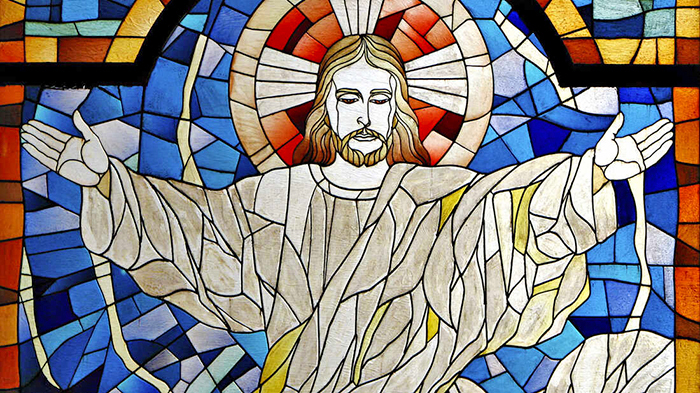
“I am the good shepherd” John 10:11

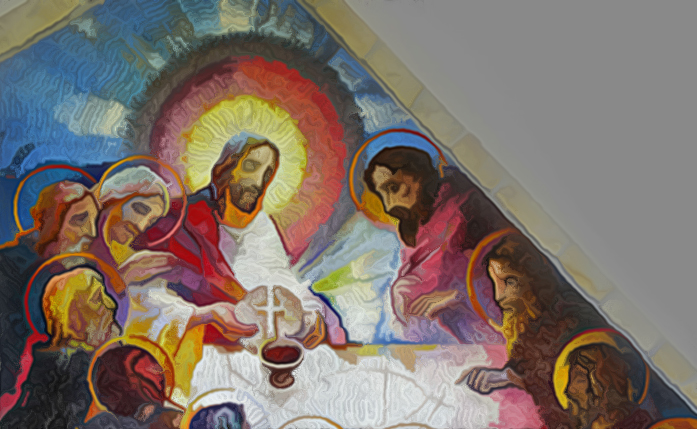
This is the fourth of seven “I am” declarations that Jesus makes about himself in the Gospel of John. In other ones, Jesus says that he is the bread of life, the light of the world, the resurrection and the life, the gate, the true vine, the way, and the door. These declarations tell us something unique about Jesus and who he is – the Son of God. Using the simple analogy of sheep and their shepherd, Jesus is telling us something central to our life of faith. Like a shepherd, he leads, feeds, protects, and saves us from death. But there’s one mystery that this statement—or any of the others—doesn’t answer: why does God have such unending and boundless love for us? The answer to this question is both simple and profound. God is love. It’s who he is, and he can’t stop loving us. We are his children, and he will always care for us. He loves us so much that he asked his Son to leave his heavenly home, take on a human body, and lay down his life for us. Now risen in glory and enthroned with his Father, Jesus still cares more about us than himself. Like a good shepherd, he guides us to safety, restores our strength, and anoints us with his grace. He is the “shepherd and guardian” of our souls. He is the “great shepherd” who gives his all to his sheep. Jesus knows that his sheep are defenseless against the temptations of Satan, the “thief” who wants to steal, kill, and destroy us. He also wants us to know it so that we will cling to him and follow him like faithful, innocent sheep. Today, in prayer, tell the Lord, “Jesus, you are my good shepherd. Come, Lord, and keep me safe.”

“We have come to believe and are convinced that you are the Holy One of God” John 6:69

To whom shall we go? Peter asks. In other words, “Who else will instruct us the way you do?” Or, “To whom shall we go to find anything better?” You have the words of eternal life, not hard words, as those other disciples say, but words that will bring us to the loftiest goal, unceasing, endless life removed from all corruption. The Church, down through the ages to the present day, has stood with Peter. Jesus is not one interesting teacher among many; he is the only one, the one with the words of eternal life, indeed, the Holy One of God. And he comes to us through the flesh and blood of the Eucharist. St. Cyril of Alexandria writes that these words surely make quite apparent to us the necessity of sitting at the feet of Christ, taking him as our one and only teacher, and giving him our constant and undivided attention. “He must be our guide who knows well how to lead us to everlasting life. Thus, shall we ascend to the divine court of heaven and, entering the church of the firstborn, delight in blessings passing all human understanding. But accompanying the Savior Christ and following him is by no means to be thought of as something done by the body. It is accomplished rather by deeds springing from virtue. Upon such virtue, the wisest disciples firmly fixed their minds and refused to depart with the unbelievers, which they saw would be fatal. With good reason, they cried out, ‘Where can we go?’ It was as though they said: ‘We will stay with you always and hold fast to your commandments. We will receive your words without finding fault or thinking you are teaching hard as the ignorant do, but thinking rather, how sweet are your words to my throat! Sweeter to my mouth are they than honey or the honeycomb.'” If we are aligned with Love, if the Bread is true, if the “flesh” and Blood are nourishment, then life flows in us. We have come not only to believe but to know, and we stay because eternal life is flowing.

“Whoever eats my Flesh and drinks my Blood has eternal life, and I will raise him on the last day” John 6:54

In the annual remembrance of the Passion of Christ, Jesus says to Pontius Pilate, “For this I was born, and for this I came into the world, to testify to the truth. Everyone who belongs to the truth listens to my voice.” Pilate responded by asking him, “What is truth?” Jesus is the truth. He can testify to the truth because he belongs to what is above and is the only one who has come down from heaven; thus, he has seen what the Father does and has heard what the Father has said. Indeed, he is the embodiment of truth, so the deeds and words of his ministry constitute testimony to the truth. I believe that Christ is truly present in the bread and the wine – referred to as the “real presence” of Christ.  The real presence of Jesus is true because he said so: “Amen, amen, I say to you, unless you eat the flesh of the Son of Man and drink his blood, you do not have life within you. Whoever eats my flesh and drinks my blood has eternal life, and I will raise him on the last day.” C.S. Lewis once wrote: “Christianity, if false, is of no importance, and if true, of infinite importance. The only thing it cannot be is moderately important.” Tweaking his statement, we could also say: “The real presence of Christ, if false, is of no importance, and if true, of infinite importance. The only thing it cannot be is moderately important.”

“the bread that I will give is my Flesh for the life of the world” John 6:51

Jesus, in defining his meaning and ministry, said: “My flesh is food for the life of the world.” Fr. Rolheiser writes that we can easily miss what’s really contained in that. Notice what he’s not saying: Jesus isn’t saying that his flesh is food for the life of the church or for the life of Christians; albeit we, believers, get fed too and, indeed, generally get fed first, but the ultimate reason why Jesus came was not simply to feed us. His body is food for the life of the world, and the world is larger than the church. Jesus came into the world to be eaten up by the world. For this reason, he was born in a manger, a feeding-trough, a place where animals come to eat, and it’s for this reason that he eventually ends up on a table, an altar, to be eaten by human beings (even when done without due reverence or attention). Jesus came not to defend himself, the church, or the faith but as nourishment for the planet. The church exists not as an end in itself (though, admittedly, partially, the church, as indeed all community, is an end in itself and needs no justification beyond itself since the community in general and ecclesial community, in particular, are already the new life that Jesus promised). But we exist as a church, too, to be food for the life of the world, to be eaten up as nourishment by everyone, including those outside our own circles. Ultimately the church is not about the church, it’s food for the world. Church life exists to build up a body, but that body exists not for itself but for the world. Our task as a church, especially today, is not to defend ourselves or even to carve out some peace for ourselves against a world that sometimes prefers not to have us around. No. Like Jesus, our real reason for being here is to try to help nourish and protect that very world that’s often hostile to us.

“But I told you that although you have seen me, you do not believe” John 6:36

At the heart of our faith lies the deep truth that we are unconditionally loved by God. We believe that God looks down on our lives and says, “You are my beloved child; in you, I take delight!” Fr. Rolheiser writes that we do not doubt the truth of that; we just find it impossible to believe. This is for many reasons, though mostly because we rarely, if ever, experience unconditional love. Mostly, we experience love with conditions, even from those closest to us: Our parents love us better when we do not mess up. Our teachers love us better when we behave and perform well. Our churches love us better when we do not sin. Friends love us better when are successful and not needy. The world loves us better when we are attractive. Our spouses love us better when we do not disappoint them. Mostly, in this world, we must measure up in some way to be loved. So, even when we know that God loves us, how can we make ourselves believe it? At one level, we do believe it. Deep down, below our wounded parts, the child of God that still inhabits the recesses of our soul knows that it is made in God’s image and likeness and is special, beautiful, and loveable. But how do we make ourselves believe that we are unconditionally loved in a way that would make us less insecure in our attitude and our actions? How do we live in surer confidence that we are unconditionally loved so as to let that radiate in the way we treat others and ourselves? There are no easy answers. For a wounded soul, like for a wounded body, there are no magic wands for quick, easy healing. In great mythical literature, we see that, usually, before the great wedding where the young prince and the young princess are to be married so as to live happily ever after, there first has to be an execution: the wicked older brothers and the wicked stepsisters have to be killed off. Why? Because they would eventually come and spoil the wedding. Who are those wicked older brothers and wicked stepsisters? They are not different from the young prince or princess who is getting married. They are their older incarnations. They are also inside of us. They are the inner voices from our past that can, at any given moment, ruin our wedding or our self-image by dragging in our past humiliations and saying: “Who do you think you are? Do you really think that you can marry a prince or princess? Do you really think that you’re loveable? We know you; we know your past, so don’t delude yourself!” To truly believe that we are unconditionally loved, we first must kill a few “wicked older brothers and wicked stepsisters” that remain inside of us.

“I am the bread of life; whoever comes to me will never hunger, and whoever believes in me will never thirst” John 6:35

There once lived a peasant in Crete who deeply loved his life. He enjoyed tilling the soil, feeling the warm sun on his naked back as he worked the fields, and feeling the soil under his feet.  He loved the planting, the harvesting, and the very smell of nature. He loved his wife, and his family and his friends, and he enjoyed being with them, eating together, drinking wine, talking, and making love. One day he sensed that death was near. What he feared was not what lay beyond, for he knew God’s goodness and had lived a good life. No, he feared leaving Crete, his wife, his children, his friends, his home, and his land. Thus, as he prepared to die, he grasped in his right hand a few grams soil from his beloved Crete and he told his loved ones to bury him with it. He died, awoke, and found himself at heaven’s gates, the soil still in his hand and heaven’s gate firmly barred against him. Eventually, St. Peter emerged through the gates and spoke to him: “You’ve lived a good life, and we have a place for you inside, but you cannot enter unless you drop that handful of soil. You cannot enter as you are now!” The man was reluctant to drop the soil and protested: “Why? Why must I let go of this soil? Indeed, I cannot! What’s inside of those gates, I have no knowledge of. But this soil, I know … it’s my life, my work, my wife and kids, it’s what I know and love, it’s Crete! Why should I let it go for something I know nothing about?” Peter left him, closing the large gates behind. Several minutes later, the gates opened a second time, and this time, from them. emerged a young child. She did not try to coax the man into letting go of the soil in his hand. She simply took his hand, and as she did, it opened, and the soil of Crete spilled to the ground. She then led him through the gates. A shock awaited him as he entered heaven … there, before him, lay all of Crete! Fr. Rolheiser writes that when Jesus links the idea of breaking to the Eucharist, the rending and breaking down that he is talking about has to do with narcissism, individualism, pride, self-serving ambition, and all the other things that prevent us from letting go of ourselves so as to truly be with others. Whenever anyone looks at a group photo, he or she always first looks how he or she turned out and, only afterwards, considers whether or not it is a good picture of the group. Breaking the eucharistic bread has a whole lot to do with looking first at how the group turned out.

“Do not work for food that perishes but for the food that endures for eternal life” John 6:27

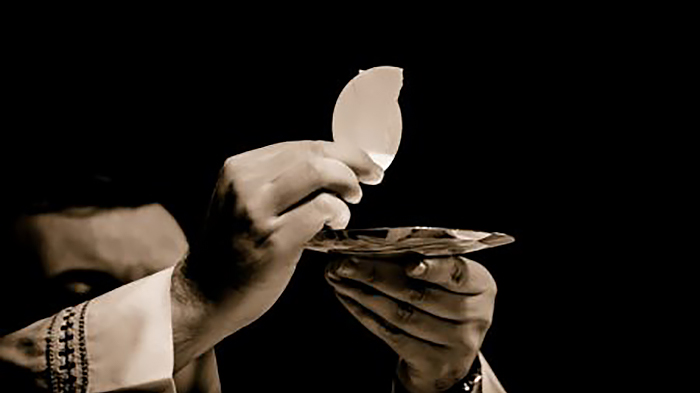
Without food, the body quickly collapses, without spiritual food, the soul atrophies. It really is as simple as that. Though materialists of all stripes want to deny it, there is a dimension of the human person that goes beyond the merely physical, a dynamism that connects him or her with God. Classically, this link to the eternal is called the soul. What the soul requires for nourishment is the divine life or what the spiritual masters call “grace.” Bishop Robert Barron writes that it is of this sustenance that Jesus speaks in John 6: “Do not work for food that perishes but for the food that endures for eternal life.” Most people are at least [a little bit] aware of the soul and its hunger, but they feed it with insufficient food: wealth, pleasure, power, and honor. All of these are good in themselves, but none of them is designed to satisfy the longing of the soul. And this is precisely why some of the wealthiest, most famous, and accomplished people in our society are dying of spiritual starvation. So, where and how do we find the divine life? First, I would suggest, through prayer. The soul wants to pray every day, to speak to God and to listen to him. So, we should spend time before the Blessed Sacrament, pray the rosary, do the Stations of the Cross, read the Bible in a meditative spirit, confess our sins, and above all, go to Mass. A second way in which we encounter grace is through serious spiritual reading. One of the principal marks of an engaged Catholic is the faithful reading of spiritual and theological books. Most of us fill our minds with junk; but the mind, the soul, wants to be filled with the lofty things of God. Why have so many Catholic bookstores faded away? Because Catholics have stopped taking spiritual reading seriously. A third way to feed the soul is to practice the corporal and spiritual works of mercy. If you are spiritually hungry, feed the physically hungry, give drink to the thirsty, counsel the doubtful, visit the sick and imprisoned, pray for the living and the dead. You’ll find that the more you empty yourself in love, the more satisfied your soul will feel. Finally, and most importantly, you can receive the Eucharist regularly. In his discourse on the Eucharist in John 6, Jesus says, “I am the bread of life; whoever comes to me will never hunger, and whoever believes in me will never thirst.” The divine life is found, par excellence, in the transfigured bread and wine of the Eucharist. What the soul is hungry for, finally, is the person of Jesus, the body and blood of Christ. Without feeding regularly on that food, the soul will atrophy. Why are so many Catholics feeling lost today? Well, 75% of them stay away from the Mass and the Eucharist on a regular basis. This is not rocket science: if you want to be healthy spiritually, you’ve got to eat!

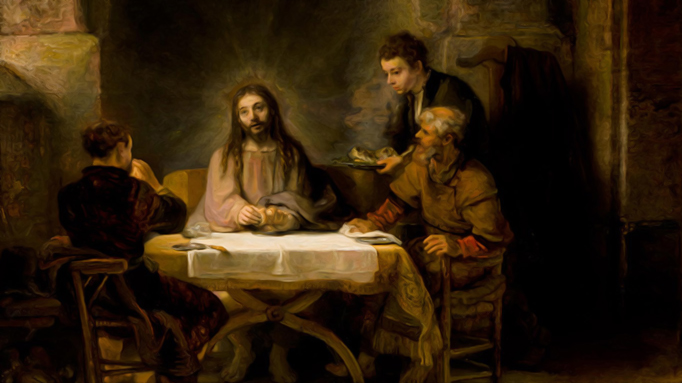
“The two disciples recounted what had taken place on the way, and how Jesus was made known to them in the breaking of bread” Luke 24:35

Rembrandt les pelerins d’Emmaüs

As we sit and read the scriptures 2,000 years after the events being described occurred, we can often find ourselves wondering how the disciples could have missed all of those clues Jesus provided them about who he was and what he came to do. In all fairness, they viewed Jesus through a different lens than we do today. Everything the Lord endured in his passion was numbing and fear inducing for the disciples. The readings assigned to the liturgies of the Easter season are intended to mediate the reality of the resurrection as an event accessible to us today, in the here and now. They seek to answer the question of how in our daily lives we encounter the risen Jesus and share in his victory over sin and death in the resurrection. Jesus rose for every human being, for the whole family of God, from the first Adam to the last Antichrist. He rose not simply for the good and the “nice.” He rose not only for the Virgin Mary who mothered him but for the Judas who betrayed him and for the Peter who denied him thrice. Importantly for our presence here today, Jesus rose to life for each of us and those yet to come. Easter in its essence is Jesus: Jesus risen, Jesus gloriously alive, Jesus risen and alive for us. What this “for us” means in the concrete is that we Christians are risen with Christ. In particular, the risen Christian should live the charge Jesus said would determine if we are to rise together with him for ever: “I was hungry and you gave me food, I was thirsty and you gave me drink, a stranger and you welcomed me, naked and you clothed me, ill and you cared for me, in prison and you visited me . . . Whatever you did for one of these least brothers [or sisters] of mine, you did for me.” Such fidelity to relationships is the new life of risen Christians which means this meant for your life and mine. A taxing task, for it touches our responsibilities to all that is: to God, to people, to earth. And still a thrilling task, for the Christ Jesus who rose from death to life on the first Easter, the same Christ Jesus who raised us to new life with him in our baptism, wants with all his heart to share that life and its responsibilities. In fact, unless he shares that life, our new life would not exist; we cannot live it alone.

“Lord, let your mercy be on us, as we place our trust in you” Psalm 33

“You lament the world’s hardness of heart, and you are correct there too. However, what I don’t hear in all this are many words about the Lordship of Jesus. We talk as if we need to save the world as if everything depends on us. Well, it doesn’t. In the resurrection of Jesus, the world is already saved; the powers of death and darkness have already been vanquished. We only need to live in such a way so as to show that world that we believe this” – William Stringfellow.
Fr. Rolheiser writes that Stringfellow was telling us what Jesus tried to teach, namely, that the opposite of faith is not so much unbelief and doubt in the existence of God as it is anxiety and fretless worry. The opposite of faith is what Jesus cautions Martha against: “Martha, Martha, you are anxious about many things!” We are not to be anxious about many things. Jesus keeps telling us not to worry and to trust that we are always in good hands. A gracious, all-powerful, loving God is solidly in charge, and nothing will happen in the world, and nothing will happen to us that this Lord is indifferent to. At its core, our faith invites trust, not just abstract trust, and the belief that good is stronger than evil. No. To say the creed, to say that I believe in God with a very particularized, concrete trust, a trust that God has not forgotten about me and my problems and that, despite whatever indications there are to the contrary, God is still in charge and is very concerned with my life and its concrete troubles. The trouble, though, is that this is hard to do, even when we do believe in a God who is Lord of the universe. Our problem is that we project our limited, selective care onto this God. We feel that God is inadequate because we often are, that God falls asleep at the switch because we occasionally do and that God forgets about us in our problems because we have a habit of letting certain persons and things slip off our radar screens. Things slip our minds. Our capacity to care is limited and selective. Were we Lord of the universe, many a sparrow would be forgotten, and many a hair would fall to the ground unnoticed. And so we fear that God sometimes forgets and does not notice us, that God, like us, is an inadequate Lord of the universe. That is why we get anxious and fret; like one without faith, we can feel that we are in an unfeeling universe. Help us, Lord, to trust in you in all things and all ways.

HTML Snippets Powered By : XYZScripts.com