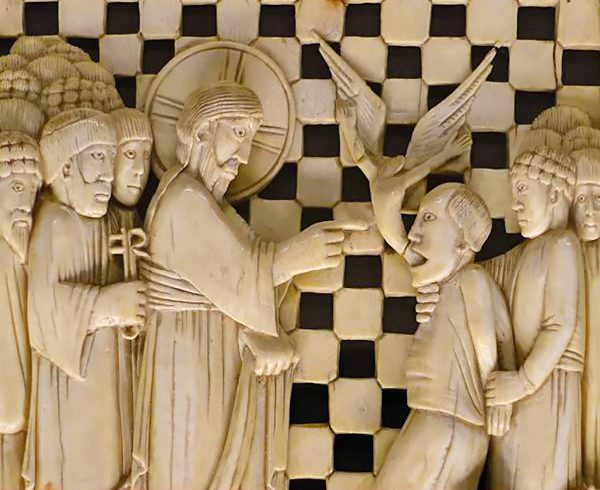
“Child, your sins are forgiven.” Mark 2:5

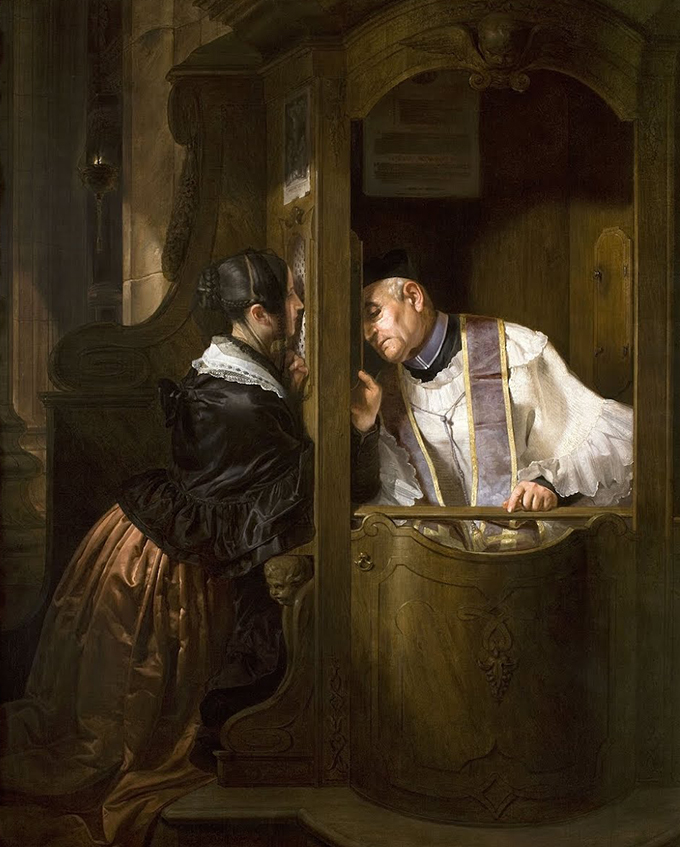
Known by many as an evocative late sixties song, “He Ain’t Heavy, He’s My Brother” was, in fact, a take on the motto for Boys Town, the community for troubled or homeless boys founded by Fr. Edward Flanagan in 1917. Fr. Flanagan had seen the phrase in a magazine, along with the drawing of a boy carrying a younger boy on his back. He sought permission to commission a statue of the drawing with the inscription, “He ain’t heavy, Father, he’s my brother.” It’s a powerful phrase that draws us in, knowing that we occasionally need to carry others amid their pain in our lives. There are also times when we need to be carried by others. Fr. Brendan McGuire writes that in today’s Gospel, Jesus commends the four men’s faith who carried the paralytic man and the man himself. Faith is an attitude of trust in the presence of God. Faith is openness to what God will reveal, do, and invite. It should be evident that in dealing with the infinite, all-powerful person who is God, we are never in control. Jesus healed the paralytic first of his sins and then of his physical ailment, giving us the clear message that our spiritual healing is of the highest importance. There are times in our lives when we are like the paralytic, crippled in our relationship with God. Sometimes, we know we have made mistakes, and there is distance in our relationship with God. And so, we ask for forgiveness. There are other times when we carry others to God for healing. They are unable to get there themselves because they are paralyzed in one way or another. Can we open our eyes and find the compassion within our hearts to carry them? They’re not heavy. In Christ, they’re our brothers and sisters. “Oh, what needless burdens we bear when we fail to take them to God in prayer.”
“A leper came to him and, kneeling down, begged him and said, ‘If you wish, you can make me clean.’” Mark 1:40

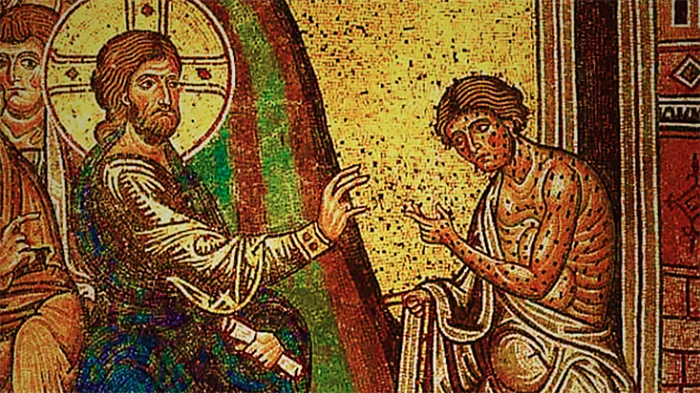
Our Gospel from Mark today concerns Jesus’ healing of a leper. The man who knelt before Jesus and begged for a cure was not simply concerned about his medical condition; he was an Israelite in exile from the temple, and hence, he was a very apt symbol of the general condition of scattered, exiled, wandering Israel. Living in the world without being exposed to its chaotic and unyielding nature is impossible. There are no desert places to spare us its contact. Having assumed human nature in its totality, Jesus experiences this from the outset of his ministry. Since the crowds come to him, he goes to them, endeavoring with patience and without discouragement to make them understand that he is not the earthly Messiah they are dreaming of. By inopportunely proclaiming his title of Son of God, demons are seeking to discredit him and pretend he is their leader. Whenever demons raise their voices, Jesus silences them. The authority manifested by his teaching and his power over disease and evil spirits unceasingly pose the question of Jesus’ identity. The Christians assembled today undoubtedly know that he is the Son of God, the Good News, the Savior, who took upon himself our sicknesses and sins on the cross: this is the mystery of faith celebrated in the Eucharist. But to celebrate it in spirit and truth requires that we constantly allow ourselves to be purified by the word and touch of the Lord from every stain on our faith, that we accept to be driven ever further by Christ. If we want to belong wholeheartedly to the Lord, we shall often have to make choices contradicting those of the world or those of our immediate small world. But when we set out on the way of freedom and, being all things to all, we share in the work of salvation for God’s glory, with our eyes fixed on Christ, our model. We are then acting in one with the Lord.

“In the morning, long before dawn, he got up and left the house and went off to a lonely place and prayed there” Mark 1:35

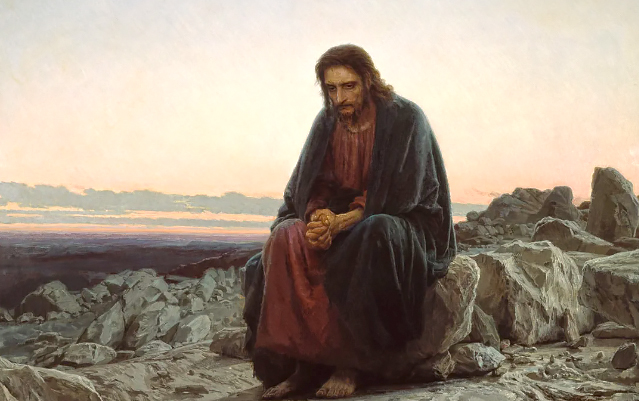
Henri Nouwen writes that the words that Jesus spoke in the nearby villages were born in the intimacy with the Father. They were words of comfort and of condemnation, words of hope and of warning, words of unity and division. He dared to speak these challenging words because he did not seek his own glory: We read in John, “If I were to seek my own glory,” he says, “my glory would be worth nothing; in fact, my glory is conferred by the Father, by the one of whom you say ‘He is our God,’ although you do not know him.” Within a few years, Jesus’ words brought about his rejection and death. But the one who had spoken to him in the lonely place raised him up as a sign of hope and new life. When you can create a lonely place in the middle of your actions and concerns, your successes and failures slowly can lose some of their power over you. For then, your love for this world can merge with a compassionate understanding of its illusions. Then, your serious engagement can merge with an unmasking smile. Then, your concern for others can be motivated more by their needs than your own. In short, then you can care. Let us, therefore, live our lives to the fullest, but let us not forget to once in a while get up long before dawn to leave the house and go to a lonely place.

“Jesus rebuked him and said, ‘Quiet! Come out of him!’ The unclean spirit convulsed him and with a loud cry came out of him.” Mark 1:25-26

Jesus comes to Capernaum in our Gospel reflection today from Mark. He enters the synagogue on a Sabbath, where he begins to teach. Then scripture says that the “people were astonished at his teaching, for he taught them as one having authority and not as the scribes.” Bishop Robert Barron writes that ordinary teachers would have appealed to their own teachers and authorities and, finally, to Moses and the Torah, which were unassailable. Then, a man with “an unclean spirit” rushed into the synagogue and said to Jesus: “I know who you are—the Holy One of God.” It is then that Jesus demonstrates his authority: “‘Quiet, come out of him!’ And the unclean spirit convulsed him with a loud cry and came out of him.” The claim to God’s own authority is now ratified by showing power over the spiritual realm. As frightening and real are the power of demons, the authority of Christ is infinitely superior. Through his cross and resurrection, Christ definitively conquered the powers of hell. For the present time, however, their malicious actions are permitted by God, who can work good out of every evil. The grace of baptism affords us protection from demons and the strength to resist their seductive influence. And now they and we have to make a decision. Are we with him, or are we against him? If he is who he says he is and who he demonstrates himself to be, then we have to give our lives to him.

“I have baptized you with water; he will baptize you with the Holy Spirit” Mark 1:8

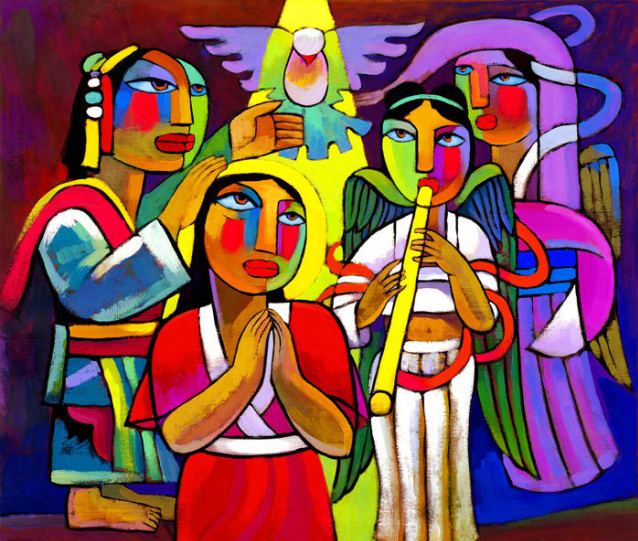
He Qi – The Baptism of Jesus

Today’s Gospel tells the story of the baptism of Jesus. Bishop Robert Barron said the first thing we must keep in mind about the baptism of Jesus was that it was embarrassing. Here is the one that the first Christians maintained was the Son of God, the sinless lamb who takes away the sins of the world, the Word made flesh. So why the heck is he seeking a baptism of repentance? As is usually the case with the Bible, there is an irony in the fire. Before ever a word passes Jesus’ lips, he is teaching, in fact, communicating the heart of the faith by this stunning reversal. In this gesture, God lays aside his glory and humbly joins us in our sinfulness, standing with us and assuming our burden. Dr. Mary Healy writes that John’s prophecy that Jesus would “baptize you with the Holy Spirit” is fulfilled in the life of every new Christian through the sacraments of baptism and confirmation. Just as the gestation of our first birth took place in water, so the water of Baptism truly signifies that our birth into the divine life is given to us in the Holy Spirit. Most Christians receive this unspeakable gift at a very young age; thus, to experience its full effects, we need to appropriate the gift of the Spirit personally through faith, ongoing conversion, and growth in the knowledge of God. The phrase “baptism in the Spirit” has also become familiar to millions of English-speaking Christians through the charismatic renewal, which adapted the biblical term to express the life-changing encounter with Christ and the outpouring of the power of the Holy Spirit that many experience. “Baptism in the Spirit,” in this sense, is not a sacrament but a coming alive of the graces received in sacramental baptism. Although the grace of Pentecost is manifested in different ways in every age, it is fundamentally the same grace of which John spoke and which Jesus poured out on the Church after his passion and resurrection.

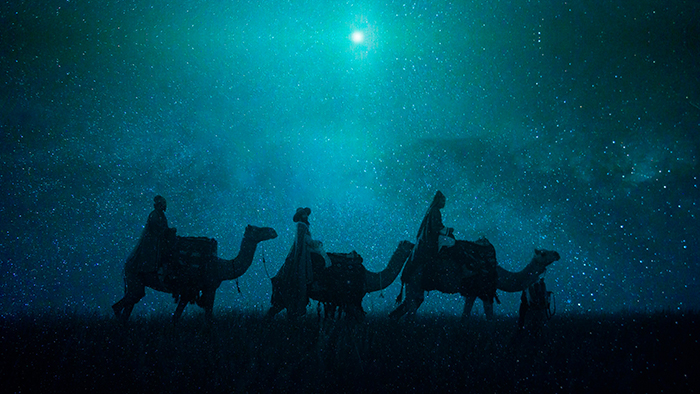
“And you, Bethlehem, land of Judah, are by no means least among the rulers of Judah; since from you shall come a ruler, who is to shepherd my people Israel” Matthew 2:6

In today’s reading from Matthew’s Gospel, we are coming close to the heart of the Biblical revelation. Robert Barron notes that of all the nations of the world, God chose Israel to be especially his own, a priestly people, a holy nation. But the reason for this choice was not to glorify Israel over and against the other nations; instead, it was to make Israel a beacon to the world so that through Israel, all might be gathered. Yes, a king would be born for the Jews, but he wouldn’t be for the Jews alone. This Messiah would be the King of Kings, a light to all the nations. How wonderful that the sign of the birth of this king should be a star, something that can be clearly seen by every nation and from any nation. We also can see how a number of the Church Fathers marveled over the faith of the magi, who, through human eyes, see only an ordinary child in Bethlehem but, by faith, see so much more. They fall down and worship God in human flesh and offer him gifts of gold for his kingship, frankincense for his divinity, and myrrh for his humanity. This is the response we should have even today when we meet Jesus in the Eucharist. Though we see what appears to be only bread with the eyes of our bodies, with the eyes of faith, we know it to be the very body of our Lord. Like the magi, we can show Jesus great reverence when we bow before his Real Presence in the Eucharist. We too can bring him gifts, perhaps not gold, frankincense, and myrrh, but the gifts of our hearts in praise and thanksgiving, which would be, according to St. Gregory Nazianzen, great “spiritual gifts, more sublime than those which can be seen with eyes.”

“Who indeed is the victor over the world but the one who believes that Jesus is the Son of God” 1 John 5:5

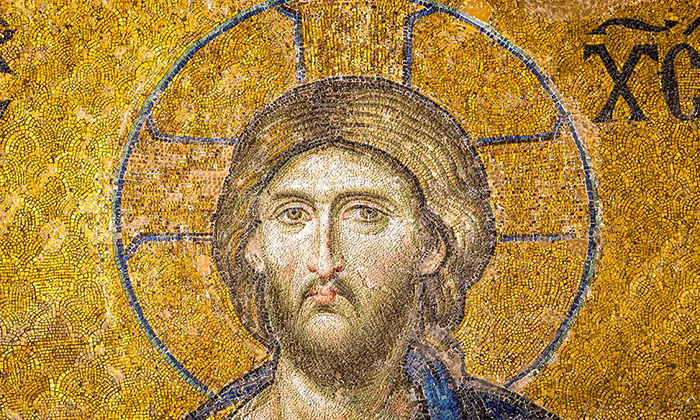
Today, we hear from The First Letter of John: “Who indeed is the victor over the world but the one who believes that Jesus is the Son of God?” In the end, what is the most important decision we make in life? Is it what we decide to do in life or what type of person we plan to be? Bishop Robert Barron writes that from a scriptural perspective, the biblical authors point to the answer of whom or what you worship. Everything in your life will flow from our answer. Even in our supposedly secular society, we can appreciate the appropriateness of the biblical terminology, for everyone, even the most un-churched, operates under the aegis of something they consider supreme, a summum bonum or highest good. No one would get out of bed in the morning unless they believed in some value that ultimately motivated their actions and decisions. This might be bodily pleasure, fame, material goods, or one’s country or family. Still, if it is functioning as the prime mover of a person’s activity, it is playing the role of a god, and it is, in effect, being worshiped. My intellectual hero, St. Thomas Aquinas, said that if we want to live a happy life, we should love what Jesus loved on the cross and despise what he despised on the cross. What did he despise but all of those objects of false worship to which we tend to erect altars? Many of us worship wealth, but on the cross, he was utterly poor, stripped naked; many of us worship pleasure, but on the cross, he was at the limit of suffering, both physical and psychological; many of us worship power, but on the cross he was nailed in place, unable even to move; and many of us worship honor, but on that terrible cross he was the object of scorn and ridicule. In short, the crucified Lord said no to the idols as radically as possible. But what did he love on the cross? He loved doing the will of his Father. A lost soul plays to the world’s endlessly fickle audience, hoping to acquire the fleeting goods that the world can provide. The uncorroded soul plays to God and the friends of God, seeking to please them alone. That is the direction of one’s life centered on Jesus, the Son of God we should pursue.

“let us love not in word or speech but in deed and truth” 1 John 3:18

The human effort to love, as Jesus taught, is a struggle. Love isn’t easy, except in our daydreams. Fr. Rolheiser writes that we do not even need to look at the superficiality of cheap romantic novels or movies to see the truth of that. It suffices to merely attend church regularly, and I go there with good people who are sincere, committed, honest, and full of faith. But they (along with myself) are also human, and thus, as we stand together in a circle of faith, we are not always the idyllic picture of harmony and love of which our church hymns speak. We may be gathered in faith, but we are human, and we cannot but feel certain things in each other’s presence: jealousy, irritation, hurt, paranoia, distrust, and the sense of not being fully valued. And so, beneath our rhetoric of love, we also sometimes feel tension, distance, and even hostility. We sing brave songs that proclaim how open our hearts are and how we welcome everyone into this space, but invariably, there are parts of us that don’t quite mean those words, at least as they apply to some people. And this isn’t an anomaly; it’s true for all congregations, of every gathering, except those where everyone is already fully a saint. Love, this side of eternity, is not easy, at least not if we try to actually embrace everyone and not just our own kind. The older we get, the more we sense what love actually demands. It isn’t easy to say the words “I love you” and actually back that up. What does it mean to love someone? I would use just two words: fidelity and respect. Love means keeping your word, staying in a relationship, and not walking away. And love means fully respecting someone else, not violating anyone’s freedom, and positively blessing and helping others to grow according to their own internal dictates. What we actually feel when we do those things is sometimes less than warm, but love, as we know, is not a question of feeling but of fidelity. Partly, that is a gift, something from beyond us, from a God who can do for us what we cannot do for ourselves, namely, remain together inside of family and community. In the end, that is what church and Eucharist are meant to do: On the night before he died, Jesus sat down with his disciples, and what he found there was what we also find whenever we go to church: a sincere bunch of people struggling to not let the jealousies, irritations, self-preoccupations, and wounds of life drive them apart. We come to church and to the Eucharist to ask God to do for us that which we cannot do for ourselves – love each other. Love is only sweet for those who are already saints and for those who are dangerously naive. Since we are neither, it’s good to be humble, admit our struggle, and then go to those places that can do for us what we cannot do for ourselves.

“All the ends of the earth have seen the saving power of God” Psalm 98:3

“Is it true that the majority of people are going to hell while a minority are being saved? Is it true that there is somewhere, however this is conceived of, a great book, a law of karmic justice, within which all is noted and all will have to be accounted for?” Fr. Rolheiser responds to the above questions by stating that underneath this fear of making heaven too easy, there generally lies a sound instinct. Like Jesus, it affirms that our choices in this life are serious, that sin is important and real, and that the passage to life, already in the here and now, is not easily found. It is interesting to note that among the great religions of the world, only Christianity, Judaism, and Islam do not believe in reincarnation. Why? Because they all believe in the same God, a God who does not demand retribution but who can make everything clean with one embrace. There is no need to keep reliving life until one gets it right. We are loved unconditionally and forever. Salvation, going to heaven, is nothing other than accepting this. Of course, we can, and in this life, we often do reject this. That is why here, in this life, most of us have not yet found the road that leads to life. Few of us are really happy, actually redeemed by love. It is easy to go to hell in this life. It is not so easy, however, to stay there for eternity. Why? Because here, in this life, most often nobody can descend into our private hell – our woundedness, our fundamental alienation, our sin, our paranoia, our fantasy, and our fear and breathe out their unconditional love, understanding, and acceptance. Hence, in this life, we are often in hell, miserable, biting so as not to be bitten, and sinning to compensate for being outside of love. However, God’s love can, as we see in Christ’s death and resurrection, descend into hell and embrace and bring to peace tortured and paranoid hearts. Our moral choices in this life are crucial. We can and frequently do make choices that make it harder for us to accept unconditional love. Moreover, there is a real danger of not sinning honestly, of rationalizing, and of warping ourselves so that a permanent hell becomes a real possibility. But this is, I submit, rare. Few people will, when confronted by an unconditional embrace, resist. That is why I believe most people will go to heaven.

“Behold, the Lamb of God, who takes away the sin of the world” John 1:29

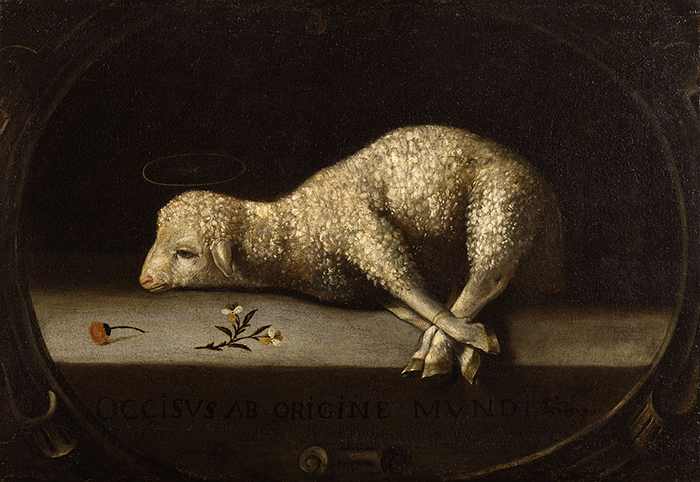
What is meant by our reflection verse today from the Gospel of John? How does his sacrificial giving of himself take away our sins? How can one person take sin out of the world? Fr. Rolheiser writes that in trying to answer that, we should be careful not to fall into a common misunderstanding. Because of certain biblical and doctrinal ways of expressing this, the impression can be given that Jesus’ suffering and death took away the sins of the world by somehow paying off a debt to God, namely, that God took Jesus’ suffering as compensation for our sin – implying that God had lived in anger since Adam’s sin, waiting for someone to adequately pay the debt before that sin could be forgiven. Jesus, as the lamb of God, does not take away the sin of the world by somehow carrying it off so that it is no longer present inside of the community. He takes it away by transforming it, by changing it, by taking it inside of himself and transmuting it. We see examples of this throughout his entire life, although it is most manifest in the love and forgiveness he shows at the time of his death. In simple language, Jesus took away the sin of the community by taking in hatred and giving back love; by taking in anger and giving out graciousness; by taking in envy and giving back blessing; by taking in bitterness and giving out warmth; by taking in pettiness and giving back compassion; he taking in chaos and giving back peace; and by taking in sin and giving back forgiveness. This is not an easy thing to do. He did not simply pass on what was done to him. Rather he took it in, held it, carried it, transformed it, and eventually gave it back as something else. This is what constitutes the sacrificial part of his love, namely, the excruciatingly pain (ex cruce, from the cross) that he had to undergo in order to take in hatred and give back love. For this reason, Christianity, among all the religions and philosophies of the world, is the only one that worships the scapegoat. Moreover, this dynamic is not just something we are asked to admire in Jesus. The incarnation is meant to be ongoing. We are asked to continue to give flesh to God, to continue to do what Jesus did. Thus, our task, too, is to help take away the sins of the world. We do this whenever we take in hatred, anger, envy, pettiness, and bitterness, hold them, transmute them, and eventually give them back as love, graciousness, blessing, compassion, warmth, and forgiveness.

HTML Snippets Powered By : XYZScripts.com