
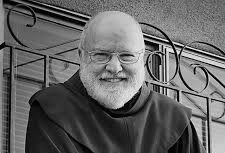
Richard Rohr (b. 1943) is an American Franciscan friar, Catholic priest, and widely read spiritual teacher known for integrating Christian mysticism, contemplative practice, and psychological insight. He is one of the most influential contemporary voices in progressive Christian spirituality.
Early Life and Formation
Richard Rohr was born March 20, 1943, in Topeka, Kansas. He entered the Order of Friars Minor (Franciscans) in 1961 and was ordained to the priesthood in 1970.
He studied theology at the University of Dayton and later engaged extensively with the Franciscan intellectual tradition, especially the thought of John Duns Scotus, whose emphasis on the primacy of Christ would strongly influence Rohr’s theology.
Ministry and the Center for Action and Contemplation
In 1987, Rohr founded the Center for Action and Contemplation in Albuquerque, which became the primary platform for his teaching.
Through the Center, Rohr developed:
– The Living School for Action and Contemplation
– Extensive retreat ministries
– Online teaching programs
– Global spiritual formation initiatives
His work consistently seeks to unite inner transformation (contemplation) with outer engagement (action).
His Theology
Richard Rohr’s theology is often described as Franciscan, mystical, nondual, and evolutionary. He draws deeply from the Christian contemplative tradition while engaging modern psychology, science, and interfaith wisdom.
1. The Universal Christ
Rohr’s most distinctive theological contribution is his teaching on the Universal Christ, most fully developed in The Universal Christ.
He distinguishes between:
Jesus — the historical person
Christ — the eternal divine presence permeating all creation
Influenced by Duns Scotus, Rohr argues that the Incarnation was not merely a response to sin but part of God’s original plan for creation. Thus, Christ is present: in all creation; in all people; throughout history.
This gives his theology a strongly cosmic and incarnational character.
2. Nondual Thinking
Rohr frequently critiques what he calls dualistic thinking—the human tendency to divide reality into rigid opposites (us/them, sacred/secular, saved/damned).
Drawing from Christian mystics and some dialogue with Eastern spirituality, he advocates nondual consciousness, which he describes as:
– holding paradox
– moving beyond either/or thinking
– seeing unity within diversity
For Rohr, contemplation trains the mind to perceive reality more holistically.
3. Action and Contemplation Together
A hallmark of Rohr’s spirituality is the integration of:
– contemplation (inner transformation)
– action (justice, compassion, social engagement)
He argues that without contemplation, activism becomes reactive and ego-driven; without action, contemplation becomes self-absorbed.
4. The Two Halves of Life
Borrowing partly from psychology (especially Jungian themes), Rohr teaches that human life typically unfolds in two broad movements:
First half of life:
– building identity
– establishing order
– achieving success
– creating the “container”
Second half of life:
– letting go
– deepening
– embracing paradox
– living from the soul rather than the ego
This framework has become one of his most popular pastoral tools.
5. The Path of Descent and Transformation
Like many mystics, Rohr emphasizes that spiritual growth often comes through loss, failure, and suffering.
Key themes include:
– necessary suffering
– falling upward (the title of one of his best-known books)
– the wisdom of the cross
– transformation through humility
He sees the pattern of death and resurrection as the universal shape of spiritual maturation.
6. Strong Franciscan and Creation Spirituality
Rooted in the spirituality of Francis of Assisi, Rohr emphasizes:
– the goodness of creation
– kinship with all creatures
– simplicity and poverty
– joy and gratitude
This gives his theology an ecological and creation-affirming tone.
Major Works
Some of Rohr’s most influential books include:
– The Universal Christ
– Falling Upward
– Breathing Under Water
– Immortal Diamond
These works have reached a wide ecumenical audience.
Legacy and Influence
Richard Rohr is one of the most widely read contemporary Christian spiritual teachers, especially among readers seeking a bridge between:
– traditional Christianity
– contemplative spirituality
– modern psychology
– social justice concerns
His work has been both highly influential and sometimes controversial within Catholic and evangelical circles.