
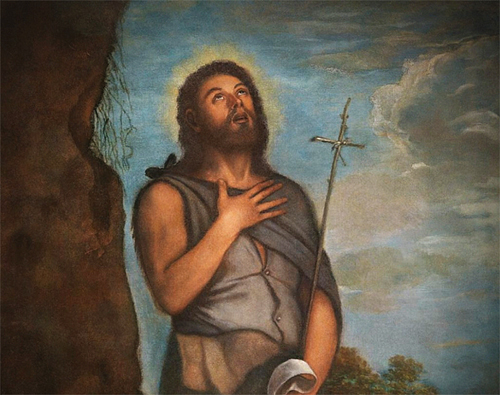
John the Baptist tries to prepare the way for Jesus by calling people to repentance: “Repent for the kingdom if heaven is near.” Whatever else that means, it includes the idea that one of the best ways we can prepare for Christmas is by making a good, honest, searing confession. To repent means to confess our sins.
This notion has fallen out of favor. The idea of confession is very much challenged today. Arguments against it take many forms: “I don’t find it meaningful!” “It’s too privatized!” “There isn’t any need to do this to have one’s sins forgiven! God doesn’t need our mediation.” “It gives undue power to the priest!” “This is an affair between God and myself.” “It’s adolescent!” “The priests don’t have time to do it properly.” Whatever the objection, and there are many, less and less people are going to confession.
This is an unfortunate development because private confession is one of the pillars of the spiritual life. At a certain point in one’s growth, there is no progress without it. Why? Why confession? Simply put, confession is the sacrament of the mature and one grows mature by confessing one’s sins. Mature people face themselves and apologize explicitly – and people grow mature by apologizing.
“You are as sick as your sickest secret!” That’s an axiom popular among people working in 12-step programs. They know the truth of that through personal experience. They also know that until one faces oneself, in searing honesty, before another human being and there acknowledges openly his or her sins, there will always be addictions, rationalization, and lack of real transparency.
Confession is not so much about having one’s sins forgiven as it is about coming to maturity within the community and being able to live a transparent life, free of dark secrets, addictions, and rationalization.
The Baptist’s message is as true today as it was 2000 years ago. To make straight the path for the coming of the Savior, to make a proper advent, to prepare ourselves to have Christ born in our lives, we need to undergo a baptism for the remission of sin. In simple talk, that means, among other things, making a searing, honest, open, confession. [Excerpt from Ron Rolheiser’s “Readying Ourselves For Christmas” December 1999]
