
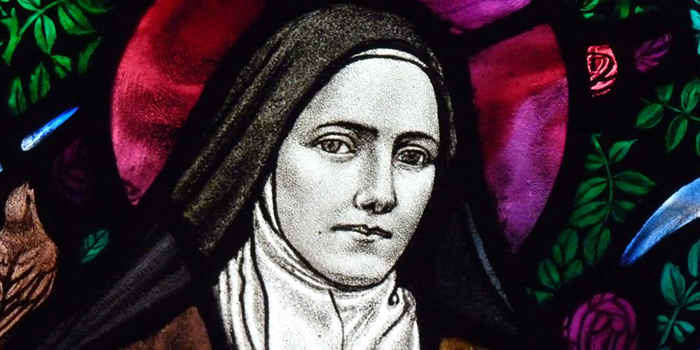
Recently, inside church circles, a debate took place as to whether Therese of Lisieux should be named a “doctor” of the church. Her proponents pointed to her influence within the faith and argued that few theologians or writers, at least not within the last century, have touched as many lives as Therese. Another constituency argued against it: She died at 24, not exactly the age of wisdom. Moreover her writings consist of just three short manuscripts which, while moving and aesthetically exceptional, are hardly in the same theological league with Augustine, Aquinas, Rahner, Barth, or Tillich. Nor do her writings, in terms of academics, measure up to the standards demanded even of graduate- level students in our theological institutions. So why declare her a “doctor”?
We know who won this argument. Therese is today a “doctor” of the church. A wise choice. Why? Because doctors heal people and her writings have healed persons in a way that many other writings that are academically and theologically superior have not. That’s not to say that the writings of the academy of theology don’t have their place, but it is to say that the power to heal depends upon things beyond brilliance, learning, professional standards, and authority or position.
We’re told there that Jesus “spoke with authority, unlike the scribes and the pharisees” (many of whom were, no doubt, brilliant, learned, and sincere). What set Jesus’ teaching apart? Its effect. He cured people and changed their lives in a way none of the other preachers and teachers of his time could. The word of God coming from his mouth simply affected things in a way that this same word coming from other mouths didn’t. His words made sick people healthy, made sinners change their lives, and even brought some dead people back to life. As a teacher or preacher, I can only envy that!
What I don’t sense is that I speak “with authority”, even when people do positively affirm me in words. Why do I say that? Because the longer I teach, preach, and write, the more sceptical I become about the effect of my efforts. It’s one thing to be told you’re wonderful, it’s quite another to have someone actually change his or her life on the basis of your preaching.
That isn’t true for everybody. Mother Theresa used to go out on a stage, face a thousand people, say “God loves you!”, and everyone’s eyes would fill with tears and they would know that this, the deepest of all realities, was true. She spoke with authority. I envy her too. When I speak or write I still need an infinitely more complex message to have any effect.
There’s a lesson here, but its shouldn’t be misread. People will recognize us as speaking with authority only when they sense that, like Jesus, we are under divine authority ourselves, that our message is not our own, that our actual lives stand behind the message, that our words are meant to reveal God and not ourselves, that we love others enough to give up protecting ourselves, that our real concern is God’s kingdom and not how we impress others, that we consider the community bigger than ourselves, and that we are willing to sweat blood rather than get bitter or walk away. [Excerpt from Ron Rolheiser’s “Ministering with Authority” January 2003]
