
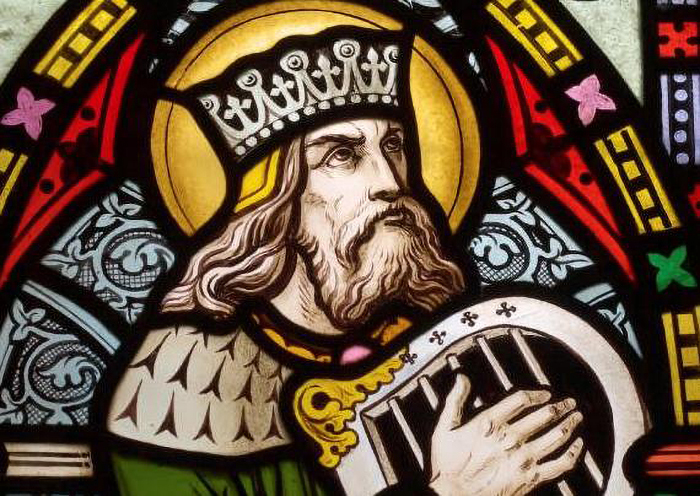
The words of King David echo across the centuries into the proclamation of the early Church in the Acts of the Apostles, where the mystery of Christ’s resurrection is revealed as the fulfillment of David’s deepest hope. David, who knew both the heights of intimacy with God and the depths of human frailty, spoke prophetically of one whose body would not see corruption, one who would not be abandoned to the realm of the dead. In him, the longing of Israel takes poetic form—a trust that God’s fidelity is stronger than death itself.
When the apostles declare that “God raised him up, releasing him from the throes of death, because it was impossible for him to be held by it,” they are not merely describing an event, but unveiling a divine necessity rooted in God’s own nature. Death, which holds all humanity in its grip, could not contain the Author of life.
In Jesus Christ, the promises glimpsed by David are brought to completion: the grave is not denied, but it is defeated from within. What David intuited in faith becomes, in Christ, a reality that reshapes the destiny of all creation. The resurrection is thus not only a victory over death, but a revelation that life—God’s life—is ultimately unconquerable, and that those who are united to Christ share in a hope that cannot be sealed in any tomb.
Fr. Ron Rolheiser often reflects on King David not simply as a historical king, but as a deeply human voice through whom God plants seeds of hope that only later come to full clarity. When David speaks in the Psalms of one who will not be abandoned to the grave, Rolheiser suggests that David himself did not grasp the full theological weight of his words. Rather, like much of Scripture, these lines are inspired longings—prayers that stretch beyond the consciousness of the one who utters them. They express a trust in God’s fidelity so radical that it dares to hope that death itself cannot have the final word.
In this light, when the early Church, as recorded in the Acts of the Apostles, proclaims that God raised Jesus Christ because it was “impossible” for death to hold him, Rolheiser sees a profound continuity. What David prayed in hope becomes, in Christ, a fulfilled reality. The “impossibility” is not about physical limits, but about the nature of God. A God who is pure love, communion, and life cannot ultimately be overcome by death.
Thus, the resurrection is not a reversal of Good Friday so much as the inevitable flowering of who God is. For Rolheiser, David’s ancient words become a kind of unconscious prophecy—an echo of divine life already at work in human longing—pointing toward a future in which death would be entered into but not allowed to reign.
