
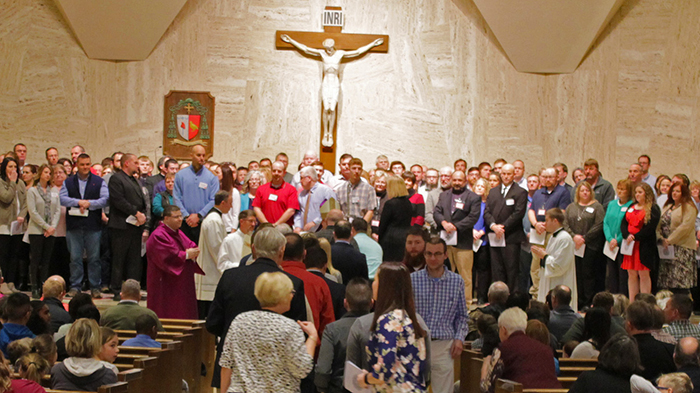
The exhortation in 1 Peter 2:5—“let yourselves be built into a spiritual house” has invited reflection across the centuries because it holds together identity, participation, and transformation.
The early Church reads this verse first and foremost ecclesiologically. For Augustine, the image of “living stones” reveals a people being actively shaped by God into a unified whole:
“You also are being built together into a house of God… This house is not built with stones that can be seen, but with those who believe.”
Here, Augustine underscores that the Church is not merely a collection of individuals but a divine construction, one whose unity comes from Christ himself. Similarly, John Chrysostom emphasizes both the dignity and responsibility of believers within this structure:
“For he calls them ‘living stones,’ showing that they are partakers of a living building… not lying idle, but contributing to the building.”
Chrysostom highlights an important balance: while God is the builder, Christians are not passive but are living, active participants in the life of the Church. This theme deepens when the Fathers turn to the idea of spiritual sacrifice. The “spiritual house” is also a priestly reality. Origen interprets this priesthood expansively:
“Every holy soul is a priest… offering spiritual sacrifices, prayers, and a contrite heart.”
In these ancient voices, the Church is at once temple, priesthood, and offering, all united in Christ. The emphasis falls on a shared, visible, and sacramental identity: God is forming a people in whom He dwells.
Modern spiritual writers do not reject this vision, but they tend to translate it into the language of interior transformation and lived experience. Henri Nouwen, for example, often reframes the “spiritual house” as the formation of a hospitable heart:
“We are called to create a space in our own hearts where God can dwell, and where others can be welcomed as well.”
Nouwen’s focus is less on structure and more on interiority and hospitality, the human person becoming a dwelling place for God and neighbor alike. Likewise, Ronald Rolheiser connects this imagery to the slow, often hidden work of spiritual growth:
“We are being carved into living stones, but the chisel of God often feels like restlessness, longing, and incompleteness.”
Here, the “building” process becomes existential: it unfolds through desire, struggle, and surrender. The emphasis shifts from what the Church is to how the believer becomes.
Taken together, these voices reveal a rich continuity. The Fathers insist that we already are God’s dwelling, built together in Christ as a visible, sacramental reality. Modern writers remind us that we must grow into that reality, allowing our lives to be shaped—often painfully—into a place where God truly dwells. The ancient emphasis guards against reducing Christianity to private spirituality; the modern emphasis guards against reducing it to mere structure or institution. The Church is not only something we belong to but is something we are continually becoming as God builds us together, into a spiritual house.
