
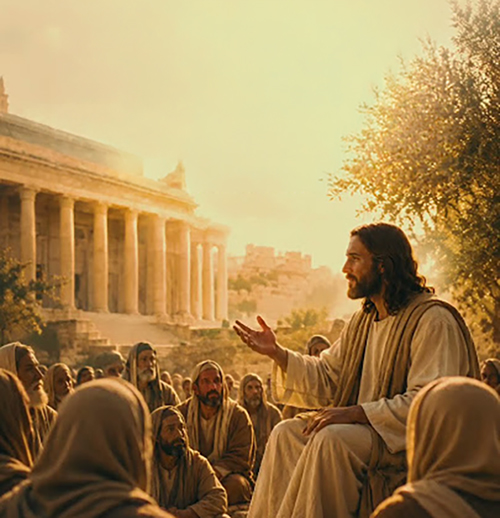
To His Jewish listeners, the Temple in Jerusalem was not merely a religious building; it was the very dwelling place of God among His people. It was the center of Israel’s worship, the place of sacrifice, the destination of pilgrimage, and the visible sign of God’s covenant with Israel. Every aspect of Jewish life ultimately pointed toward the Temple because it was there that heaven and earth were believed to meet. To claim that something—or someone—was greater than the Temple was to speak with extraordinary authority.
Jesus is not diminishing the holiness of the Temple. Rather, He is revealing its fulfillment. Throughout the Old Testament, the Temple had always been a sign pointing beyond itself. God’s presence filled the Holy of Holies, but even Solomon recognized at its dedication that “the heavens and the highest heavens cannot contain you”. The Temple was never meant to contain God; it was a sacramental sign of His presence among His people. Now, in the Incarnation, God is present in a far more intimate and complete way. In Jesus Christ, the eternal Word has become flesh. God is no longer encountered primarily in a sacred building but in a living Person.
The Catholic Church understands this verse in light of the mystery of the Incarnation. Jesus Himself is the true Temple because in Him the fullness of the Godhead dwells bodily. Every purpose the Temple once served finds its completion in Christ. He is the place where humanity encounters the Father. He is the perfect High Priest who offers Himself as the eternal sacrifice. He is the meeting place between heaven and earth, where divine mercy and human need embrace. His death on Calvary replaces the countless animal sacrifices that could only foreshadow the one perfect offering capable of reconciling humanity with God.
This teaching becomes even more profound when Jesus later says in John’s Gospel, “Destroy this temple, and in three days I will raise it up”. His listeners assumed He was speaking of the magnificent Temple built by Herod, but the Gospel explains that He was speaking about the temple of His body. His Resurrection inaugurates a new covenant in which God’s presence is no longer centered in a building of stone but in the risen Christ, who remains present in His Church and, most especially, in the Eucharist.
Spiritually, Jesus’ words invite every disciple to examine where they seek God. It is possible to become attached to religious practices, sacred places, or cherished traditions while failing to recognize the living Christ who gives them meaning. Rituals remain essential because Christ Himself established the sacraments, but they are never ends in themselves. Every liturgical action, every prayer, every act of devotion ultimately leads to communion with the Person of Jesus Christ. The Temple has become flesh, and the invitation is no longer simply to visit a holy place but to enter into a living relationship with the Son of God.
