
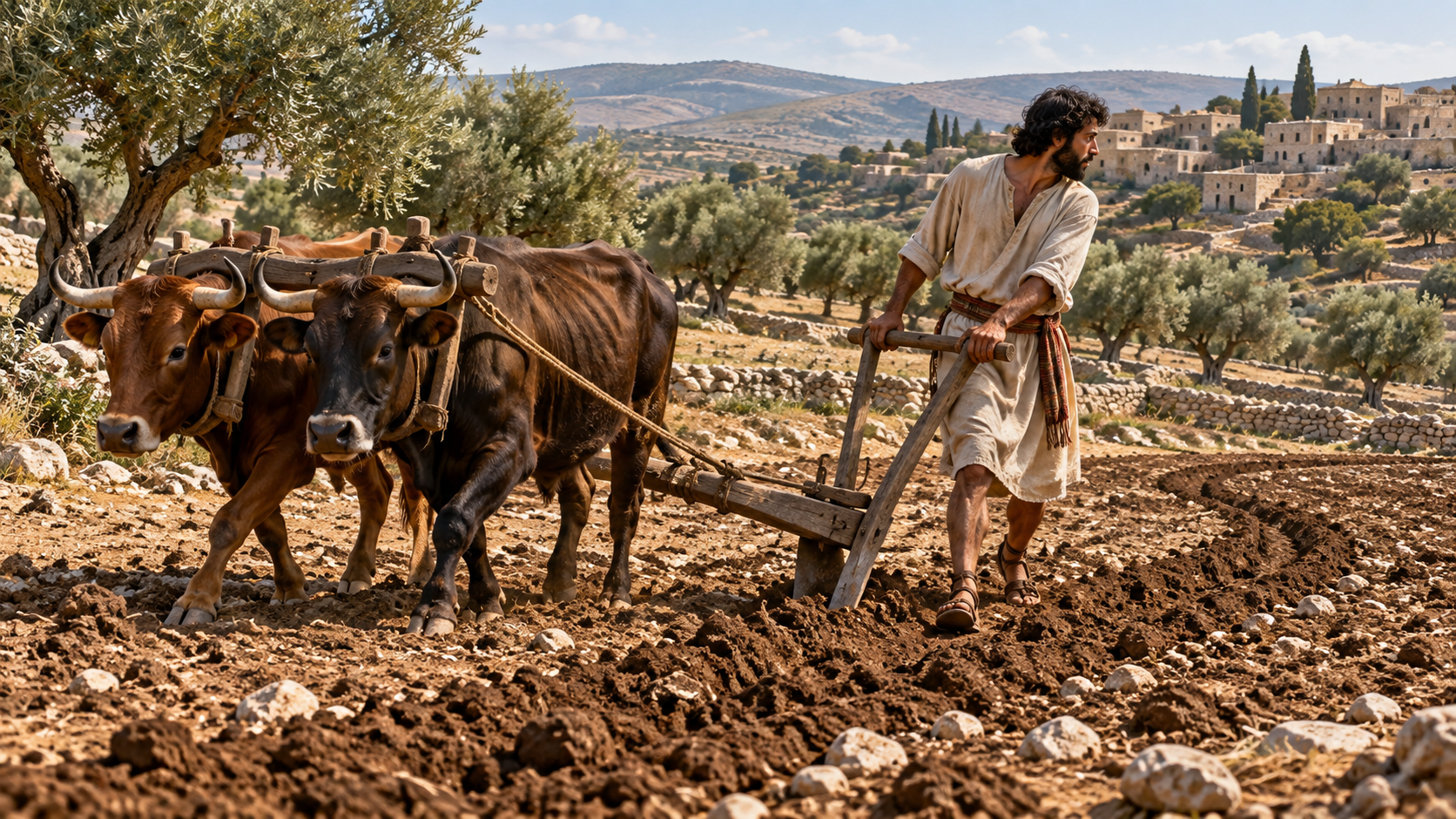
Jesus speaks these challenging words while traveling toward Jerusalem. A man offers to follow him, but first wants to say farewell to those at home. In this setting, following Jesus means actually accompanying him on the road, sharing the uncertainties of his mission and participating in the proclamation of God’s Kingdom.
The image of the plow expresses the commitment that this calling requires. A person cannot guide a plow steadily while continually turning backward. Likewise, someone joining Jesus’ mission must be prepared to move forward without allowing the life being left behind to govern that decision. Jesus is asking the prospective disciple to recognize the seriousness and urgency of what he is undertaking.
We should preserve that setting when reflecting on these words. Jesus is addressing a particular encounter and the demands of accompanying him. We should therefore be careful about treating this verse as a direct command for every Christian to leave home, family, or livelihood—or as though its immediate subject were simply the general importance of centering one’s life on God.
Nevertheless, we can listen for what this encounter reveals about responding to Christ. Some people receive a calling that requires leaving familiar surroundings for missionary service. Others live their discipleship through marriage, parenting, employment, and service within their communities. The outward demands differ, and faithfulness requires discerning the calling actually entrusted to us.
Jesus himself continues toward Jerusalem, where his faithfulness to the Father will lead through the Cross to the Resurrection. His journey invites us to consider our response with honesty: when we recognize a genuine calling from Christ, are we willing to embrace what it asks?