
Cursed is the man who trusts in human beings, who seeks his strength in flesh. Jeremiah 17:5

We have been made, as scripture assures us, “as little less than God.” If God could have given us divinity, I believe, he would have. But the one thing God can’t do is to create another God. So, in creating us, God took us as close to divinity as possible. Given the incredible array of qualities that God put in us, it shouldn’t then be surprising that we are pathologically complex, that human grandiosity has a perpetual itch to set itself against God, and that, when frustrated, we are capable of becoming killers who can take life itself as if we were God. We should never be surprised at how messy life can get or how deranged we can be. What is surprising, rather, is that sometimes – in the pre-sophistication of a child or the post-sophistication of a saint – we do see simple happiness, simple meaning, and simple faith.

Things could only be simpler if God had made us Swiss clocks – wonderfully tuned to pre-set rhythms, with no mess, no sin, no evil, and the beauty of perfect crystal. But then there wouldn’t be any love, freedom, creativity, or meaning. No. God built us on a razor’s edge, so full of godly fire that we are capable of both martyrdom and murder.

We live in a very disordered world but must bless that world by letting it know that God still looks at it and says: “You are my beloved Child in whom I am well pleased”; even as we prophetically challenge it to see the poverty of its practical atheism, its lack of community, its consumerism, its greed, its obsession with comfort and the things of this world, and especially with its failure to see the poor. 

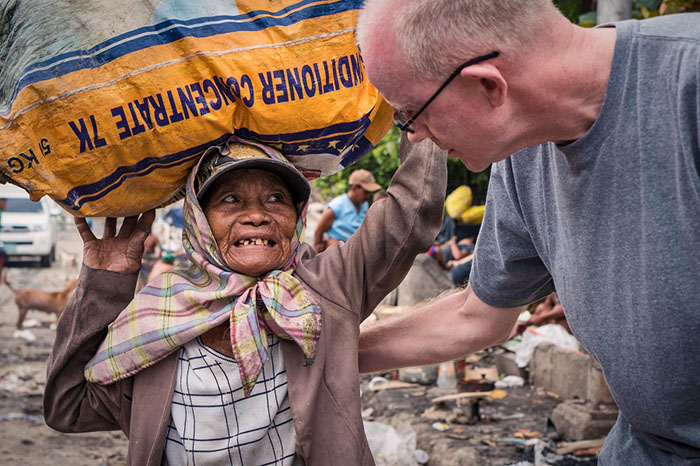
Ultimately, what we must do is to show the world the cross of Christ, to make it aware that the one whom it commonly rejects, the one whom it crucifies, the poor one, the helpless one, the unnoticed one, the insignificant one, is the cornerstone for its final progress. Within all the goodness and sin of this world, our task is to stand with the poor and bring the expertise of the poor, which is the wisdom of the cross, to all the dialogue and planning that goes into helping shape our planet. 

But we can do this only if we view the world through a prism of hope within which we bless its goodness and challenge its sin, even as we trust that God still deeply loves this post-modern planet and that, in the end, all will be well and all will be well and every manner of being will be well. [Excerpt from Ron Rolheiser’s “A Christian Attitude Towards the World and God’s Risk…Our Freedom,” September 1998, and 2001 respectively]

But I say, “You are my God.” In your hands is my destiny. Psalm 31:15-16

All who serve, whether ordained or lay ministers, come into service with a hopefully discerned gift from God. Fr. Ron Rolheiser recounts the period in his life when he was away from his teaching, one of his gifts, as he fought his battle with cancer.

When he returned to teaching, he was somewhat nervous, but as the three-hour session got underway, he noted, “My nervousness passed quickly as the class robustly engaged the topic and, after the three hours, I walked out of the class feeling a wonderful energy that I hadn’t felt for six months.”

Every good gift comes from God. Not just the visible talents — the quiet strengths, the compassion that comes naturally, the ability to listen, to build, to lead, to create. These are not accidents of personality. They are entrusted with grace.

Rolheiser continued his reflection by questioning himself on the anxiety he felt. “What really triggered that wonderful feeling and burst of energy? Narcissism? Pride? Was I basking in the capacity to demonstrate some cleverness and learning and then drink in the students’ admiration? Did I feel good because my ego got stroked? Was my teaching really about furthering God’s kingdom or about stoking my ego?”

He goes on to write that “these are valid questions for anyone who draws energy from his or her work, especially if, because of that work, he or she drinks in a fair amount of adulation. Our motivations are never completely pure.” A beautiful example is drawn from the story of Eric Liddell, the Scottish Olympian and evangelist that was depicted in the movie, Chariots of Fire.  

Liddell once made this comment on his running, “When I run, I feel God’s pleasure.” Rolheiser writes that “in his quest to win an Olympic gold medal, he was motivated more by his faith than by his own ego. His faith had him believe that, since God gave him this unique talent, God, not unlike any proud parent, took a genuine delight in seeing him use that gift. In his heart, he sensed that God was pleased whenever he exercised that talent to its optimum.”

He continues: “Moreover, that an inner sense that God was happy with his use of his talent filled Eric, with a wonderful energy whenever he ran. And this, I believe, is true for every one of us. When anyone uses the gifts that God gave him or her properly, God will take pleasure in that. After all, God gave us that gift and that gift was given to us for a reason.” [Excerpt from Ron Rolheiser’s “God’s Pleasure in Our Action” February 2015]

But if you refuse and resist, the sword shall consume you: for the mouth of the LORD has spoken! Isaiah 1:20

God is non-violent. God does not prescribe violence. Violence should never be rationalized in God’s name. That is clear in Christian revelation. But that immediately poses the question:  What about the violence in scripture that is attributed to God or to God’s direct orders?

Doesn’t God, in anger, wipe out the entire human race, save for Noah and his family? Doesn’t God ask Abraham to kill Isaac on an altar of sacrifice? Doesn’t Moses have to talk God out of destroying Israel because God is angry?  Didn’t God give an order to Israel to kill everybody and everything (men, women, children, and even the animals) as she entered the Promised Land? Didn’t the Mosaic Law, attributed to God, prescribe stoning women to death for adultery? What about all the wars and capital punishment that have been done in God’s name through the centuries?  What about extremist Islam today, killing thousands of people in God’s name? How do we explain all the violence attributed to God?

Whenever scripture speaks about God as being offended, as getting angry, as wanting to wreak vengeance on his enemies, or as demanding that we kill somebody in his name, it is speaking anthropomorphically, that is, it is taking our own thoughts, feelings, and reactions and projecting them into God. We get angry, God doesn’t. Our hearts crave vengeance; God’s heart doesn’t. We demand that murderers be executed, but God doesn’t. Scripture contains many anthropomorphisms that lead to a bad and dangerous theology if read and understood literally. To read parts of scripture literally is to turn God into a tribal God in competition with other gods.

When scripture says that we experience God’s wrath when we sin, it doesn’t want us to believe that God actually gets angry and punishes us. There’s no need.  The punishment is innate, inherent in the sin itself. When we sin it is our own actions that punish us (the way excessive use of alcohol dehydrates the brain and the dehydration causes a headache). We may feel that the punishment as coming from God, from God’s anger, from God’s wrath, but it is nature’s wrath and our own that we are feeling. God has no need to extrinsically punish sin because sin already punishes itself. Nature is so constructed. There is a law of karma. Sin is its own punishment.

But still, what do we do with the biblical texts that prescribe violence to God? For instance, how can we interpret God’s ordering Israel to kill all the Canaanites as she entered the Promised Land? In archetypal stories, killing is metaphorical not literal. It’s about a death inside the heart.  God’s command to kill all the inhabitants of Canaan is simply a hard metaphor for what Jesus refers to when he says that you have to put new wine into new wineskins so that the new wine will not burst the old skins.

Virtually every text in the bible which ascribes violence to God or puts into his mouth a command to do violence needs to be read in that same way. The violence and killing are metaphorical, even as the text is asking the heart to do something that cannot be a half-measure. [Excerpt from Ron Rolheiser’s “God and Violence,” May 2011]

Be merciful, just as your Father is merciful. Luke 6:36

I hope that something people take away from my lectures and writings is to believe that the first task of any Christian apologetics is to rescue God from stupidity, arbitrariness, narrowness, legalism, rigidity, tribalism, and everything else that’s bad but gets associated with God. A healthy theology of God must underwrite all our apologetics and pastoral practices. Anything we do in the name of God should reflect God.

It’s no accident that atheism, anti-clericalism, and the many diatribes leveled against the church and religion today can always point to some bad theology or church practice on which to base their skepticism and anger. Atheism is always a parasite, feeding off bad religion.

More important than the criticism of atheists are the many people who have been hurt by their churches. A huge number of people today no longer go to church or have a very strained relationship with their churches because of what they’ve met in their churches doesn’t speak well of God.

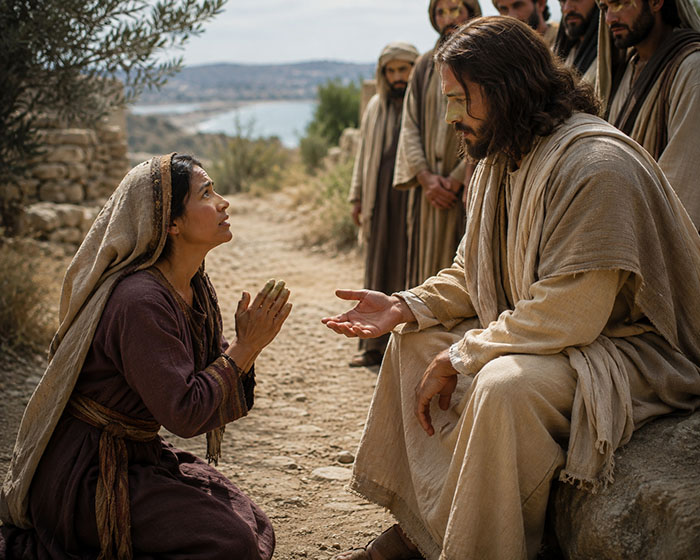
Jesus taught that God is especially compassionate and understanding towards the weak and towards sinners. Jesus scandalized his religious contemporaries by sitting down with public sinners without first asking them to repent. He welcomed everyone in ways that often offended the religious propriety of the time and he sometimes went against the religious sensitivity of his contemporaries, as we see from his conversation with the Samaritan woman or when he grants a healing to the daughter of a Syro-Phoenician woman. Moreover he asks us to be compassionate in the same way and immediately spells out what that means by telling us that God loves sinners and saints in exactly the same way.  God does not have preferential love for the virtuous.

Finally, and centrally, Jesus is clear that his message is, first of all, good news for the poor, that any preaching in his name that isn’t good news for the poor is not his gospel. We need to keep these things in mind even as we recognize the validity and importance of the ongoing debates among and within our churches about whom and what makes for true discipleship and true sacrament. [Excerpt from Ron Rolheiser’s “Mercy, Truth, and Pastoral Practice,” May 2018]

Bear your share of hardship for the gospel with the strength that comes from God. 2 Timothy 1:8

You look at a whole lot of things differently and sense that others are looking at you differently when you unexpectedly become sick. You find those around you wondering, “Is he really sick? Is he a hypochondriac? Does he want to be sick? He was always so intense, I knew that this would happen! He is unhappy in his state in life! He is simply looking for attention and sympathy! There is something he cannot face!”

You pick up the reactions, and soon you begin to ask yourself the same things. It all gets frightening because you do not know the answers and, deep down, you sense that any or all of those things could be true. We are pretty complex critters! The physical illness is not all that serious, but you get pretty serious.

Initially, the symptoms are all bad: self-pity, anger at friends, impatience with everything. Your old confidence and strength is gone. At this stage, you are genuinely ill, though the physical illness has been mostly lost in the new emotional lesions. But things slowly change, the scars disappear; first the physical ones, and, later, much more slowly, the emotional ones. You feel strength again, and old friends and old circles begin to open up again.

Health returns, but it is different. Some of the old self-confidence is gone, replaced by a new sense of vulnerability and relativity that is immensely freeing. You realize more clearly what is a gift and what is earned. You know that you, on your own, cannot guarantee your own health, nor your attractiveness and desirability in love and friendship.

You begin to beg for conversion because you would want to transvaluate all your values and prioritize your whole self and life anew. Even so, you know you are still a long way from home. There is still a lot of turf between you and the promised land. But, like Moses and Abraham, you have been given a “glimpse from afar.”  When one is wandering in a wilderness, it is helpful to know in what direction the milk and honey lie. You will still spend most of your life wandering, wondering how to enter the promised land. But with an anonymous poet from the past, you realize that God is finally taking you in hand:

I asked for strength that I might achieve;
I was made weak, that I might learn humbly to obey.

I asked for health, that I might do greater things;
I was given infirmity, that I might do better things.

I asked for riches, that I might be happy;
I was given poverty, that I might be free…

I asked for power, that I might have praise from men;
I was given weakness, that I might feel the need for God.

I asked for all things that I might enjoy life;
I was given life that I might enjoy all things.

I got nothing I asked for, but everything that I had hoped for.

[Excerpt from Ron Rolheiser’s “Weakness Leads to Strength,” July 1983]

He makes His sun rise on the bad and the good, and causes rain to fall on the just and the unjust. Matthew 5:45

Be compassionate as your heavenly Father is compassionate. Jesus challenged us with those words, and there is more in them than meets the eye at first. How is God compassionate?

Jesus defines this for us: God, he says, lets his sun shine on the bad as well as the good. God’s love doesn’t discriminate; it simply embraces everything. Like the sun, it doesn’t shine selectively, shedding its warmth on the vegetables because they are good and refusing its warmth to the weeds because they are bad. It just shines and everything, irrespective of its condition, receives its warmth.

That’s a stunning truth: God loves us when we are good, and God loves us when we are bad. God loves the saints in heaven and God loves the devils in hell equally. They just respond differently. The father of the prodigal son and the older brother loves both, one in his weakness and the other in his bitterness, and his embrace is not contingent upon their conversion. He loves them even inside their distance from him.

And we are asked to love in the same way.

He shall live because of the virtue he has practiced. Ezekiel 18:22

“At a certain age our lives simplify and we need have only three phrases left in our spiritual vocabulary: Thank you! Thank you! Thank you!” –Morris West


Gratitude is the ultimate virtue, undergirding everything else, even love. It is synonymous with holiness.

Gratitude not only defines sanctity; it also defines maturity. We are mature to the degree that we are grateful. But what brings us there? What makes for a deeper human maturity? I would like to suggest ten major demands that reside inside both human and Christian maturity:

  • Be willing to carry more and more of life’s complexities with empathy: Maturity invites us to see, understand, and accept this complexity with empathy.
  • Transform jealousy, anger, bitterness, and hatred rather than give them back in kind: Any pain or tension that we do not transform we will retransmit.
  • Let suffering soften rather than harden our souls: Suffering and humiliation find us all, in full measure, but how we respond to them, with forgiveness or bitterness, will determine the level of our maturity and the color of our person.
  • Forgive: In the end there is only one condition for entering heaven (and living inside human community), namely, forgiveness.
  • Live in gratitude: To be a saint is to be fueled by gratitude, nothing more and nothing less.
  • Bless more and curse less: The capacity to praise more than to criticize defines maturity.
  • Live in an ever-greater transparency and honesty: We are as sick as our sickest secret, but we are also as healthy as we are honest.
  • Pray both affectively and liturgically: We are mature to the degree that we open our own helplessness and invite in God’s strength, and to the degree that we pray with others that the whole world will do the same thing.
  • Become ever-wider in your embrace: We are mature only when we are compassionate as God is compassionate, namely, when our sun too shines on those we like and those we do not.
  • Stand where you stand and let God protect you: We can only do our best, whatever our place in life, wherever we stand, whatever our limits, whatever our shortcoming, and trust that this is enough, that if we die at our post, honest, doing our duty, God will do the rest.

God is a prodigiously-loving, fully-understanding, completely-empathic parent. We are mature and free of false anxiety to the degree that we grasp that and trust that truth. [Excerpt from Ron Rolheiser’s “The Major Imperatives Within Mature Discipleship”]

A clean heart create for me, God; renew within me a steadfast spirit. Psalm 51

Fr. John Eaton, commenting on Psalm 51, notes that any announcement posted on a bulletin board in a parish becomes invisible after two or three weeks. The same can be true of our prayers. These verses from Psalm 51 are used so frequently that it is easy for those praying to close their minds to the meaning behind the words.

Besides the prayer for the forgiveness we all need, the psalm begs for three things that I personally need: 1) a clean heart (that is, a heart that is not divided by conflicting interests), 2) a steadfast spirit (a spirit that cannot be weakened by external pressure or internal weakness), and 3) a willing spirit (a spirit that is ready to hear and obey).

“A clean heart create for me, O God”

The word create is striking. It echoes the language of creation in Genesis, suggesting that what is needed is not minor repair but a new act of divine creation. The psalmist recognizes that real change cannot be self-manufactured. A “clean heart” is not just moral behavior on the outside; it is purified desire, restored intention, and re-centered love on the inside.

This line acknowledges that sin is not only about actions—it is about the condition of the heart. Therefore, restoration must begin at the deepest level of identity.

“A steadfast spirit renew within me”

If the first phrase asks for cleansing, this one asks for stability. A “steadfast” (or firm) spirit implies consistency and resilience. The psalmist longs not just to be forgiven, but to become faithful—to be inwardly strengthened so that he does not fall again. Renewal here is ongoing. It suggests that spiritual life is not static; it must be continually refreshed by God.

“A willing spirit sustain in me”

A willing spirit is one that freely chooses obedience. It is not coerced or merely compliant. The prayer recognizes that even willingness is a gift. We often think effort alone sustains faithfulness, but this line confesses dependence: “sustain in me.” The ability to remain faithful requires ongoing divine support.

This prayer is profoundly hopeful. It assumes that no failure is beyond God’s re-creative power. The same God who creates the world can recreate a human heart.

Even now, says the LORD, return to me with your whole heart, for I am gracious and merciful. Joel 2:12-13

In the past few years, both when teaching and writing, I have frequently been challenged by persons who feel that I am going soft on part of the Christian message. There are a number of variations to the critique, but generally it sounds like this: “You make it too easy! You sound as if it is easy to go to heaven. You talk as it there was no hell, or, at least, as if very few persons end up there. Doesn’t Scripture itself say that the road that leads to life is narrow…and few find it! Aren’t you leading people astray by giving them the impression that almost everyone is going to heaven?”

Not infrequently too have I been quoted the visions of a certain mystic who once saw souls going to hell like snowflakes. To affirm that the majority of persons are being lost in terms of eternity denies the unconditional love of God and the power of that love to ultimately redeem sin and woundedness. Simply put, the love of the God that Jesus called his and our Father would not tolerate a situation within which the millions are going to an eternal hell, like snowflakes, while a mere few are finding the narrow way. This God would redo the incarnation…not to mention creation itself.

It is interesting to note that among the great religions of the world, only Christianity, Judaism, and Islam, do not believe in reincarnation. Why? Because they all believe in the same God, a God who does not demand retribution but who can make everything clean with one embrace. There is no need to keep reliving life until one gets it right. We are loved unconditionally and forever. Salvation, going to heaven, is nothing other than accepting this. Of course, we can, and in this life we often do, reject this.

Few of us are really happy, actually redeemed by love. It is easy to go to hell in this life. It is not so easy, however, to stay there for eternity. Why? Because here, in this life, most often nobody can descend into our private hell – our woundedness, our fundamental alienation, our sin, our paranoia, our fantasy, and our fear – and breathe out there unconditional love, understanding, and acceptance. Hence, in this life, we are often in hell, miserable, biting so as not to be bitten, sinning so as to compensate for being outside of love. 

However, God’s love can, as we see in Christ’s death and resurrection, descend into hell and embrace and bring to peace tortured and paranoid hearts. Our moral choices, in this life, are crucial. We can and frequently do, make choices that make it harder for us to accept unconditional love. Moreover, there is a real danger of not sinning honestly, of rationalizing and of warping ourselves so that a permanent hell becomes a real possibility. But this is, I submit, rare. Few people will, when confronted by an unconditional embrace, resist. That is why most people will go to heaven. In saying that, I am not going soft on the Christian message. I am, I believe, affirming the greatest truth there is. [Excerpt from Ron Rolheiser’s “Living Under A Merciful God” July 1988]

“This is how you are to pray” Matthew 6:9

Jesus is our model for prayer, and he shows us what it looks like to pray as a child of God. The Lord’s Prayer has been called the perfect prayer and the summary of the whole Gospel.

It is interesting to me that in St. Matthew’s Gospel, Jesus gives us the Lord’s Prayer near the end of his Sermon on the Mount.

The Sermon, beginning with the Beatitudes, gives us the picture of what it means to be a Christian, and how we should live as a child of God. So it is fitting that here he teaches us to pray — because prayer is the language of our relationship with our Father.

In a way, we could say that this prayer gives us the “spirituality” of Jesus at prayer. When we pray the Our Father, we are praying as Jesus did — as a child of God, with love and confidence; with the desire to be obedient and to serve our Father’s will.

Jesus gives us his own words to pray with — but far more than that. He gives us the gift of his own intimate prayer to God. When we pray these words we are praying with Jesus. We are standing alongside him as his brothers and sisters, sharing in his own personal prayer of self-offering to the Father. We need to remember that when we pray. [Excerpt from the Archbishop José H. Gomez “Praying the Our Father” April 2016]

HTML Snippets Powered By : XYZScripts.com