Daily Virtue Post

“We have found the Messiah, which is translated Christ.” John 1:41

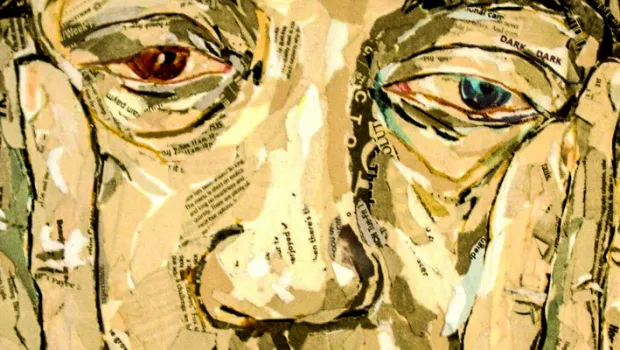
When Jesus was on earth, virtually no one believed he was the Messiah precisely because he was so ordinary, so unlike what they imagined God to be. People were looking for a Messiah. When Christ finally appeared, they were disappointed. They’d expected a superstar, a king, a miracle worker, someone who would, by miracle and hammer, vindicate good, destroy evil, and turn the world rightfully upside down. Jesus didn’t live up to those expectations. Born in a barn, preaching meekness and gentleness, unwilling to use power forcefully, there was little hammer and few miracles. Fr. Ron Rolheiser writes that there was mainly ordinariness. Curiously, Scripture refuses to describe what Jesus looked like. It never tells us whether he was short or tall, with a beard or without, had light or dark hair, or blue or brown eyes. Neither does it ever assign to him anything extraordinary in terms of psychological countenance: for example, it never tells us that when Jesus entered a room, his eyes were so penetrating and his gaze so awesome that people knew they were in the presence of something extraordinary. No, Scripture doesn’t describe him because, in terms of physical appearance, Jesus wasn’t worth describing, he looked like everyone else. Even after the resurrection, he is mistaken for a gardener, a cook, and a traveler. People had trouble recognizing Jesus as God incarnate because he was so ordinary, so immersed in the things they took for granted. He was just a carpenter’s son, and he looked like everyone else. Things haven’t changed much in 2,000 years. Seldom does Christ meet expectations. We desire proof of the existence of God even as life in all its marvels continues all around us. We tend to look for God everywhere except in the place where the incarnation took place – our flesh. 1 John 4:7-16, says: “God is love and whoever abides in love abides in God and God abides in him/her.” Love is a thing that happens in ordinary life, in kitchens, at tables, in workplaces, in families, in the flesh. God abides in us when we abide there. The Christ-child is also to be found in church, in the sacraments, and in private meditations (for these, too, are ordinary). All of these are ordinary, and the incarnation crawls into them and helps us abide in God.

“Behold, the Lamb of God, who takes away the sin of the world” John 1:29

Jesus is the lamb of God who takes the sin of the world! That formula, expressed in various ways, lies at the center of what we believe about Jesus. What is meant by it? How does his sacrificial giving of himself take away our sins? How can one person take sin out of the world? Fr. Rolheiser writes that Jesus, as the lamb of God, does not take away the sin of the world by somehow carrying it off so that it is no longer present inside of the community. He takes it away by transforming it, by changing it, by taking it inside of himself and transmuting it. We see examples of this throughout his entire life, although it is most manifest in the love and forgiveness he shows at the time of his death. In simple language, Jesus took away the sin of the community by taking in hatred and giving back love; by taking in anger and giving out graciousness; by taking in envy and giving back blessing; by taking in bitterness and giving out warmth; by taking in pettiness and giving back compassion; he taking in chaos and giving back peace; and by taking in sin and giving back forgiveness. The incarnation is meant to be ongoing. We are asked to continue to give flesh to God, to continue to do what Jesus did. Thus, our task, too, is to help take away the sin of the world as Jesus did in transmuting the darkness by giving back the light of God’s love.

“All the ends of the earth have seen the saving power of God” Psalm 98

Daniel Berrigan was once asked to give a conference at a university gathering. The topic given him was something to the effect of “God’s Presence in Today’s World”. His talk, Fr. Ron Rolheiser writes, surprised a number of people in his audience, both in brevity and content. He told the audience how he, working in a hospice for the terminally ill, goes each week to spend some time sitting by the bed of a young boy who is totally incapacitated, physically and mentally. The young boy can only lie there. He cannot speak or communicate with his body nor in any other way, it would seem, express himself to those who come into his room. He lies mute, helpless, by all outward appearance cut off from any possible communication. Berrigan then describes how he regularly sits by this young boy’s bed to try to hear what he is saying in his silence and helplessness. After sharing this, Berrigan added a further point: The way this young man lies in our world, silent and helpless, is the way God lies in our world. To hear what God is saying, we must learn to hear what this young boy is saying. God’s power, though, is more muted, more helpless, more shamed, and more marginalized. But it lies at a deeper level, at the ultimate base of things, and will, in the end, gently have the final say. To hear God is to sit in silence.

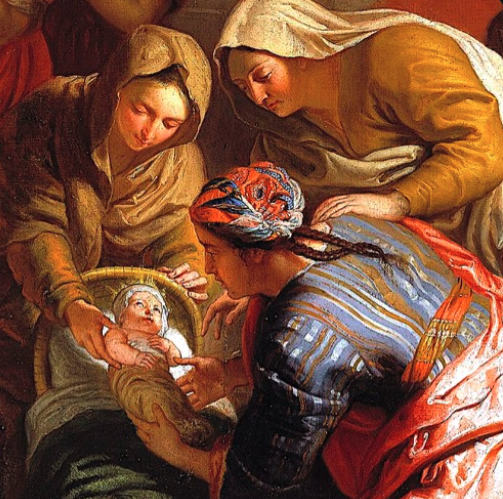
“The shepherds went in haste to Bethlehem and found Mary and Joseph,  and the infant lying in the manger” Luke 2:16

Jesus’ nature as both equally human and divine is something we may take for granted today. But back in the early days of the church, this dogma of our faith was hotly debated. In 431 A.D., during the Council of Ephesus, the title of “Mary Mother of God,” in Greek “Theotokos,” was defended and defined against the heresy of Nestorius. Nestorius, Bishop of Constantinople, refuted the title of “Theotokos,” claiming that Christ had two loosely united natures, and therefore, Mary was only the mother of the human part of Him. Catholic theologians rejected this claim and defined Christ as having two natures, a divine nature, and a human nature, united in one divine person. Since Christ’s two natures form one single person, Mary is the mother of the whole Person of Christ. Therefore, Mary can be properly called “Mother of God,” not in the sense that she came before God or is the source of God, but in the sense that the person that she bore in her womb is indeed a true God and true man. The Solemnity of Mary Mother of God falls exactly one week after Christmas, the end of the octave of Christmas. It is fitting to honor Mary as Mother of Jesus, following the birth of Christ. When Catholics celebrate the Solemnity of Mary Mother of God we are not only honoring Mary, who was chosen among all women throughout history to bear God incarnate, but we are also honoring our Lord, who is fully God and fully human. Calling Mary “mother of God” is the highest honor we can give Mary. Just as Christmas honors Jesus as the “Prince of Peace,” the Solemnity of Mary Mother of God honors Mary as the “Queen of Peace.”

“In the beginning was the Word, and the Word was with God, and the Word was God.” John 1:1

John’s Gospel has us focusing today on the famous statement related to the Word made flesh. Bishop Robert Barron writes that ancient Jewish thought found all sorts of sophisticated ways to say that God was active in the world without ceasing to be transcendent over it. Above all, they spoke of God’s holy Word, a Word by which all things were made. Now listen to the Prologue to John’s Gospel: “In the beginning was the Word…” John is writing a new Genesis—and he is drawing our attention to this word of God, this powerful, musical breath of God that makes and governs the universe and speaks through the prophets, this Word that is the same as God. And this Word became flesh. The Greek term means “pitched his tent among us,” the very phrase used of God’s Wisdom inhabiting the Temple in Jerusalem. “And we saw his glory…and he was full of grace and truth.” Glory, for he is beautiful to look on; truth, for he is the new Law. All the ways that the Old Testament spoke of God’s involvement with the world come together in this description of Jesus Christ. He is the powerful Word that will not return without accomplishing his purpose.

“There was a prophetess, Anna… She never left the temple, but worshiped night and day with fasting and prayer.” Luke 2:36-37

In today’s Gospel from Luke, Jesus is presented by his parents in the Temple. Present in the temple, at the time our Lord Jesus Christ was brought in, was Simeon of Jerusalem, a devout, just, elderly man. Simeon was said to have been waiting for the “Consolation of Israel”, the indescribable joy of the prophesied deliverance that the Messiah had been waited for to bring to Israel. Anna was a prophetess who followed in the company of such prophetesses as Miriam, Deborah, and Huldah in the Old Testament. Living in the Temple, Anna the prophetess had served the Lord faithfully and actively with fasting and prayer day and night, for many years. She did not excuse herself with the frailty of old age; nor consider herself too lonely or too old to actively serve the Lord. Annas life of constant prayer and fasting led to yet another bigger and more glorious, blessed experience of evangelism, happiness and thanksgiving. At the dedication service, Anna the prophetess picked up the chance and prayed a prayer of thanksgiving and had the honor of happily carrying the news of the Child, the Lord Jesus Christ, to “all who were looking for the redemption of Jerusalem,” to the faithful remaining in Jerusalem. In our daily, evening prayers we continue to confess and confirm in our hearts and minds that the Lord Jesus Christ is still today the salvation, God has prepared for all people, that the Lord Jesus Christ is still the Light to the gentiles, and that the Lord Jesus Christ is still the Glory of Israel in the same manner as Simeon the just elderly man had spiritually proclaimed and Anna the elderly prophetess had given thanks unto God for; and carried the pertaining Good News. May we all consider carefully the inspiring example of continuous prayer, fasting, thanksgiving and evangelism personified in and by the very aged Anna the prophetess. May we all, including the elderly among us, follow her footsteps in actively serving God in the many wonderful ways available, in anticipation of the glorious Eternal Life.

“When his parents saw him, they were astonished, and his mother said to him, “Son, why have you done this to us? Your father and I have been looking for you with great anxiety.” Luke 2:48

Inside of God there is a kind of family life going on and Jesus has assured us that when we give and receive from each other within a family, when we break open our lives and hearts and joys and frustrations and egos and agendas and finances and share these with each other, we are letting the life of God flow through us and we are giving skin to the inner life of the Trinity. In that sense, family life is a sacrament and, for many of us, the most important sacrament of all because it is the one that in fact touches our lives and transforms us the most deeply. To say that family life is a sacrament is not to say that it will not be fraught with pettiness, frustration, anger, jealousies, selfish concern, pathology, and even at times real sin. Our families are never the holy family! I remember my mother, a truly pious and good woman, occasionally lamenting how in her idealism she dreamed of being the mother of the holy family—and she ended up getting stuck with us! Our families are never the romanticized stuff of our adolescent or pious dreams. Nor are they ever the idealized families of literature and movies, where people are still attractive, interesting, and worthy of our understanding and sympathy even when they are petty, selfish, jealous, unfaithful, and sinful. As we know, understanding and sympathy in the midst of the muck and grime of real family life is considerably harder to crank up. All of that notwithstanding, however, unless there is present the kind of abuse that violates the soul, family life remains a sacrament—sometimes indeed because of its imperfections rather than simply in spite of them. It is in forming hearts that are big enough to love and forgive within imperfection that we ready ourselves for heaven. For many of us, coming home from the hospital to join a family will be our first baptism, our family dwelling will be our primary church, our family table our primary place of Eucharist, our living room our first sanctuary, our marriage bed our deepest experience of Eucharist, and our reconciliation with each other after the pettiness and hurts of family life our ongoing sacrament of reconciliation. It is there that the flow of the life that originates within God, and finds its perfection there, will flow through us.

“A voice was heard in Ramah, sobbing and loud lamentation; Rachel weeping for her children, and she would not be consoled, since they were no more” Matthew 2:18

St. John, whose feast we celebrated yesterday, begins the readings today with the proclamation that God is light, and in him, there is no darkness. Those who repent and receive the forgiveness of Jesus will have communion with each other and walk in the light. The Gospel today, however, is in stark contrast. There, we see the darkness of Herod at its worst. Insecure and power-hungry, he reacts to the news that the wise men tricked him by murdering all the children in Bethlehem under the age of two, hoping that way he might kill the newborn king of the Jews. That is terrible darkness indeed. The Holy Innocents we celebrate today had done nothing to deserve such a fate. This act seems senseless. However, it can remind us of all the people in the world, the voiceless and powerless, who innocently suffer from evil and greed. This feast teaches us that in God’s eyes, no one is unimportant, unnecessary, and no one doesn’t matter. However meaningless their lives and deaths may seem, they shine gloriously in heaven. The honor given to the Holy Innocents reminds us that if we suffer or die for God’s sake, it has value even if we have little or no say in it ourselves. Honoring them also honors the loss of the people these children could have become and their grandchildren. At the same time, we can remember the senseless slaughter of the innocent, often caught in the crossfire of opposing political forces. Let us pray that we may renew our baptismal commitment to die to sin and live in the light of Christ to receive forgiveness and healing.

“Then the other disciple also went in, the one who had arrived at the tomb first, and he saw and believed” John 20:8

On this Feast of Saint John, Apostle, and Evangelist, we read from the Gospel of John and are told that Mary Magdalene arrives at the tomb very early in the morning while it is still dark. She has come to anoint the body of the Lord, which had been buried in haste because of the onset of the Passover. She spies the great stone rolled back and assumes that the body has been stolen. So, she runs immediately to Simon Peter and the other disciples: “They have taken the Lord from the tomb, and we don’t know where they put him.” She doesn’t yet believe in the Resurrection, for she is operating still within a conventional framework. So, the two disciples, Peter and John, make a mad dash toward the tomb, the younger John outpacing the older Peter. Upon coming to the open tomb, John looks in and sees “the burial cloths.” Then Peter arrives and spies the same cloths, as well as the cloth that had covered his head “rolled up in a separate place.” Bishop Robert Barron asks in his reflection if we have ever wondered why there is such an emphasis on the burial cloths in John’s writing. The most obvious reason is that their presence is peculiar. If the body had been stolen, why would the thieves have bothered taking the elaborately wound cloths off, and why in the world would they have taken the time and effort to fold the head cloth up so carefully? When St. John entered the tomb and saw the burial cloths, he “saw and believed.” There was something about those wrappings that convinced him. I wonder whether the same thing is true today in our hyper-skeptical age. We, too, can see the cloth in which Jesus’ body was wrapped, and we understand it far more thoroughly than St. John ever could have. Does it cause us to “see and believe?”

“Stephen, filled with grace and power, was working great wonders and signs among the people” Acts 6:8

In today’s Gospel reading from Matthew, Jesus warns his disciples that men “will hand you over to courts and scourge you.” These words are realized in the martyrdom of Saint Stephen as told in the first reading from the Acts of the Apostles. Tradition regards Stephen as the first Christian martyr, an example of fortitude and suffering for love of Christ. Saint Cyprian, speaking of the actions taken against Stephen tells us: “Could you keep all God’s commandments, were it not for the strength of patience? That was what enabled Stephen to hold out, in spite of being stoned he did not call down vengeance on his executioners, but rather forgiveness. Through his glorious death, he was the model of all the martyrs that would come after him.” Like Jesus, Stephen dies commending his soul to God and praying for his persecutors. At this point, Saint Luke brings in Saul, who cooperates in the proceedings by watching the executioners’ clothes; Saul will soon experience the benefit of Stephen’s intercession. If Stephen had not prayed to God, the Church would not have had Paul. Stephen has died, but his example and teaching continue to speak across the world.

HTML Snippets Powered By : XYZScripts.com