
Daily Virtue Post

No one pours new wine into old wineskins. Otherwise, the wine will burst the skins, and both the wine and the skins are ruined. Rather, new wine is poured into fresh wineskins. Mark 2:22

We live too frustrated by our own mediocrity. The problem lies not in our unwillingness to convert, but in our inability to convert. We keep trying, by the way of good resolutions, to wage war against the bad habits of our hearts and minds. But we fail, grow discouraged, and generally live with a non-expressed despair, which lets us believe that for us, things cannot really change.

What’s at issue? I suspect the issue is more about our unwillingness to move toward the radicalism and upheaval that genuine conversion implies. Perhaps the best analogy available to us for understanding the real meaning of the word conversion is that of revolution. Conversion is an interior revolution. Anything less radical simply misses most of the meaning of that word. As Scripture puts it: “You cannot put new wine into old wineskins!”

When we look at the phenomenon of a political-social revolution, we see that a successful revolution brings about a new consciousness and a new system, a “new guard.” This replaces an “old guard,” a previously established consciousness and way of doing things.

Revolution is dramatic, not gradual. It is an upheaval, a radical overturning. It arises precisely when people have despaired of gradual change. When simple evolution and ordinary everyday changes provide the necessary growth, then revolution is not necessary. Revolution becomes necessary only when the old order is hopelessly stagnant, when there is no longer any hope that peaceful, non-violent, gradual change can bring about improvements of any significance.

Once the new consciousness and order have been established, they must – and very quickly, too – purge themselves of all elements which are not single-mindedly and unequivocally supportive of the new ideals and the new system. Aristotle said: “Habits become one’s second nature.” He is correct. Bad habits do become our second natures. This is a realty that tells us that too many things have been happening for too many years. Evolution is no longer possible for us. Revolution and a certain violence are necessary. We must radically shake up our lives.

Year after year, we try to change ourselves through good resolutions, through means that will not be too dramatic, painful or disruptive. That is why we fail and stay ever the same: mediocre, frustrated, and unable to break out of bad habits that have dominated our lives. It is our fear of dramatic upheaval, painful uprooting and new patterns of life that are hostile to established habits that, precisely, allow our bad habits and mediocrity to keep the upper hand.

Genuine conversion and real change will come when we have the nerve to risk dramatic upheaval. [Excerpt from Ron Rolheiser’s “Conversion Is Revolution!” February 1987]
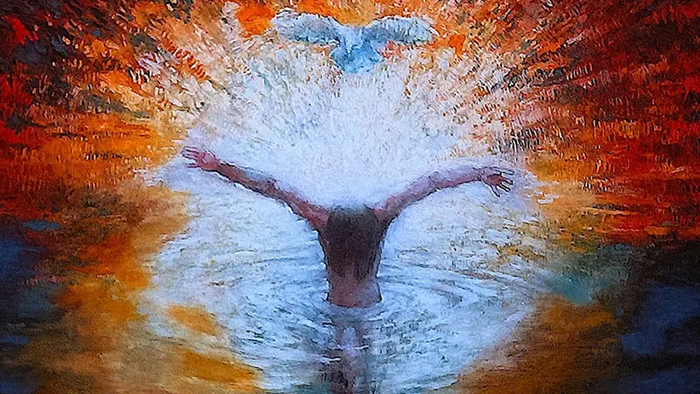

Behold, the Lamb of God, who takes away the sin of the world. John 1:29

Scripture, our creeds, and our Christian tradition have a certain language. Among other things, we say: “He paid the price for our sins. We are saved by his blood. He paid the debt of sin. We are washed clean in his blood, the blood of the lamb. He is the Lamb of God who takes away our sins. He restored us to life, after our death in Adam’s sin. He conquered death, once and for all. By his stripes we were healed. He offered an eternal sacrifice to God. He is our victim. He opened the gates of heaven. He stripped the principalities and Satan of their power. He descended into hell.”

Accepting the truth of this language is one thing, explaining in within the categories and language of ordinary life is something else. About Jesus’ death, we have a language but we don’t have a vocabulary. We know its meaning, but we can never adequately explain it.

What exactly do we mean by these statements? How does Jesus’ death save me from being accountable for my sins? How does his death vicariously substitute for human shortcoming, including our own, through the centuries? Why does God need someone to suffer that agonizingly in order to forgive me? How does Jesus’ death open the gates of heaven? Why had they been closed? What does it mean that, in his death, Jesus descended into hell?

Literal explanations come up short here. The words are more like an icon, an artifact that highlights form to bring out essence. The language of scripture, the creeds, and our dogmas put us in touch with something that we can know but struggle to conceptualize and explain. It is meant to be grasped at levels beyond the just the intellect. It is a language to be contemplated and knelt-before more than a language to be understood literally.

Some years ago, Time magazine did a cover story on the death of Jesus. Among other things, they interviewed various people and asked them how they understood the blood of Jesus as washing them clean. One of those interviewed was JoAnne Terrell, the author of Power in the Blood? The Cross in the African American Experience. For her, the question of how Jesus’ blood saves us triggered a deep personal search. Sitting in a seminary classroom and studying the death of Jesus, she began having flashbacks: As a young girl she had seen her mother murdered by a boyfriend. She vividly recalled the blood-soaked mattress and her mother’s bloody fingerprints on the wall. And so her search was very much a search “to find the connection between my mom’s story and my story and Jesus’ story.”

For her, the language around the death of Jesus, its blood and heartbreak, became an icon to be contemplated for meaning. She began to look at it from various angles and to see how it spoke to her in her life-situation, to the blood in her own history. The language of redemptive blood gave meaning and dignity to her mother’s blood.

We cheat ourselves of meaning whenever we treat scripture, the creeds, and the dogmas of our faith as simple statements of history, newspaper accounts in literal language. They have a historicity and they are true, but the language surrounding them is not the language of the daily newspaper. They are anchored in history and we risk our very lives on their truth, but they speak to us more as does an icon than as does yesterday’s newspaper. Their language is meant to be contemplated, knelt-before, and absorbed in the heart as we experience more and more of life’s mysteries. [Excerpt from Ron Rolheiser’s “Religious Language as Icon” August 2009]

I did not come to call the righteous but sinners. Mark 2:17

Some years ago, a young man came to me for confession. It was a difficult confession for him. He had been having an affair with a girl and she had become pregnant. He recognized that he had sinned. He also recognized that he had helped create a situation that was irrevocable, a certain ease and innocence had been destroyed, some things would never be quite the same again. He ended his confession on a note of sadness and hopelessness: “There is no way I’ll ever live normally again, beyond this. Even God can’t unscramble an egg!” What this young man was saying was that, for him, there would always be a skeleton in the closet. Ordinary life would, in its own way, limp along, but he would remain forever marked by this mistake.

Today we live in a world and a church in which this kind of brokenness and attitude are becoming more the rule than the exception. For more and more people, there is a major something to live beyond, some skeleton in the closet. What we need today, in the church, perhaps more than anything else, is a theology of brokenness that relates failure and sin seriously enough to redemption.

If the Catholicism that I was raised in had a fault, and it did, it was precisely that it did not allow for mistakes. It demanded that you get it right the first time. There was supposed to be no need for a second chance. If you made a mistake, you lived with it and, like the rich young man, you were doomed to be sad, at least for the rest of your life. A serious mistake was a permanent stigmatization, a mark that you wore like Cain.

We need a theology which teaches us that even though God cannot unscramble an egg, God’s grace lets us live happily and with renewed innocence far beyond any egg we might have scrambled. We need a theology that teaches us that God does not just give us one chance, but that every time we close a door, God opens another one for us. We need a theology that challenges us not to make mistakes, that takes sin seriously, but which tells us that when we do sin, when we do make mistakes, we are given the chance to take our place among the broken, among those whose lives are not perfect, the loved sinners, those for whom Christ came.

We need a theology which tells us that a second, third, fourth, and fifth chance are just as valid as the first one. We need a theology that tells us that mistakes are not forever, that they are not even for a lifetime, that time and grace wash clean, that nothing is irrevocable. Finally, we need a theology which teaches us that God loves us as sinners and that the task of Christianity is not to teach us how to live, but to teach us how to live again, and again, and again. [Excerpt from Ron Rolheiser’s “God Overcomes Scrambled Eggs” June 2016]

Listen to whatever the people say. You are not the one they are rejecting. They are rejecting me as their king. 1 Samuel 8:7

The poet, Rumi, submits that we live with a deep secret that sometimes we know, and then not.

That can be very helpful in understanding our faith. One of the reasons why we struggle with faith is that God’s presence inside us and in our world is rarely dramatic, overwhelming, sensational, something impossible to ignore. God doesn’t work like that. Rather God’s presence, much to our frustration and loss of patience sometimes, is something that lies quiet and seemingly helpless inside us. It rarely makes a huge splash.

Because we are not sufficiently aware of this, we tend to misunderstand the dynamics of faith and find ourselves habitually trying to ground our faith on precisely something that is loud and dramatic. We are forever looking for something beyond what God gives us. But we should know from the very way God was born into our world, that faith needs to ground itself on something that is quiet and undramatic. Jesus, as we know, was born into our world with no fanfare and no power, a baby lying helpless in the straw, another child among millions. Nothing spectacular to human eyes surrounded his birth. Then, during his ministry, he never performed miracles to prove his divinity; but only as acts of compassion or to reveal something about God. Jesus never used divine power in an attempt to prove that God exists, beyond doubt. His ministry, like his birth, wasn’t an attempt to prove God’s existence. It was intended rather to teach us what God is like and that God loves us unconditionally.

Moreover, Jesus’ teaching about God’s presence in our lives also makes clear that this presence is mostly quiet and hidden, a plant growing silently as we sleep, yeast leavening dough in a manner hidden from our eyes, summer slowly turning a barren tree green, an insignificant mustard plant eventually surprising us with its growth, a man or woman forgiving an enemy. God, it seems, works in ways that are quiet and hidden from our eyes. The God that Jesus incarnates is neither dramatic nor splashy.

And there’s an important faith-lesson in this. Simply put, God lies inside us, deep inside, but in a way that’s almost non-existent, almost unfelt, largely unnoticed, and easily ignored. However, while that presence is never overpowering, it has within it a gentle, unremitting imperative, a compulsion towards something higher, which invites us to draw upon it. And, if we do draw upon it, it gushes up in us in an infinite stream that instructs us, nurtures us, and fills us with endless energy.

This is important for understanding faith. God lies inside us as an invitation that fully respects our freedom, never overpowers us; but also never goes away. It lies there precisely like a baby lying helpless in the straw, gently beckoning us, but helpless in itself to make us pick it up. [Excerpt from Ron Rolheiser’s “How God works in our lives quietly, just below the surface” November 2025]

If you wish, you can make me clean. Mark 1:40

Like Adam and Eve we take, as if it is ours by right, what can only be received gratefully as gift. This goes against the very contours of love. It is the original sin. The leper’s ask of Jesus that is noted in the reflection verse today is a realization that everything is God’s and it is through the thankfulness and gratitude of his grace and mercy that we must approach life’s difficulties.

To be a saint is to be motivated by gratitude, nothing more and nothing less. Scripture, everywhere and always, makes this point. For example, the sin of Adam and Eve was, first and foremost, a failure in receptivity and gratitude. God gives them life, each other and the garden and asks them only to receive it properly, in gratitude—receive and give thanks. Only after doing this, do we go on to “break and share” Before all else, we first give thanks.

To receive in gratitude, to be properly grateful, is the most primary of all religious attitudes. Proper gratitude is ultimate virtue. It defines sanctity. Saints, holy persons, are people who are grateful, people who see and receive everything as gift. The converse is also true. Anyone who takes life and love for granted should not ever be confused with a saint. Let me try to illustrate this:

As a young seminarian, I once spent a week in a hospital, on a public ward, with a knee injury. One night a patient was brought on to our ward from the emergency room. His pain was so severe that his groans kept us awake. The doctors had just worked on him and it was then left to a single nurse to attend to him.

Several times that night, she entered the room to administer to him—changing bandages, giving medication, and so on. Each time, as she walked away from his bed he would, despite his extreme pain, thank her.

Finally, after this had happened a number of times, she said to him: “Sir, you don’t need to thank me. This is my job!” “Ma’am!” he replied, “it’s nobody’s job to take care of me! Nobody owes me that. I want to thank you!

I was struck by that, how, even in his great pain, this man remained conscious of the fact that life, love, care, and everything else come to us as a gift, not as owed. He genuinely appreciated what this nurse was doing for him and he was right— it isn’t anybody’s job to take care of us!

It’s our propensity to forget this that gets us into trouble. The failure to be properly grateful, to take as owed what’s offered as gift, lies at the root of many of our deepest resentments towards others—and their resentments towards us.

Invariably when we are angry at someone, especially at those closest to us, it is precisely because we are not being appreciated (that is, thanked) properly. Conversely, I suspect, more than a few people harbor resentments towards us because we, consciously or unconsciously, think that it is their job to take care of us. [Excerpt from Ron Rolheiser’s “Gratitude the Basic Virtue” May 1992]

Samuel grew up, and the LORD was with him, not permitting any word of his to be without effect. 1 Samuel 3:19

“Not permitting any word of God to be without effect” is a biblical concept emphasizing God’s powerful, unfailing word word that isn’t forceful. It is a gentle, respectful invitation, often quiet and easily missed, yet it’s meant to be deeply received and allowed to work within us, transforming our hearts and actions, even if it’s not immediately apparent.

We must learn to ponder and bear things, allowing God’s patient guidance to transform pain into growth, rather than forcing outcomes, trusting that God uses even difficult circumstances to bring about lasting change and ultimate flourishing, never giving up on leading us home. 

Here are some inportant aspects of God’s word we should understand:

  • Gentle & Respectful: God’s voice is never coercive; it respects our freedom, like a quiet nudge or a baby’s presence, not an overwhelming force.
  • Invitation, Not Demand: It’s an invitation to deeper relationship and truth, asking us to open ourselves to its reality.
  • Pondering & Bearing: When we can’t control situations or feel helpless, we’re called to ponder, bear the unbearable tension, and allow God’s grace to transmute suffering, creating space for deeper understanding.
  • Patience & Recalculation: Like a GPS, God patiently recalculates, giving new instructions until we reach our destination, never giving up on us.
  • Transformative, Not Immediate: God’s word works through our circumstances, even hard ones, to change us over time, waiting for the right moment to bring about deep spiritual transformation, not just external change.
  • The “Unnoticed” Word: God’s presence is often unfelt and unnoticed until we deliberately open ourselves to it, revealing itself as the deepest reality within. 

We need to lstop trying to control everything and instead, listen for that quiet, insistent voice, even in silence and struggle, trusting that God’s persistent, gentle love will work its transformative effect, leading us to wholeness, even when things seem unbearable or unclear. 

A new teaching with authority. Mark 1:27


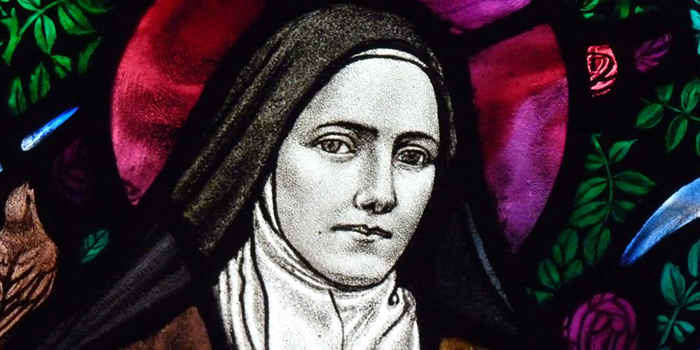
Recently, inside church circles, a debate took place as to whether Therese of Lisieux should be named a “doctor” of the church. Her proponents pointed to her influence within the faith and argued that few theologians or writers, at least not within the last century, have touched as many lives as Therese. Another constituency argued against it: She died at 24, not exactly the age of wisdom. Moreover her writings consist of just three short manuscripts which, while moving and aesthetically exceptional, are hardly in the same theological league with Augustine, Aquinas, Rahner, Barth, or Tillich. Nor do her writings, in terms of academics, measure up to the standards demanded even of graduate- level students in our theological institutions. So why declare her a “doctor”?

We know who won this argument. Therese is today a “doctor” of the church. A wise choice. Why? Because doctors heal people and her writings have healed persons in a way that many other writings that are academically and theologically superior have not. That’s not to say that the writings of the academy of theology don’t have their place, but it is to say that the power to heal depends upon things beyond brilliance, learning, professional standards, and authority or position.

We’re told there that Jesus “spoke with authority, unlike the scribes and the pharisees” (many of whom were, no doubt, brilliant, learned, and sincere). What set Jesus’ teaching apart? Its effect. He cured people and changed their lives in a way none of the other preachers and teachers of his time could. The word of God coming from his mouth simply affected things in a way that this same word coming from other mouths didn’t. His words made sick people healthy, made sinners change their lives, and even brought some dead people back to life. As a teacher or preacher, I can only envy that!

What I don’t sense is that I speak “with authority”, even when people do positively affirm me in words. Why do I say that? Because the longer I teach, preach, and write, the more sceptical I become about the effect of my efforts. It’s one thing to be told you’re wonderful, it’s quite another to have someone actually change his or her life on the basis of your preaching.

That isn’t true for everybody. Mother Theresa used to go out on a stage, face a thousand people, say “God loves you!”, and everyone’s eyes would fill with tears and they would know that this, the deepest of all realities, was true. She spoke with authority. I envy her too. When I speak or write I still need an infinitely more complex message to have any effect.

There’s a lesson here, but its shouldn’t be misread. People will recognize us as speaking with authority only when they sense that, like Jesus, we are under divine authority ourselves, that our message is not our own, that our actual lives stand behind the message, that our words are meant to reveal God and not ourselves, that we love others enough to give up protecting ourselves, that our real concern is God’s kingdom and not how we impress others, that we consider the community bigger than ourselves, and that we are willing to sweat blood rather than get bitter or walk away. [Excerpt from Ron Rolheiser’s “Ministering with Authority” January 2003]

This is the time of fulfillment. The kingdom of God is at hand. Repent, and believe in the gospel. Mark 4:15

Sometimes we’re a mystery to ourselves, or, perhaps more accurately, sometimes we don’t realize how much paranoia we carry within ourselves. A lot of things tend to ruin our day.

I went to a meeting recently and for most of it felt warm, friendly towards my colleagues, and positive about all that was happening. I was in good spirits, generative, and looking for places to be helpful. Then, shortly before the meeting ended, one of my colleagues made a biting comment which struck me as bitter and unfair. Immediately a series of doors began to close inside me. My warmth and empathy quickly turned into hardness and anger and I struggled not to obsess about the incident. Moreover the feelings didn’t pass quickly. For several days a coldness and paranoia lingered inside me and I avoided any contact with the man who had made the negative comments while I stewed in my negativity.

Time and prayer eventually did their healing, a healthier perspective returned, and the doors that had slammed shut at that meeting opened again and metanoia replaced my paranoia.

The word, metanoia, comes from two Greek words: Meta, meaning above; and Nous, meaning mind. Metanoia invites us to move above our normal instincts, into a bigger mind, into a mind which rises above the proclivity for self-interest and self-protection which so frequently trigger feelings of bitterness, negativity, and lack of empathy inside us. Metanoia invites us to meet all situations, however unfair they may seem, with understanding and an empathic heart. Moreover, metanoia stands in contrast to paranoia. In essence, metanoia is “non-paranoia”, so that Jesus’ opening words in the Synoptic Gospels might be better rendered: Be un-paranoid and believe that it is good news. Live in trust!

Henri Nouwen, in a small but deeply insightful book entitled, With Open Hands, describes wonderfully the difference between metanoia and paranoia. He suggests that there are two fundamental postures with which we can go through life. We can, he says, go through life in the posture of paranoia. The posture of paranoia is symbolized by a closed fist, by a protective stance, by habitual suspicion and distrust. Paranoia has us feeling that we forever need to protect ourselves from unfairness, that others will hurt us if we show any vulnerability, and that we need to assert our strength and talents to impress others. Paranoia quickly turns warmth into cold, understanding into suspicion, and generosity into self-protection.

Jesus, in his message and his person, invites us to metanoia, to move towards and stay within our big minds and big hearts, so that in the face of a stinging remark our inner doors of warmth and trust do not close. [Excerpt from Ron Rolheiser’s “From Paranoia to Metanoia” September 2016]

How God anointed Jesus of Nazareth with the Holy Spirit and power. Acts 10:38

There is a marvelous story told about a four year old child who woke up one night frightened, convinced that there were all kinds of spooks and monsters in her room. In terror she fled to her parents’ bedroom. Her mother took her back to her room and, after soothing her fears, assured her that things were safe there: “You don’t have to be afraid. After I leave, you won’t be alone in the room. God will be here with you.” “I know that God will be here,” the child protested, “but I need someone in this room who has some skin.”

This little story can teach us a whole lot about the incarnation. God knows that we all need a God who has some skin for we are creatures of the senses. We see, hear, touch, taste, and smell. Everything that goes into to us enters through those senses, just as everything that comes out of us exits through them. Through our senses we are open to the world and to each other. Through them, we communicate. 

In the incarnation, God comes to us through the senses. In Jesus, the ineffable, spiritual, invisible reality of God, which is beyond all physical sense, becomes precisely something which can be seen, heard, and touched through the senses.

This mystery, the incarnation, is the centre of our entire faith. It is also often misunderstood. What we tend to not understand is its ongoing nature. Generally, we understand the incarnation too much as a thirty-three year experiment: In Jesus, God takes on flesh, lives on earth for thirty-three years, and then, after his death and resurrection, ascends back to God and sends us the Holy Spirit (who has no flesh and is not physical). In this view, God took on flesh, for a while, but has returned to heaven and is now working invisibly again.

What is wrong with this view? One main thing: The ascension of Jesus does not end, nor fundamentally change, the incarnation. God continues still to have real flesh on earth. Jesus returned to God but, in a manner of speaking, Christ did not. The word “Christ”, as we know, is not Jesus’ surname name; for example, as we might say in: Jack Smith, Susan Parker, Jesus Christ. Jesus did not have a surname. The word “Christ” is a title which connotes God’s anointed presence on earth. 

To say that the body of believers is the body of Christ is not any more of a metaphor than to say that the Eucharist is the body of Christ. The Eucharist and the body of believers are not like the body of Christ. Each is the body of Christ, just as Jesus is the body of Christ.

Jesus makes this clear. In John’s gospel as he tells us that, as his disciples, we can do all the things that he does, and even greater things. This is not a pious platitude. If we ever understood its real truth we would no longer doubt that the gospel is “good news” and we would sing out joy filled Christmas songs until our lungs burst. The power that came into our world with Jesus, at that first Christmas, is still with us. It is in us. Like Jesus, we too can freely dispense God’s forgiveness, heal each other with God’s touch, and reach through death itself to save our loved ones. Christmas begins the mystery of God’s body on earth. Our own bodies are part of that mystery. [Excerpt from Ron Rolheiser’s “Helping to Give Birth to God” November 1996]

We have this confidence in him that if we ask anything according to his will, he hears us. 1 John 5:14

Karl Rahner once said that one of the secrets to faith is to always see your life against an infinite horizon. This meant that you always searched for the finger of God, some faith meaning, in every incident within your life.

Thus, for example, if something tragic happened to you (sickness, the death of loved one, an accident, the loss of your job, or economic disaster) you would always ask yourself: “What is God saying to me in this?” Conversely, if something good happened to you (you met a marvelous person, you fell in love, you had a huge success, or you made a lot of money) you would ask yourself the same question: “What is God saying to me in this?” The idea was that, in every event of life, God spoke, said something to you, and meant this event to have spiritual significance for your life.

Part of the idea was that nothing was purely secular. Hence, my parents, who were farmers, would have a priest come and bless their land, bless their house, and even bless their marriage bed. Then, if they had a good crop, it was not interpreted simply as good luck, a lucky year, but seen as God’s blessing: “For God’s good reason, we are being blessed this year.”  Conversely, if there was a poor crop, or no crop, it wasn’t written off as simple bad luck (“Rotten weather this year!”) but it was seen in the context of providence: “God wants us to live with less!” The idea was always that somehow God was behind things, if not actively arranging them at least speaking through them.

Sometimes, of course, they overdid it. Rather than seeing God as speaking through an event, they saw God as actually causing the event. Thus, God was literally seen to be sending sickness, death, drought, and pestilence upon the earth; or, conversely, deliberately privileging some people over others. Beyond making for an awful theology of God, this sometimes led to an unhealthy fatalism: “It’s in God’s hands. I won’t take my child to the doctor. If God wants her to live, she’ll live. If God wants to take her home to heaven, then so be it. It’s God’s will!” That is just bad theology. God speaks through thse events but is not the cause of them.

Divine providence might be defined as a conspiracy of ordinary accidents within which God’s voice can be heard. John of the Cross said as much when he wrote: The language of God is the experience that God writes into our lives. Karl Rahner, as we saw, suggests that it is a question of seeing against an infinite horizon.

My parents, and most of their generation, had some understanding of what this meant and searched always for the finger of God in their everyday lives. Sometimes they did this healthily and sometimes in less healthy ways. In either case, they prayed in a way that too often we do not.

When Scripture tells us to “pray always”, it doesn’t mean that we should always be saying prayers. Among other things, though, it does mean that we, like generations of old, should be looking at every event in our lives and asking ourselves: “What is God saying to me in all of this? What is providential for me in this event?” [Excerpt from Ron Rolheiser’s “Divine Providence” January 1999]

HTML Snippets Powered By : XYZScripts.com