Daily Virtue Post

For there is one God. There is also one mediator between God and men, the man Christ Jesus, who gave himself as ransom for all. 1 Timothy 2:5

There is one Lord, one faith, one baptism, one God who is Father of us all (Ephesians 4:5-6). That’s a lot in a few words! This creedal statement, while Christian, takes in all denominations, all faiths, and all sincere persons everywhere. Everyone on the planet can pray this creed because ultimately there is only one Lord, one faith, one baptism, and one God who created and loves us all.As Christians, we believe that Christ is the unique mediator between God and ourselves. As Jesus puts it, no one goes to the Father, except through me. 

If that is true, and as Christians we hold that as dogma, then where does that leave Hindus, Buddhists, Taoists, Jews, Muslims, New Agers, Neo-Pagans, and sincere non-believers? How do they share the kingdom with us Christians since they do not believe in Christ?

As Christians, we have always had answers to that question. The Catholic catechisms of my youth spoke of a “baptism of desire” as a way of entry into the mystery of Christ. Karl Rahner spoke of sincere persons being “anonymous Christians”. Frank de Graeve spoke of a reality he called “Christ-ianity”, as a mystery wider than historical “Christianity”; and Pierre Teilhard de Chardin spoke of Christ as being the final anthropological and cosmological structure within the evolutionary process itself.

What all of these are saying is that the mystery of Christ cannot be identified simplistically with the historical Christian churches. The mystery of Christ works through the historical Christian churches but also works, and works widely, outside of our churches and outside the circles of explicit faith. Christ is God and therefore is found wherever anyone is in the presence of oneness, truth, goodness, and beauty. [Excerpt from Ron Rolheiser’s “A Universal Creed” October 2024]

For God so loved the world that he gave his only Son,so that everyone who believes in him might not perishbut might have eternal life.For God did not send his Son into the world to condemn the world,but that the world might be saved through him. John 3:16-17

Among all the religious symbols in the world none is more universal than the cross. Rene Girard, an anthropologist, once commented that “the cross of Jesus is the single most revolutionary moral event in all of history.” What is so morally revolutionary in the cross? Precisely because it such a deep mystery, the cross is not easy to grasp intellectually. The deeper things in life, love, fidelity, morality, and faith are not mathematics, but mysteries whose unfathomable depths always leave room for more still to be understood.

The cross is seen as revelation, and as being redemptive. Both concepts, even to the limited extent that we can intellectually understand them, are thoroughly morally revolutionary. Christianity is 2000 years old, but it took us nearly 1900 years to fully grasp the fact that slavery is wrong, that it goes against heart of Jesus’ teaching. The same can be said about the equality of women. Much of what Jesus revealed to us is like a time-released medicine capsule. Throughout the centuries, slowly, gradually, incrementally, Jesus’ message is dissolving more deeply into our consciousness.

There have been popes for 2000 years, beginning with Peter, but it was only Saint Pope John Paul II, who stood up and said with clarity that capital punishment is wrong. Mark, the Evangelist, speaking as a disciple of Jesus, puts it another way: For him, the cross of Jesus is the deep secret to everything. To the extent that we don’t grasp the meaning of the cross, we miss the key that opens up life’s deepest secrets. When we don’t grasp the cross, life deep mysteries become a riddle.

A good tree does not bear rotten fruit, nor does a rotten tree bear good fruit. For every tree is known by its own fruit. Luke 6:43-44

There’s a real difference between our achievements and our fruitfulness, between our successes and the actual good that we bring into the world. What we achieve brings us success, gives us a sense of pride, makes our families and friends proud of us, and gives us a feeling of being worthwhile, singular, and important.

Henri Nouwen frequently reminds us, achievement is not the same thing as fruitfulness. Our achievements are things we have accomplished. Our fruitfulness is the positive, long-term effect these achievements have on others. Achievement doesn’t automatically mean fruitfulness. Achievement helps us stand out, fruitfulness brings blessing into other people’s lives.

Hence we need to ask this question:  How have they helped make the world a better, more-loving place? This is different than asking: How have my achievements made me feel? And so the truth is that we can achieve great things without being really fruitful, just as we can be very fruitful even while achieving little in terms of worldly success and recognition. Our fruitfulness is often the result not so much of the great things we accomplish, but of the graciousness, generosity, and kindness we bring into the world.

It will be the quality of our hearts, more so than our achievements, that will determine how nurturing or asphyxiating is the spirit we leave behind us when we’re gone. Jesus teaches us repeatedly that it’s better for us that he goes away because it’s only when he’s gone that we will be able to truly receive his spirit, his full fruitfulness.  The same is true for us. Our full fruitfulness will only show after we have died. The fruit that feeds love and community tends to come from our shared vulnerability and not from those achievements that set us apart. [Excerpt from Ron Rolheiser’s “Achievements versus Fruitfulness” September 2017]

To Timothy, my true child in faith: grace, mercy, and peace from God the Father and Christ Jesus our Lord. Indeed, the grace of our Lord has been abundant, along with the faith and love that are in Christ Jesus. 1 Timothy 1:2, 14

The biblical greeting of “grace, mercy, and peace” should be understood as an unconditional and universally accessible gift from God, rather than a limited commodity to be earned or selectively distributed. Fr. Rolheiser argues that we must risk proclaiming the “prodigal character” of this divine generosity, mirroring Christ’s example of offering love and acceptance to all, regardless of merit. religious people often try to protect God and limit who receives divine mercy, a tendency he sees as misguided. Drawing a parallel to the apostles who tried to shoo away children and sinners from Jesus, he argues that God does not want or need our protection. He asserts that we must risk letting the infinite, unbounded, and undeserved mercy of God flow freely to everyone, including those we might deem unworthy. We often witness the tension between extending unconditional grace and the fear of making it “cheap” by removing all conditions. He counters that grace is, by its very nature, unmerited and cannot be “cheap.” He points out that the fear of giving out grace too liberally often stems from a desire for fairness, a legalistic mindset, or a sense of self-righteousness, like the older brother in the parable of the prodigal son. 

Fr. Rolheiser contends that divine grace, mercy, and peace are not contingent on morality, orthodoxy, or a person’s preparation. He writes that God desires everyone—”regardless of morality, orthodoxy, lack of preparation, age, or culture”—to come to the “unlimited waters of divine mercy”. The journey from “paranoia to metanoia,” from a mindset of clenched fists to one of open hands is framed by moving from being judgmental to forgiving and living out of God’s grace rather than our own wounds. The writer George Eliot observed that “When death, the great reconciler, has come, it is never our tenderness that we repent of, but our severity”. This reflects his own conviction that as he has aged, he has grown more inclined to risk God’s mercy rather than err on the side of severity. 

And let the peace of Christ control your hearts, the peace into which you were also called in one body. And be thankful. Colossians 3:15

We are blind to the fact that the greed, the wars, and the violence that we see being played out on a world stage (and which we blame politicians and world leaders for) are, to a large extent, merely a magnification of what is happening inside of our own hearts and among us in our private relationships. There can be no peace on the big stage when there is greed, jealousy, unwillingness to forgive, and unwillingness to compromise within our private hearts.

There are many aspects to waging peace. The social justice literature of the past decades has given us a crucial insight which should never again be lost, namely, that private virtue and private charity, alone, are not enough. There is sociology as well as psychology, systemic evil as well as private sin. In the face of unjust systems and corrupt governments, Christians cannot get away with simply practising private virtue and saying to their less fortunate neighbours: “I wish you well. (Stay warm and well-fed!) I’m a good and honest person, I did nothing to cause your suffering!” There are real social and political issues underlying war, poverty, oppression, and violence. Peace-making must address these.

There is a story told about a Lutheran pastor, a Norwegian, who was arrested by the Gestapo during the Second World War. When he was brought into the interrogation room, the Gestapo officer he placed his revolver on the table between them and said: “Father, this is just to let you know that we are serious!” The pastor, instinctually, pulled out his bible and laid it beside the revolver. The officer demanded: “Why did you do that?” The pastor replied: “You laid out your weapon – and so did I!” In waging peace we must keep in mind what our true weapons are and who the real enemy is. [Excerpt from Ron Rolheiser’s “Waging Peace”  April 1994]

Blessed are you when people hate you, and when they exclude and insult you, and denounce your name as evil on account of the Son of Man. Luke 6:22

There’s an axiom in philosophy that asserts that the way we perceive and judge is deeply influenced and colored by our own interiority. That’s why it’s never possible to be fully objective and that’s why five people can witness the same event, see the same thing, and have five very different versions of what happened. Thomas Aquinas expressed this in a famous axiom: Whatever is received is received according to the mode of its receiver.  

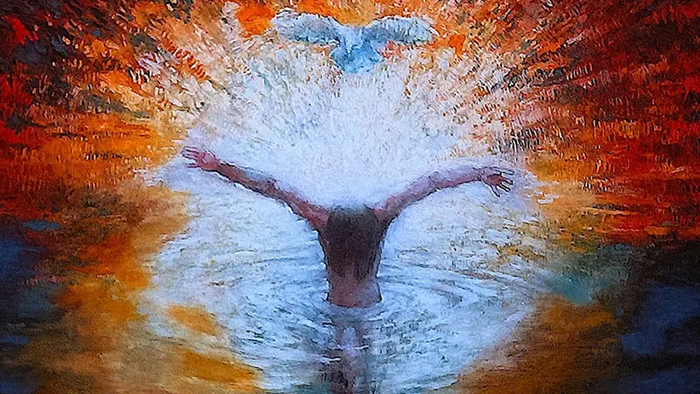
We see this in Jesus, in how he perceived and in how he judged. His was a blessed consciousness. As the gospels describe it, at his baptism, the heavens opened and God’s voice was heard to say: “This is my blessed one, in whom I take delight.” And, it seems, for the rest of his life Jesus was always in some way conscious of his Father saying that to him: “You are my blessed one!” As a consequence, he was able to look out at the world and say: “Blessed are you when you are poor, or when you are persecuted, or suffering in any way. You are always blessed, no matter your circumstance in life.” He knew his own blessedness, felt it, and, because of that, could operate out of a blessed consciousness, a consciousness that could look out and see others and the world as blessed.

Sadly, for many of us, the opposite is true: We perceive others and the world not through a blessed consciousness but through a cursed consciousness.  We have been cursed and because of that, in whatever subtle ways, we curse others. Cursing is what we do when we look at someone whom we don’t like and think or say: “I wish you weren’t here!  I hate your presence! I wish you’d go away!” Cursing is what we do when we affronted by the joyous screams of a child and we say: “Shut up! Don’t irritate me!” Cursing is what we do when we look at someone and think or say: “What an idiot! What a jerk!” The residual result of this “cursing” is shame, depression, and a cursed consciousness.

Whatever is received is received according to the mode its receiver. Our harsh judgments of others say less about them than they say about us. Our negativity about others and the world speaks mostly of how bruised and wounded, ashamed and depressed, we are – and how little we ourselves have ever heard anyone say to us: “In you I take delight! [Excerpt from Ron Rolheiser’s “On Blessed and Cursed Consciousness” March 2011]

As you received Christ Jesus the Lord, walk in him, rooted in him and built upon him and established in the faith as you were taught, abounding in thanksgiving. Colossians 2:6-7

Discipleship must involve a focus on both Jesus and the wider mystery of Christ. A personal relationship with Jesus provides a grounding, but one must also understand the cosmic dimension of Christ—the “energy that lures creation towards its Creator” and the “soul that binds the whole of physical creation together”.

Being rooted in Christ is not a purely individual endeavor. It means being integrated into the visible community of believers, the Church, which Rolheiser calls the “more flawed body of Christ on here on earth”. This commitment to a community is non-negotiable for authentic Christian conversion. Christian discipleship is a lifelong process with three main stages:

Essential Discipleship: The early stage involves the “struggle to get our lives together.” This period, often beginning in adolescence, focuses on finding one’s identity, meaning, and place in the world.
Mature Discipleship: In adulthood, the focus shifts to the “struggle to give our lives away.” This is a generative stage of living for others and giving back to the community. Qualities like empathy, forgiveness, and gratitude define this phase.
Radical Discipleship: The final stage, often late in life, is the “struggle to give our deaths away.” This involves accepting diminishment and mortality with grace, much like Jesus’s passivity during his passion. By dying well and without bitterness, one can leave a final blessing for the world.

Rootedness in Christ requires honesty with oneself, a willingness to admit our faults and stop rationalizing our failures. For Rolheiser, “No honest heart will stray far or stay long from the truth,” and honest self-acknowledgment allows Christ to find and heal us. A life rooted in Christ is ultimately a life overflowing with gratitude. For Rolheiser, the deepest reality is that we have all been touched by “loving hands”. Living in gratitude for this reality is a mark of a mature disciple. [Adapted from Ron Rolheiser’s teaching on being “rooted” in Christ]

Behold, the virgin shall be with child and bear a son,and they shall name him Emmanuel, which means :God is with us.” Matthew 1:23

Can you prove that God exists? No, at least not in a way that would compel anyone to make an act faith on the basis of a mathematical or scientific argument. God can’t be proven in that way, albeit these “proofs” point to some important things. The existence of God can’t be empirically proven because God doesn’t work that way. God doesn’t appear in the world as the conclusion to a mathematical equation. God, as we know through the way Christ was born, comes into our lives at the end of a gestation process.

That also describes how faith is born in our lives. God never dynamites his way into to our lives with a force so powerful that we can’t resist. The divine never takes us by storm. No. God always enters the world in the same way that Jesus did on the first Christmas. God is gestated in a womb and appears as a helpless infant that has to be picked up, nurtured, and coaxed into adulthood. The presence of God in our world, at least within the dynamics of the incarnation, depends upon a certain human consent and cooperation. For God to take on real flesh and power in the world we must first do something. What?

The answer to that lies in the way Jesus was born. Mary, Jesus’ mother, shows us a certain blueprint, a pattern for how God is born into our world and how faith is born in our lives. Impregnation by the Holy Spirit; Gestation of God within one’s body; The agony of giving birth. How do you prove to anyone, yourself included, that God exists? You don’t. The object of our faith and worship doesn’t appear as a compelling proof at the end of a rational experiment. God has to be gestated into the world in the same way as Mary did all those years ago at the first Christmas. [Excerpt from Ron Rolheiser’s “Giving Birth to God” December 2001] 

“If any one comes to me without hating his father and mother, wife and children, brothers and sisters, and even his own life, he cannot be my disciple.” Luke 14:26

Luke’s Gospel today provides the one of the greatest, most “slap you in the face” challenges the Lord ever offered: “If anyone comes to me without hating his father and mother . . . and even his own life, he cannot be my disciple.” There is the great spiritual principle that undergirds the entire Gospel: detachment. The heart of the spiritual life is to love God and then to love everything else for the sake of God. But we sinners, as St. Augustine said, fall into the trap of loving the creature and forgetting the Creator. That’s when we get off the rails.

We treat something less than God as God—and trouble ensues. And this is why Jesus tells his fair-weather fans that they have a very stark choice to make. Jesus must be loved first and last, and everything else in their lives has to find its meaning in relation to him. In typical Semitic fashion, he makes this point through a stark exaggeration: “Unless you hate your father and mother, wife and children, brothers and sisters . . .” Well yes, hate them in the measure that they have become gods to you. For precisely in that measure are they dangerous. – Bishop Robert Barron

Then he said to them, “The Son of Man is lord of the sabbath.” Luke 6:5

Early Christian monks believed in something they called, Acedia, that was a flattening out, a dearth of energy, that put you into a semi-vegetative state that simply deadened all deep feeling and thoughts. Simplistically put, because we won’t sit down on our own and give our bodies and minds the rest, nourishment, and space they need, our bodies and minds conspire together to sit us down, forcibly. In essence, that’s acedia, and, in essence, it’s for our own health.

When you read the Judeo-Christian scriptures, particularly the early sections in Genesis which chronicle the creation of the world and how God “rested” on the Sabbath, you see that there’s a divinely-ordered rhythm to how work and rest are supposed to unfold in our lives. Briefly stated, there’s to be pattern, a rhythm, to our lives which works this way: You work for six days, and then have a one day sabbatical; you work for seven years, and then have a one-year sabbatical; you work for seven times seven years, and then have a Jubilee year, a sabbatical for the whole planet; and then you work for a lifetime, and go on an eternity of sabbatical.

We are finding ourselves today less and less able to step away from all that we are connected to through information technology, and consequently we are finding ourselves less and less able to simply rest, to let go of things, to be in Sabbath-mode. Seven hundred years ago, the Sufi poet, Rumi, lamented: I have lived too long where I can be reached! That’s a cry for Sabbath time that went up long before today’s information technology placed us where we can always be reached, and that cry is going up everywhere today as our addiction to information technology increases. One worries that we will not find the asceticism needed to curb our addiction, but then acedia may well do for us what we cannot do for ourselves. [Excerpt from Ron Rolheiser’s “Acedia and Sabbath” July 2017]

HTML Snippets Powered By : XYZScripts.com