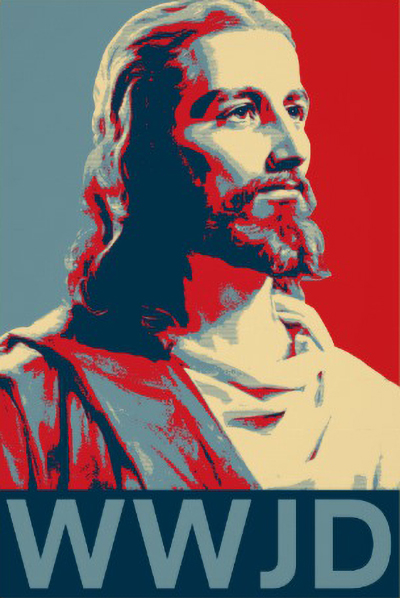
He replied, “Rather, blessed are those who hear the word of God and observe it.” Luke 11:28

What would Jesus do? For some Christians, that’s the easy answer to every question.  In every situation all we need to ask is: What would Jesus do? At a deep level, that’s actually true. Jesus is the ultimate criterion. He is the way, the truth, and the life and anything that contradicts him is not a way to God. But Jesus’ life presented complexities. We see that sometimes he did things one way, sometimes another way, and sometimes he started out doing something one way and ended up changing his mind and doing it in a different way, as we see in his interaction with the Syro-Phoenician woman.

That’s why, I suspect, within Christianity there are so many different denominations, spiritualities, and ways of worship, each with its own interpretation of Jesus. Jesus is complex. So where does this leave us?

Well, the way of most Christian denominations, is where we submit our private interpretation to the canonical (“dogmatic”) tradition of our particular church and accept, though not in blind, uncritical, obedience, the interpretation of that larger community, its longer history, and its wider experience, humbly accepting that it can be naïve (and arrogant) to bracket 2000 years of Christian experience so as to believe that our insight into Jesus is a needed corrective to a vision that has inspired so many millions of people through so many centuries.

Still, we’re not meant to park the dictates of our private conscience, our critical questions, our unease with certain things, and the wounds we carry, at our church door either. What would Jesus do? We need to answer that for ourselves by faithfully holding and carrying within us the tension between being obedient to our churches and not betraying the critical voices within our own conscience. If we do that honestly, one thing will eventually constellate inside us as an absolute: God is good!  Everything Jesus taught and incarnated was predicated on that truth. Anything that jeopardizes or belies that, be it a church, a theology, a liturgical practice, or a spirituality is wrong.

What would Jesus do? Admittedly the question is complex. However we know we have the wrong answer whenever we make God anything less than fully good, whenever we set conditions for unconditional love, and whenever, however subtly, we block access to God and God’s mercy. [Excerpt from Ron Rolheiser’s “Anchoring Ourselves Within God’s Goodness” December 2019]
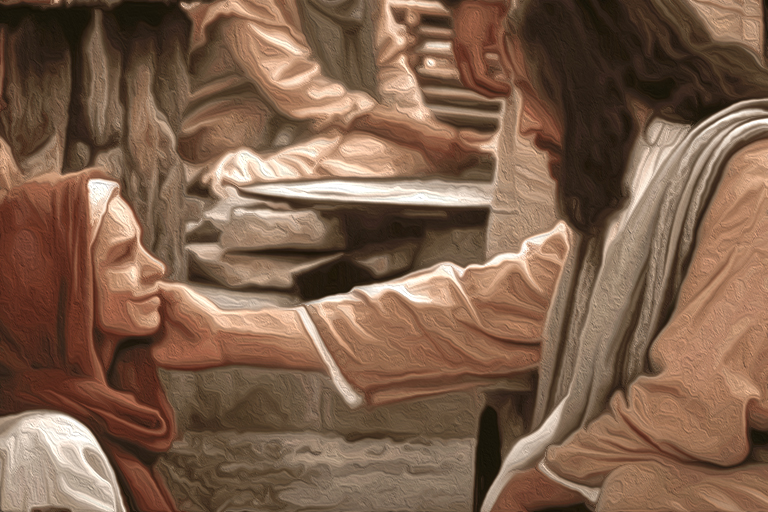
But the LORD sits enthroned forever; he has set up his throne for judgment. He judges the world with justice; he governs the peoples with equity. Psalm 9:8-9

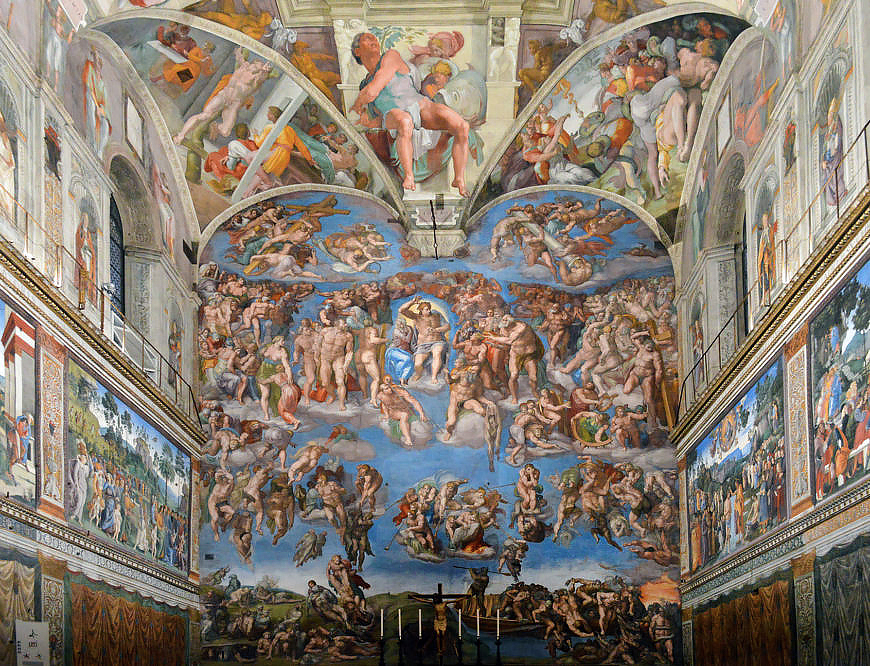
Michelangelo, Last Judgment, Sistine Chapel, altar wall, fresco, 1534–41 (Vatican City, Rome) 

We all fear judgment. We fear being seen with all that’s inside us, some of which we don’t want exposed to the light. Conversely, we fear being misunderstood, of not being seen in the full light, of not being seen for who we are. And what we fear most perhaps is final judgment, the ultimate revelation of ourselves. Whether we are religious or not, most of us fear having to one day face our Maker, judgment day. We fear standing naked in complete light where nothing’s hidden and all that’s in the dark inside us is brought to light.
What’s curious about these fears is that we fear both being known for who we are, even as we fear not being known for who we really are. We fear judgment, even as we long for it. Perhaps that’s because we already intuit what our final judgement will be and how it will take place. Perhaps we already intuit that when we finally stand naked in God’s light we will also finally be understood and that revealing light will not just expose our shortcomings but also make visible our virtues.
Wendell Berry in his writing, It is Hell until it is Heaven, says, “I might imagine the dead waking, dazed into a shadowless light in which they know themselves altogether for the first time. It is a light that is merciless until they accept its mercy; by it, they are at once condemned and redeemed. Seeing themselves in that light, if they are willing, they see how far they have failed the only justice of loving one another. And yet, in suffering the light’s awful clarity, in seeing themselves within it, they see its forgiveness and its beauty and are consoled.”
For those of us who are Roman Catholics, this notion of judgment is also, I believe, what we mean by our concept of purgatory. Purgatory is not a place that’s separate from heaven where one goes for a time to do penance for one’s sins and to purify one’s heart. Our hearts are purified by being embraced by God, not by being separated from God for a time so as to be made worthy of that embrace. As well, as Therese of Lisieux implies, the punishment for our sin is in the embrace itself. Final judgment takes place by being unconditionally embraced by Love. When that happens to the extent that we’re sinful and selfish that embrace of pure goodness and love will make us painfully aware of our own sin and that will be hell until it is heaven. [Excerpt from Ron Rolheiser’s “Judgement Day” March 2020]

But for you who fear my name, the sun of justice will arise with healing in its wings. Malachi 3:20

St. John of the Cross once proposed this axiom” “Learn to understand more by not understanding than by understanding.” Now imagine that someone who has known you deeply for a long time comes up to you and says: “You are a mystery to me. I’ve known you for most of my life and I still can’t figure you out. Sometimes I think I understand you, but you constantly surprise me. “There’s a depth and a complexity to you, something beyond me, that I’ve never fully grasped and I feel good about that. It adds to your mystique! All these years – and I am still just getting to know you!”

Wouldn’t you fell more understood, in this case, by not being understood? Wouldn’t you feel freer to be yourself and more valued as a person? When Scripture says “fear of the Lord is the beginning of wisdom,” essentially this is what it has in mind, namely, the kind of reverence and respect that backs off and lets others be fully who they are. To properly fear someone is to be afraid of violating them, of not respecting them properly.

Fear is almost never seen as positive. Fear connotes repression, timidity, oppressions, lack of nerve and immaturity, all of which are bad. There is in our culture a neurosis and a paranoia about fear of God…A certain fear is not only healthy, it’s necessary for love, peace and happiness. A healthy fear is not a fear of punishment or of experiencing guilt. God is not threatened by human creativity. God is trying to set us on fire.

Fear of the Lord is the beginning of wisdom. It is also the secret to love, harmony and respect…If we each had the wisdom that comes from fear of the Lord, the face of the earth would be renewed because our marriages, families, churches and places of work would explode with new meaning as we began to understand more by not understanding and began to see things familiar as unfamiliar again. [Adapted from Ron Rolheiser’s “Gifts of the Holy Spirit – Fear of the Lord” March 1998]

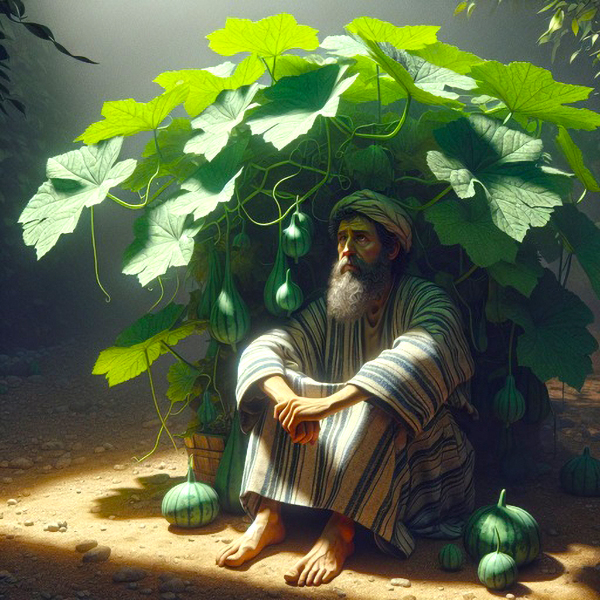
Jonah was greatly displeased and became angry that God did not carry out the evil he threatened against Nineveh. Jonah 4:1

Jonah’s unforgiving nature regarding Nineveh is an example of a deep spiritual challenge that mirrors humanity’s own struggles with resentment, bitterness, and envy. The final spiritual struggle is often not against the “devil” (our early weaknesses) but against God, specifically the bitterness that comes from feeling wounded or cheated by life. Jonah’s intense anger at God for forgiving Nineveh serves as a powerful biblical example of this struggle. 

Jonah is angry at God’s mercy because he knows the Assyrians of Nineveh are evil and undeserving of forgiveness. His demand for justice for his enemies blinds him to God’s universal compassion and his own need for grace. Jonah is unable to accept the forgiveness that God provides the Ninevites.

Forgiveness is the antidote to the bitterness and anger that can consume us as we get older. Jonah’s final words in the book, full of self-pity and resentment, serve as a stark warning about the danger of an unforgiving heart. The point of the story is not to show that Jonah was right, but to challenge the reader’s own willingness to accept God’s expansive mercy.

Jonah’s final argument with God is a perfect illustration of this. The prophet is not struggling with a base sin but with God’s very nature of being “gracious and merciful, slow to anger, abounding in steadfast love”. And this is our final challenge in life. Jonah’s story is the mirror forcing us to ask if we are okay with God loving our enemies. It challenges us to move beyond our own resentments to embrace the radical, expansive nature of God’s love. [Adapted from Ron Rolheiser’s “Overcoming Anger – the Final Spiritual Struggle” April 1997]

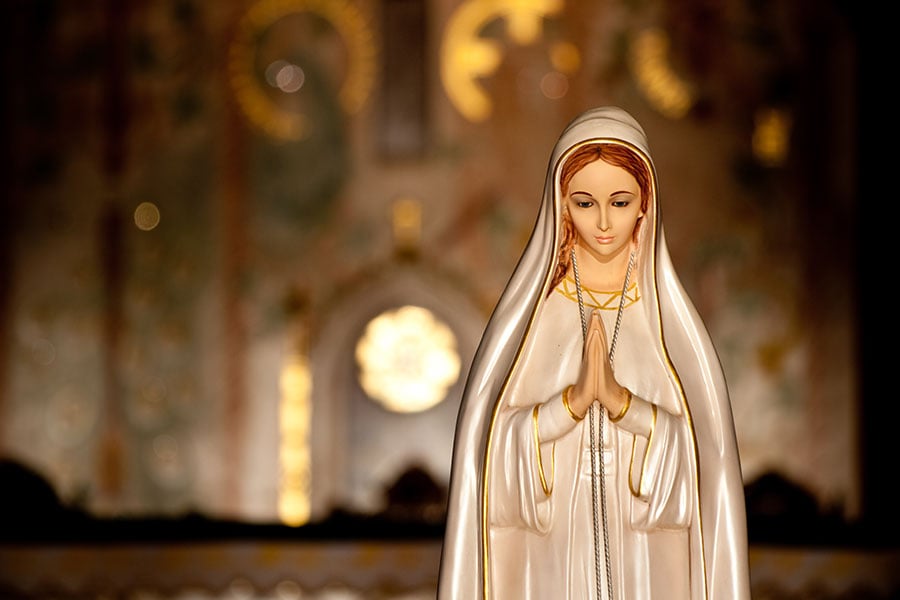
Blessed are those who hear the word of God and observe it. Luke 11:28

Among all the people in the gospels, Mary is the pre-eminent example of the one who hears the word of God and keeps it. For this reason, more than because of biological motherhood, Jesus claims her as his mother. Giving birth to Christ is something more than biological. Looking at how Mary gave birth to Christ, we see that it’s not something that’s done in an instant. Faith, like biology, also relies on a process that has a number of distinct, organic moments. What are these moments? What is the process by which we give birth to faith in the world?

First, like Mary, we need to get pregnant by the Holy Spirit. We need to let the word take such root in us that it begins to become part of our actual flesh. Then, like any woman who’s pregnant, we have to lovingly gestate, nurture, and protect what is growing inside us until it’s sufficiently strong so that it can live on its own, outside us. This process, gestation, as we know, is often accompanied by nausea, morning sickness, and a stretching of the flesh that permanently scars the body.

Eventually, of course, we must give birth. What we have nurtured and grown inside of us must, when it is ready, be given birth outside. This will always be excruciatingly painful. There is no painless way to give birth. Birth, however, is only the beginnings of motherhood. Mary gave birth to a baby, but she had to spend years nurturing, coaxing, and cajoling that infant into adulthood. Finally, motherhood has still one more phase. As her child grows, matures, and takes on a personality and destiny of its own, the mother, at a point, must ponder (as Mary did). She must let herself be painfully stretched in understanding, in not knowing, in carrying tension, in letting go.

And in this, Mary wants imitation, not admiration: Our task too is to give birth to Christ. Mary is the paradigm for doing that. From her we get the pattern: Let the word of God take root and make you pregnant; gestate that by giving it the nourishing sustenance of your own life; submit to the pain that is demanded for it to be born to the outside; then spend years coaxing it from infancy to adulthood; and finally, during and after all of this, do some pondering, accept the pain of not understanding and of letting go. [Excerpt from Ron Rolheiser’s “Mary as a Model of Faith” December 2003]

“Which of these three, in your opinion, was neighbor to the robbers’ victim?” He answered, “The one who treated him with mercy.” Jesus said to him, “Go and do likewise.” Luke 10:36-37

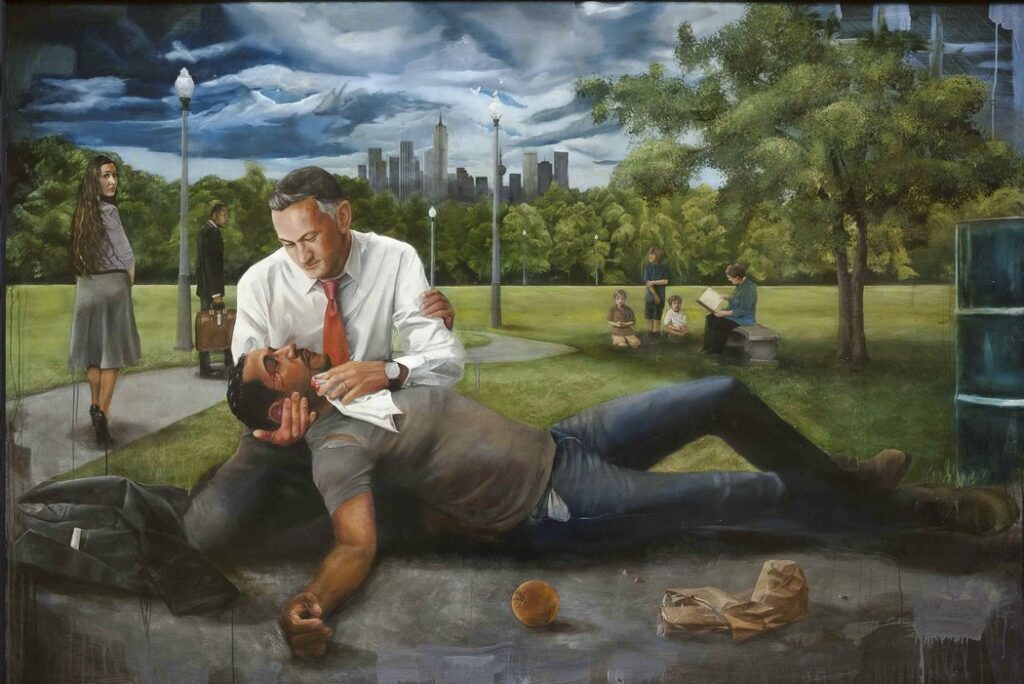
Who is my neighbor? What does it mean to be neighbor to one another? Jesus once answered this by telling us the parable of the Good Samaritan. One of the interesting things in this parable is that those who did not stop to help him, the priest and the scribe, did so for reasons that go far beyond the question of their individual selfishness and selflessness. They did so for certain ideological, religious reasons. One of the interesting things in this parable is that those who did not stop to help him, the priest and the scribe, did so for reasons that go far beyond the question of their individual selfishness and selflessness. They did so for certain ideological, religious reasons. Thus, the priest did not stop because he feared that the man was dead and, being a priest, if he touched a dead body he would be ritually defiled and thereby unable to offer sacrifice in the temple. The scribe had his own religious reasons for not stopping. The Samaritan, who had the least to lose religiously, was able to be moved by simple human compassion. What if we updated the characters in the story to modern day roles – how would that change our choices?

One day a man was taking a walk in a city park when he was mugged, beaten up, and left for dead by a gang of thugs. It so happened that, as he lay there, the provincial superior of a major religious order walked by and saw him. He thought to himself: “If I help this man, I will set a dangerous precedent. Then what will I do? Having helped him, where will I draw the line? This is ultimately a question of fairness.” And thus he passed him by.

A short time later, a young woman, a theology student, happened to come along. She too saw the man lying wounded. Her first instinct was to stop and help him, but a number of thoughts made her hesitate. “The course on pastoral care I just took, taught that it is not good to try to rescue someone. It’s simply a savior complex which doesn’t do the other person any good in the long run and comes out of a less than pure motivation besides. I would only be trying to help that person because it makes me feel good and useful. It would be a selfish act really; ultimately only this man can help himself.” So, she too, passed by the wounded person.

Finally, the CEO of Texaco Oil happened to be out joy riding in the new BMW he had just purchased. He chanced to see the wounded man lying there. Seeing the face of that wounded person, something in him suddenly changed. A compassion he didn’t even know he possessed took possession of him. Tears filled his eyes and, deeply moved, he got out of his car, bent over, and gently picked up the man. He carried him to his car and gently laid him in the back seat, oblivious of the fact that blood was staining the clean white upholstery. Arriving at the emergency entrance of the nearest hospital, he rushed in and hollered for the paramedics. After a stretcher had brought the man into the emergency room, they discovered that he had no medical insurance. The CEO produced a Visa Gold Card and told the hospital staff to give the wounded man the best medical attention possible money was to be no object. He promised to cover all hospital expenses.

Who was neighbor to the wounded man? [Adaptation of Ron Rolheiser’s “The Good Samaritan” July 2016]

When you have done all you have been commanded, say, “We are unprofitable servants; we have done what we were obliged to do.” Luke 17:10

Nikos Kazantzakis. Reflecting on the double pull of Christ and the world, he once wrote: “Every person partakes of the divine nature in both spirit and flesh. That is why the mystery of Christ is not simply a mystery for a particular creed: it is universal. The struggle between God and human nature breaks out in everyone, together with the longing for reconciliation. Most often The stronger the soul and the flesh, the more fruitful the struggle and the richer the final harmony. The Spirit wants to have to wrestle with flesh that is strong and full of resistance. It is a carnivorous bird which is incessantly hungry; it eats flesh and, by assimilating it, makes it disappear. Struggle between flesh and spirit, rebellion and resistance, reconciliation and submission, and finally the supreme purpose of the struggle/union with God: this was the ascent taken by Christ, the ascent which he invites us to take as well, following in his bloody tracks.”

The tension, as Kazantzakis, writes it up here, reflects the language and concepts of his Greek background. Hence, there is more than a little classical dualism (body versus soul) in his expression. But the struggle he describes, despite the limits of his Greek dualism, stills capture the heart of the issue. All sensitive persons should expect a life and death struggle within their souls and the harmony that needs to be established there between world and God, flesh and soul, earth and transcendence, will be long, painful, full of competing voices, and will often times, seemingly, pit life against life.

What is said too is that, just because it is natural to feel that the world and God (flesh and soul, full life and church) are opposed to each other and seemingly demand that we choose one over the other, does not mean that they are, in fact, irreconcilable. The point is not to choose between them, but to hold them both in a way that fully respects their respective values. That will not be easy, nor quick, but God wants to wrestle with resistance  – and the more bitter the struggle, the richer the final harmony. [Excerpt from Ron Rolheiser’s “Wrestling with God” December 1997]

“Blessed are the eyes that see what you see.” Luke 10:23

Sometimes you can see a whole lot of things just by looking. That’s one of Yogi Berra’s infamous aphorisms. It’s a clever expression of course, but, sadly, perhaps mostly, the opposite is truer. Mostly we do a whole lot of looking without really seeing much. Seeing implies more than having good eyesight. Our eyes can be wide open and we can be seeing very little. 

We see this most clearly at those times when Jesus heals people who are blind.  He’s giving them more than just physical sight; he’s opening their eyes so that that can see more deeply. But that’s only an image. How might it be unpackaged? How can the grace and teachings of Jesus help us to see in a deeper way? Here are some suggestions:

  • By shifting our eyes from seeing through familiarity to seeing through wonder.
  • By shifting our eyes from seeing through paranoia and self-protection to seeing through metanoia and nurture.
  • By shifting our eyes from seeing through jealousy to seeing through admiration.
  • By shifting our eyes from seeing through bitterness to seeing through eyes purified and softened by grief.
  • By shifting our eyes from seeing through fantasy and auto-eroticism to seeing through appreciation and prayer.
  • By shifting our eyes from seeing through relevance to seeing through contemplation.
  • By shifting our eyes from seeing through anger to seeing through forgiveness.
  • By shifting our eyes from seeing through longing and hunger to seeing through gratitude.

Longing and hunger distort our vision. Gratitude restores it. It enables insight. The most grateful person you know has the best eyesight of all the people you know. [Excerpt from Ron Rolheiser’s “Seeing in a Deeper Way” March 2015]

If today you hear his voice, harden not your hearts. Psalm 95:8

“The person who will not have a softening of the heart will eventually have a softening of the brain!” That warning, issued by G.K. Chesterton more than a half century ago, is particularly relevant for today, a time when virtually everything conspires against tenderness and softness.

Everywhere, today, the atmosphere is one of professionalism, efficiency, toughness, competitiveness, and lean strength. Workplaces, and at times even our homes and church circles, leave little room for softness, be it inefficiency, sentiment, or fat.  Even to insert a call for any tenderness and softness to somehow tone this down is to endanger one’s status and respect. Our world has a very restricted place for what is unprofessional, sentimental, inefficient, fat, soft and fragile. Toughness and achievement are what get respect.

For this reason, we often experience our places of work and even our homes as being cold and somewhat brutal. But when we feel this coldness, what we are actually experiencing is our own intimidation. Our fear of being seen as soft, fat, childish, and as unable to handle pressure and meet certain standards of toughness and efficiency pushes us to make every kind of sacrifice rather than let ourselves be so judged.  This shouldn’t be so, but, in fact, most often is. Ideally, we shouldn’t allow ourselves to be thus intimidated, but, most often, we do. The fact is that we generally do live and work within an atmosphere that is cold and unfeeling.

Given this, perhaps the most important prayer moments we can have each day are those moments which soften the heart, moments which bring us back to eagerness of spirit, hospitality, compassion, and childlike joy. To have a tender moment is to pray.  Praying is more than just saying prayers. We are asked to “pray always.” This implies that we need to be praying even when we aren’t formally saying prayers. We share a common heart and a common struggle. To become aware of that is to soften the heart.  The world can be hard and, if we aren’t careful, if we do not massage the tender moment as prayer, we will harden too, becoming as untender, cold, and inhospitable as the world itself. [Excerpt from Ron Rolheiser’s “Fear of Tenderness Stifles the Soul” June 1989]

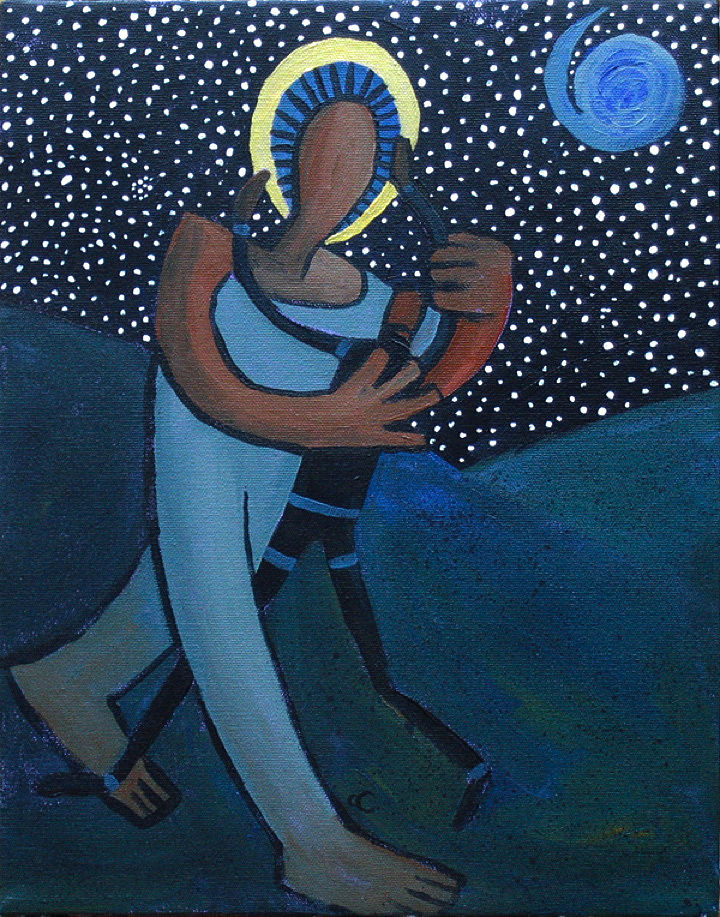
Amen, I say to you, unless you turn and become like children, you will not enter the Kingdom of heaven. Matthew 18:3

Unless you change and become like little children you will not enter the Kingdom of Heaven. So what does Jesus have in mind when he holds up the heart of a child as an ideal? The quality of heart, seen in a child, that Jesus most challenges us to imitate is that of acknowledging powerlessness and helplessness. A child is powerless. It cannot provide for itself, feed itself, or take care of itself. For a child, if mum and dad do not get up and make breakfast, there will be no breakfast! A child knows dependence, knows that life comes from beyond itself, that it is not self-providing and self-sufficient.

But how can this be undone? How can we “change and become like little children”? Nature, God, and circumstance often do it for us. Here is an example: Several years ago, I went to the funeral of a ninety year-old man. While he had always been an honest man, a good man, a family man, and a man of faith, he had also, at least up until the years shortly before his death, been a particularly strong man, fiercely independent, proud of his self-sufficiency, and not infrequently hard on others and cantankerous in his dealings with them. His son, a priest, preached the funeral mass and said this in his homily:

Scripture tells us that the sum of years of a man’s life is seventy, eighty for those who are strong. But my dad lived for ninety years. Why those extra ten years? Well, it’s no mystery: In my dad’s case, God needed ten extra years to mellow him. He wasn’t ready to die at eighty; he was still too strong, too independent, too self-reliant. But the last ten years did their work on him: He lost his wife, his health, much of his independence, his place in society, and his firm grip on life. And that mellowed his soul. He died ready to grasp a stronger hand.

We have a choice: We can do this process deliberately, on purpose (so to speak), or we can fiercely guard our strength and sense of self-sufficiency and wait for nature, God, and circumstance to do it for us. [Except from Ron Rolheiser’s “The Heart of a Child” August 2008]

HTML Snippets Powered By : XYZScripts.com