Were not our hearts burning within us while he spoke to us on the way and opened the Scriptures to us? Luke 24:32

The disciples were filled with their own worries as they traveled along the Emmaus road—they were filled with anxiety, and disappointment about the future. A stranger joined them on the road and they repeated the recent events—the crucifixion, the empty tomb, the testimony of the women about the angel visitation saying that Jesus had risen. But these two were not buying any of that because disappointment and anxiety hung around them. “We had hoped he was the one who would redeem Israel.”

That’s one of the most melancholy statements in Scripture—”we had hoped he would be the one…We had hoped….” We know how that feels, don’t we?  We had hoped our finances worked out differently. We had hoped our health was better.  We had hoped our kids would go to church. We had hoped there would be no more war by now. We had hoped we would stop wondering about our faith by this age.

It’s funny how worry and anxiety and disappointment can blind us from seeing what is right in front of our eyes. When the mind doesn’t believe something possible, it is hard for the senses to receive the information. Cleopas and his friend on the road to Emmaus were so anxious, and so certain that Jesus was still dead, that the risen Lord appeared to them, walked along beside them, taught them all about the Hebrew scriptures and how Jesus was the fulfillment of that—and they still did not see him. The light of the world was right beside them, but to their eyes, the risen Lord just looked like a fellow traveler on the way to Emmaus.

But Jesus met the disciples where they were at—walking away from Jerusalem, not believing the testimony of the empty tomb, and full of disappointment and anxiety. That’s exactly where Jesus shows up in our lives, too. It is so easy to believe that fears, worries, doubts, anxieties separate us from God, drive God away from us, disappoint Jesus and mean that we are somehow outside the family of God and circle of faith—but that is precisely where Jesus meets us, walks with us, engages us, loves us.

A friend of mine had a plaque in her kitchen that said, “Before you go to bed at night, give your worries to God, he’ll be up all night anyway!” Rev. Ralph Abernathy during the Civil rights movement once said, “I don’t know what the future holds, but I know Who holds the future.” Lay your worries at the altar, for the Risen One who reveals himself in the breaking of the bread, holds the night, and our future secure. (Excerpt from Linda Little’s “The Road to Emmaus: The Walk of Worry and Revelation,” May 2019]

When Jesus had taken the wine, he said, “It is finished.”And bowing his head, he handed over the spirit. John 19:30

“It is fulfilled!” The Greek word here is Tetelesti.  This was an expression used by artists to signify that a work was completely finished and that nothing more could be added to it. It was also used to express that something was complete.

When is our life fulfilled? At what point in our lives do we say: “That’s it! That’s the climax! Nothing I can do from now on will outdo this. I’ve given what I have to give.”

Henri Nouwen suggests that people will answer this very differently: “For some it is when they are enjoying the full light of popularity; for others, when they have been totally forgotten; for some, when they have reached the peak of their strength; for others, when they feel powerless and weak; for some it is when their creativity is in full bloom, for others, when they have lost all confidence in their potential.”

For Jesus, it wasn’t immediately after his miracles when the crowds stood in awe, and it wasn’t after he had just walked on water. It wasn’t when his popularity reached the point where his contemporaries wanted to make him king that he felt he had accomplished his purpose in life and that people began to be touched in their souls by his spirit. None of these. When did Jesus have nothing further to achieve?

Henri Nouwen again, in answering this question: “We know one thing, however, for the Son of Man the wheel stopped when he had lost everything: his power to speak and to heal, his sense of success and influence, his disciples and friends – even his God. When he was nailed against a tree, robbed of all human dignity, he knew that he had aged enough, and said: ‘It is fulfilled’”

On the cross, faithful to the end, to his God, to his word, to the love he preached, and to his own integrity, he stopped living and began dying, and that’s when he gave off his seed and that’s when his spirit began to permeate the world. He had reached his deepest center, his life was fulfilled. [Excerpt from Ron Rolheiser’s “When is our Life Fulfilled?” November 2018]

“This is my body that is for you. Do this in remembrance of me…This cup is the new covenant in my blood. Do this, as often as you drink it, in remembrance of me.” 1 Corinthians 11:24-25

Christians argue a lot about the Eucharist. What does it mean? What should it be called? How often should it be celebrated? Who should be allowed to fully participate? There are lots of views on the Eucharist:

  • For some it is a meal, for others it is a sacrifice
  • For some it is a ritual act, sacred and set apart, for others it is a community gathering, the more mess and kids there the better.
  • For some it is a deep personal prayer, for others it is a communal worship for the world. 
  • For some its very essence is a coming together, a communion, of those united in a single denominational faith, while for others part of its essence is its reaching out, its innate imperative to wash the feet of those who are different from ourselves.
  • For some it is a celebration of sorrow, a making present of Christ’s suffering and the thus place where we can break down, for others it is the place to celebrate joy and sing alleluia.
  • For some it is a ritual remembrance, a making present of the historical events of Jesus’ dying, rising, ascending, and sending the Holy Spirit, for others it is a celebration of God’s presence with us today.
  • For some it is a celebration of the Last Supper, something to be done less frequently, for others it is God’s daily feeding of his people with a new manna, Christ’s body, and is something to be done every day.
  • For some it is a celebration of reconciliation, a ritual that forgives and unites, for others unity and reconciliation are pre-conditions for its proper celebration.
  • For some it is a vigil act, a gathering that is essentially about waiting for something else or someone else to appear, for others it is a celebration of something that is already present that is asking to be received and recognized.
  • For some it is understood to make present the real, physical body of Christ, for others it is understood to make Christ present in a real but spiritual way.
  • Some call it the Lord’s Supper, others call it the Eucharist, others call it the Mass.
  • Some celebrate it once a year, some celebrate it four times a year, some celebrate it every Sunday, and some celebrate it every day.

Who’s right? In truth, the Eucharist is all of these things and more. It is like a finely-cut diamond twirling in the sun, every turn giving off a different sparkle. It is multi-valent, carrying different layers of meaning, some of them in paradoxical tension with others. There is, even in scripture, no one theology of the Eucharist, but instead, there are various complementary theologies of the Eucharist. The fault, which is not a fault at all but a marvel, lies in the richness of the Eucharist itself. In the end, it defies not just theology professors, but metaphysics, phenomenology, and language itself.  

For instance, we already see variations among the apostolic communities as to how they understood the Eucharist, what it should be called, and how often it should be celebrated. Some early communities called it the Lord’s Supper, connected its meaning very much to the commemoration of the Last Supper, and celebrated it less frequently. Whereas the apostolic community that formed around John connected its theology and practice very much to the concept of God feeding his people daily with manna, and they celebrated it every day, given that we need sustenance daily.

There is no adequate explanation of the Eucharist for the same reason that, in the end, there is no adequate explanation for love, for embrace, and for the reception of life and spirit through touch. Certain realities take us beyond language because that is their very purpose. They do what words cannot do. They are also beyond what we can neatly nail down in our understanding. And that is true of the Eucharist. Any attempt to nail down its full meaning will forever come up short because it will always eventually get up and walk away with the nail! [Excerpt from Ron Rolheiser’s “The Many Faces of the Eucharist,” May 2008]

The Lord GOD has given me a well-trained tongue, that I might know how to speak to the weary a word that will rouse them. Isaiah 50:4

Sand Opera began as a daily Lenten meditation, working with the testimonies of the tortured at Abu Ghraib, to witness to their suffering. My desire in Sand Opera is to make the Iraq War and the wider war on terror visible, to make a visible and audible map of it, a map that we would carry in our eyes and ears, in our bodies and hearts, to replace the maps of pundits and demagogues.

As Isaiah writes, “Morning after morning/ He opens my ear that I may hear.” Sand Opera is the sound of my listening. These poems carry forth voices that have opened me—an Arab-American living through the paranoid days after the terrorist attacks of Sept. 11, 2001, and my daughter’s coming to consciousness in a world where war leaks through the radio and television. The words of my daughter at the end of the poem “Hung Lyres” embody what I hope I can continue to open myself into:

What does it mean, I say. She says, it means 
to be quiet, just by yourself. She says, there’s 

a treasure chest inside. You get to dig it out. 
Somehow, it’s spring. Says, will it always 

rain? In some countries, I say, they are 
praying for rain. She asks, why do birds sing? 

In the dream, my notebook dipped in water, 
all the writing lost. Says, read the story again. 

But which one? That which diverts the mind 
is poetry. Says, you know those planes 

that hit those buildings? Asks, why do birds sing? 
When the storm ends, she stops, holds her hands 

together, closes her eyes. What are you doing? 
I’m praying for the dead worms. Says, listen:

– PHILIP METRES

My children, I will be with you only a little while longer. John 13:33

Theologians have long reflected on the striking brevity of Jesus’ public ministry—often understood to span only a few years—and generally interpret it not as a sign of divine intentionality. Figures such as Augustine of Hippo and Thomas Aquinas argued that Christ’s mission unfolded according to a precise divine plan, accomplishing exactly what was necessary within the appointed time. 

Rather than emphasizing duration, theologians highlight the intensity and completeness of what was revealed, with thinkers like Karl Barth describing Jesus’ life as a concentrated expression of God’s self-disclosure. The shortness of the ministry also subverts human expectations of power and success: as Dietrich Bonhoeffer observed, its culmination in suffering and execution reveals a divine logic rooted in humility and sacrifice rather than worldly dominance, a key dimension of the Incarnation. 

Ultimately, the limited span of Jesus’ ministry serves to focus attention on its decisive climax in the Crucifixion of Jesus and resurrection, which are understood as the central acts of salvation, making the question of length secondary to the completeness and purpose of what was achieved.

Ron Rolheiser reflects on the shortness of Jesus’ earthly ministry in a way that emphasizes psychological and spiritual completeness rather than chronological length. For Rolheiser, what stands out is not how long Jesus lived or ministered, but that he reached a point of inner readiness and maturity—a stage where he could fully give himself away without clinging to life, success, or unfinished ambitions.

Rolheiser often frames this through what he calls the “four stages of spiritual transformation” seen in Jesus’ life: good Friday (loss), Easter Sunday (new life), the ascension (letting go of presence), and Pentecost (new form of presence). In this pattern, the brevity of Jesus’ mission is not a tragedy but a sign that he had completed the essential human and spiritual journey. Jesus did not need decades of public influence; he needed to reach the point where he could surrender completely in love and trust.

The shortness of Jesus’ mission is deeply reassuring—it implies that fulfillment is not about how much time we have, but about whether we have come to the point of giving ourselves fully and freely.

A bruised reed he shall not break, and a smoldering wick he shall not quench, until he establishes justice on the earth. Isaiah 42:3

Catholic theologians primarily see in our reflection verse from Isaiah a connection with both Christ’s first coming and its completion at his Second Coming. St. Thomas Aquinas frames Christ’s mission in two stages:
– First coming: Christ inaugurates justice through grace, teaching, and redemption.
– Second coming: Christ perfects justice in the Final Judgment.

In this framework, “until he establishes justice” points to a process unfolding in history, not something completed immediately. Justice begins in the Church but is only fully realized when Christ returns to judge the living and the dead.

St. Augustine interprets such prophetic language through the lens of the two cities (earthly vs. heavenly): Justice is being established now through the spread of the Gospel. But justice is delayed because history is still mixed with sin. So “until” signals an ongoing mission that reaches completion only at the end of time, when Christ definitively orders all things under God.

Fr. Ron Rolheiser emphasizes that God’s way of establishing justice is organic, patient, and non-coercive. Christ does not fix the world in a single dramatic intervention; rather, he inaugurates a process that respects human freedom and unfolds within history.

Christ’s physical presence gives way to a sacramental and communal presence in the Church. This means that the work described in Isaiah—establishing justice on the earth—has not been postponed, but diffused into countless acts of fidelity, compassion, and moral courage carried out by ordinary believers. Justice, then, is already real but hidden, advancing quietly wherever the Gospel takes root.

Christ is quietly, patiently establishing justice in the world through us, and what remains unfinished will only be completed when he comes again.

My God, my God, why have you abandoned me? Psalm 22

What is a dark night of the soul? A dark night of the soul is an experience where our felt-sense of God dries up and disappears. At the level of feeling, thought, and imagination, we are unable to conjure up any sense of security or warm feelings about the presence of God in our lives. We feel agnostic, even atheistic, because we can no longer imagine the existence of God. God seems non-existence, absent, dead, a fantasy of wishful thinking.

But notice that this takes place at the level of the imagination and feelings. God doesn’t disappear or cease to exist. What disappears are our former feelings about God and our capacity to imagine God’s existence.

God exists, independent of our feelings. Sometimes our heads and hearts are in tune with that and we feel its reality with fervor. Other times our heads and hearts cannot attune themselves to the think, imagine, and feel the existence of a God who ineffable, unimaginable, and Other (by definition) and we experience precisely a certain absence, depression, or void when we try to imagine God’s existence and love.

Why are dark nights of faith given to us? Why does God seemingly sometimes withdraw his presence? Always to make us let go of something that, while it may have been good for awhile, an icon, is now causing some kind of idolatry in our lives.

Whenever we cry out in faith and ask God why he isn’t more deeply present to our sincerity, God’s answer is always the same one he gives in Scripture, time and time again: You will find me again when you search for me with your whole heart, your whole mind, and your whole soul, that is, when you let go of all the things that, right now, in your mind and heart you have mistaken for God!” [Excerpt from Ron Rolheiser’s “Dark Nights of Faith in Our Lives,” April 2012]

Cast away from you all the crimes you have committed, says the LORD, and make for yourselves a new heart and a new spirit. Ezekiel 18:31

During the last year of her life, Therese of Lisieux corresponded regularly with a young man named Maurice who was preparing to become a missionary. This man, despite being very sincere and quite pious, had some rather serious moral struggles. While he greatly admired Therese, eagerly awaited her advice on things, and relied upon her prayers to help him, he was always afraid to tell her about his moral failures. Thus, for a long time, he would share with her only about the good things in his life, but never about his sins and failings. He feared that if he told her the real truth she would be shocked, lose respect for him, and turn away.      

I was afraid that in love you would take on the prerogative of justice and holiness and that everything that is sullied would then become an object of horror for you.” Therese’s response to this comment is most noteworthy: “It must be that you don’t know me well at all, if you are afraid that a detailed account of your faults would lessen the tenderness that I feel for your soul.”

God should get more press like this. The fear that this young man experienced in his relationship to Therese is the exact one that all of us perennially have in our relationship with God. We are afraid that in the sight of goodness and holiness all that is sullied in us will be an object of horror. Simply put, we are afraid that God’s good opinion of us might change should all of our darkest secrets be laid bare. Thus Therese’s words could have come right from God’s own mouth: “You don’t know me very well, if you are afraid that baring your faults before me will lessen the tenderness I feel towards you.”

We treat God as we would a visiting dignitary, namely, we show God what we think God wants to see in us, tell God what we think God would want to hear about us, and hide all those things that we feel will lessen God’s affection. We try to hide our faults from God, worrying that if we really bared our souls God would be displeased.

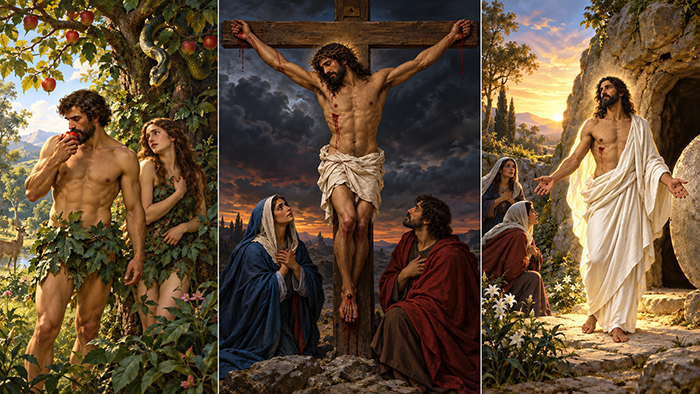
After Adam and Eve sinned, they too did what comes naturally, they hid and tried to camouflage their shame by their own efforts at clothing themselves. But their shame remained until God found them and gave them real clothing with which to cover their guilt.

We do not know God very well at all when we fear coming into God’s presence, replete with all that is within us, weaknesses as well as strengths. Nothing we do can ever lessen God’s tenderness towards us. [Excerpt from Ron Rolheiser’s “On Not Hiding From God,” August 1999]

All those who were my friends are on the watch for any misstep of mine. Jeremiah 20:10

It’s dishonesty, living a double life, that kills the soul and kills families.”

The unforgivable sin against the Holy Spirit begins with lying, with rationalization, with the refusal to acknowledge the truth. But we don’t commit this sin easily, overnight, the first time we tell a lie. The soul warps slowly, like an old board soaked too often in the rain. It’s not the first time it gets wet that makes the warp. We commit the sin against the Holy Spirit when we lie for so long that we believe our own lies. If we lie long enough, eventually light begins to look like darkness and darkness begins to look like light.

That’s especially true of the lie of a double life, when we are no longer honest with our loved ones. If we do that long enough, eventually our betrayals begin to look like virtue, our lies like the truth, and what our families, faith, and churches stand for begins to look like falsehood, death, darkness.

About 15 years ago, a young man, still in his twenties, produced an award-winning movie, Sex, Lies, and Videotapes. The story is rather simplistic and crass at times, but overall teaches the a lesson that could be from John’s gospel: The hero of the story, a young man with a bad history in the area of sexuality, resolves to make himself better by making a vow to never again tell a lie, even a very small one. Like the man who’s born blind in John’s gospel, that vow brings him to health. He gets better, much better. He then sets up a video camera and invites people to come and tell their stories. Those who tell the truth also get better, healthier, and those who lie and hide their infidelities continue to deteriorate in both health and happiness. The truth does set us free.

In her book, Guidelines for Mystical Prayer, Ruth Burrows describes what it means to die a “happy death”. To die in a good way, she states, is not a question of whether or not death catches us in a morally good moment or a morally bad one (dying drunk in a bar as opposed to dying in a church). Rather, to die a happy death is to die in honesty, without pretence, without the need to lie about our lives. [Excerpt from Ron Rolhiser’s “The Truth Sets Us Free,” July 2005]

“Amen, amen, I say to you, before Abraham came to be, I AM.” John 8:58

Our reflection verse today from John’s Gospel speaks of the original covenant of God and Abraham, and the profound revelation of Christ’s eternal nature and his identity as the “Great I AM” who transcends time. 

Msgr. John J. McIlhon, in his work, Forty Days Plus Three, writes that Jesus represents the final covenant God made with humankind. “The sign of this covenant bore no mark of earthly distinctiveness—no tree of good and evil, no rainbow, no circumcision, no Passover lamb. The mark of the new covenant was Jesus Christ and his new way of living, distinguishing God’s chosen people from all others. Christ’s way of living was a new kind of circumcision, marked on the hearts of Christ’s followers by “the two-edged sword of God’s Word.” God designed that a divinely chosen people should be distinguished from all others by the kind of love Jesus generously displayed.”

While Jesus was a flesh-and-blood individual, the “I AM” statement points to the eternal Christ who predates all creation and continues to be present through the Word, the Eucharist, and the community of believers. 

Fr. Ron Rolheiser writes that just as Abram had to become Abraham, we are called to expand our hearts and identities. Jesus’ claim of being “before Abraham” underscores a divine authority that calls us out of our “comfortable and secure” boundaries into a larger, more inclusive faith. This statement is one of Jesus’ most powerful declarations of divinity, directly echoing God’s self-revelation to Moses at the burning bush (“I AM WHO I AM”). It signifies that Jesus is not merely a prophet but the eternal Son of God, uncreated and self-existent.

HTML Snippets Powered By : XYZScripts.com