I am the resurrection and the life, says the Lord; whoever believes in me will never die. John 11:25-26


To believe in the resurrection of Jesus is to be comforted, comforted at a level so deep that nothing in life is any longer ultimately a threat. In the resurrection, the hand of God soothes us, and the voice of God assures us, frightened children that we are, that all is good, and that all will remain good forever and ever.

Sociologist of religion, Peter Berger, outlining what he calls “rumours of angels in everyday life”, gives us the following reflection:

Consider the most ordinary, and probably the most fundamental of all – the ordinary gesture by which a mother reassures her anxious child. A child wakes up in the night, perhaps from a bad dream and finds himself surrounded by darkness, alone, beset by nameless threats. At such a moment the contours of trusted reality are blurred and invisible, in the terror of incipient chaos the child cries out for his mother. It is hardly an exaggeration to say that, at this moment, the mother is being invoked as a high priestess of protective order. It is she (and, in many cases, she alone) who has the power to banish the chaos and to restore the benign shape of the world. And, of course, any good mother will do just that. She will take the child and cradle him in the timeless gesture of the Magna Mater who became our Madonna. She will turn on a lamp, perhaps, which will encircle the scene with a warm glow of reassuring light. She will speak or sing to the child and the content of this communication will invariably be the same – “Don’t be afraid – everything is in order, everything is all right.

The mother’s comforting reassurance, “Don’t be afraid, it is all right”, is, in fact, a profession of faith in God and the resurrection. When she says these words, she is making an act of faith just as surely, even if not as explicitly, as if she were saying: “I believe in God, the Father Almighty … and I believe in the resurrection of the body and life everlasting.”

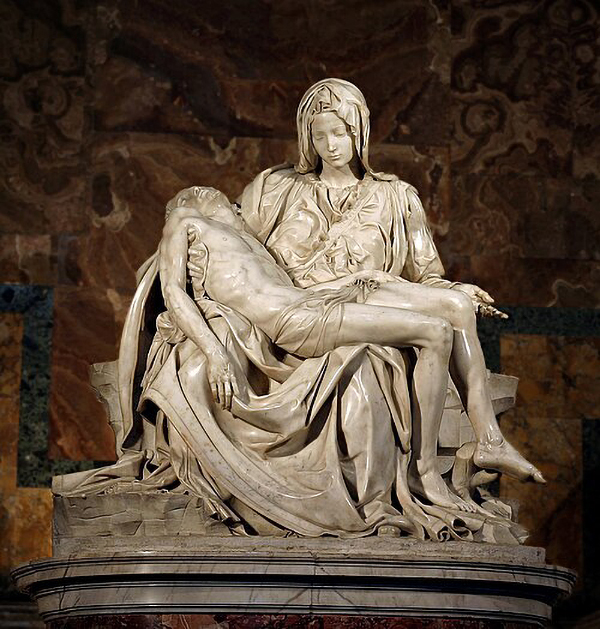
Do you want to understand the power of the resurrection? Meditate on Michelangelo’s Pieta: A woman holds a dead body in her arms, but everything about her and about the scene itself says loudly and clearly: “Don’t be afraid. It’s all right. Everything is all right!” [Excerpt from Ron Rolheiser’s “I Believe in the Resurrection,” March 1994]
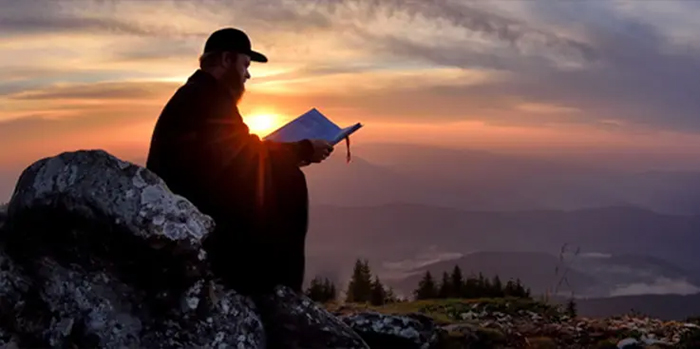
Therefore, the Jews began to persecute Jesus because he did this on a sabbath. John 5:16

The Sabbath is a symbol of resting and playing in God. It is also a symbol for praying to God.

Sabbath is not just stopping work; it is taking time for joy, celebration, family, and relationship-building. The Sabbath is made for humanity, meaning it serves human flourishing. Doing good works, such as caring for a sick loved one or connecting with the community, aligns with this purpose.

Ron Rolheiser argues that enjoying the fruits of creation—good food, leisure, and beauty—is a key part of Sabbath and acts as a form of thanksgiving. The third commandment teaches us that, ultimately, we have no purpose outside of enjoying creation and glorifying its maker. Everything else we do is in function of that. Regularly, we need to stop working and hurrying and re-appreciate that fact. It is when we forget that the unimportant things become too important and we become consumed by hurry and pressure.

What can all of this mean, today, concretely, in a culture of Sunday shopping, Sunday jobs, Sunday business as usual, and sporting events which dominate our Sundays? It doesn’t mean that we should feel riddled by a false guilt which says: “God has given you six days, now you can’t even give him one day or one hour back!” We don’t owe God anything. God made us freely, in love, and wants us to respond freely in gift. He doesn’t demand our love.

What the Sabbath does mean is that on one day a week, ideally Sunday, we must stop work, try to center our lives, try to slow things down, try to re-appreciate why we are here in the first place, and then worship and celebrate that with God and each other through prayer, food, and play.  Life is too short for the way we are living.[Exceprt from Ron Rolheiser’s “Slow The Rat Race, Take A Rest,” April 1988]

Lo, I am about to create new heavens and a new earth. Isaiah 65:17

Our reflection verse today is one of many biblical promises of something new awaiting us. Some interpret this as the destruction of our current world, while others see it as a promise of its transformation. Fr. Ron Rolheiser writes that this verse emphasizes what is good and loving in life, which will be redeemed and transfigured.

Our future existence is the renewal of this earth, where God’s promise means taking the current reality and bringing it to perfection. Our actions of love, justice, and kindness in this life possess an eternal, irrevocable quality that carries over into this new creation.

The “new heavens and new earth” represents the ultimate hope where all suffering, iniquity, and limitations of the current, broken world are transformed, fulfilling the longing for a paradise where God dwells among us.

Kathy McGovern reflects on the story of Edie Littlefield Sundby and her walking the El Camino Real de las Californias, the old mission trail from Loreto, Mexico, to Sonoma, California, having only one lung left and surviving widespread metastasis of stage IV gall bladder cancer.

McGovern asks, “What is the point of it all, a dying woman forcing herself through often desolate and harsh landscapes in order to reach another mission, some of them decrepit and long abandoned?”

McGovern writes that we might see Sundby’s journey as an excruciating exercise in nostalgia. Yet, unseen in all of this is what God is doing in her tormented body. As she pushes herself on to every single mission site (some still in use, most in ruins), she is being healed. She lives today, twelve years after her diagnosis and six years after setting out on her journey.

Of this stunning pilgrimage, Sundby says: “If I was walking, I was alive.” Might that be what the Spirit is saying to us today as Church, as the People of God? We are all “under construction” in one way or another. God is doing something new. Keep walking, Church, keep walking, People of God. It just might be that God is healing us too.

Awake, O sleeper, and arise from the dead, and Christ will give you light. Ephesians 5:14

We’re called to live in the light, but we tend to have an overly romantic idea of what that should mean. We tend to think that to live in the light means that there should be a kind of special sunshine inside of us, a divine glow in our conscience, a sunny joy inside us that makes us constantly want to praise God, an ambience of sacredness surrounding our attitude.  But that’s unreal.  What does it mean to live in the light?

To live in the light means to live in honesty, pure and simple, to be transparent, to not have part of us hidden as a dark secret.

All conversion and recovery programs worthy of the name are based on bringing us to this type of honesty. We move towards spiritual health precisely by flushing out our sickest secrets and bringing them into the light. Sobriety is more about living in honesty and transparency than it is about living without a certain chemical, gambling, or sexual habit. It’s the hiding of something, the lying, the dishonesty, the deception, the resentment we harbor towards those who stand between us and our addiction, that does the real damage to us and to those we love.

Spiritual health lies in honesty and transparency, and so we live in the light when we are willing to lay every part of our lives open to examination by those who need to trust us.

– To live in the light is to be able always to tell our loved ones where we are and what we are doing.

– To live in the light is not to have to worry if someone traces what websites we have visited.

– To live in the light is not to be anxious if someone in the family finds our files unlocked.

– To live in the light is to be able to let those we live with listen to what’s inside our cell phones, see what’s inside our emails, and know who’s on our speed dial.

– To live in the light is to have a confessor and to be able to tell that person what we struggle with, without having to hide anything.

– To live in the light is to live in such a way that, for those who know us, our lives are an open book.

For it is love that I desire, not sacrifice, and knowledge of God rather than burnt offerings. Hosea 6:6

Fr. Ron Rolheiser writes that a theology of God that reflects God’s compassion and mercy should always be reflected in every pastoral decision we make. Otherwise, we make God look stupid – arbitrary, tribal, cruel, and antithetical to church practice. He shares a quote from Marilynne Robinson, the American novelist and essayist: “Christianity is too great a narrative to be underwritten by any lesser tale, and that should forbid in particular its being subordinated to narrowness, legalism, and lack of compassion.”

So what did Jesus reveal to us about God?

First, that God has no favorites and that there must be full equality among races, among rich and poor, among slave and free, and among male and female. No one person, race, gender, or nation is more favored than others by God. Nobody is first. All are privileged.

Next, Jesus taught that God is especially compassionate and understanding towards the weak and towards sinners. Jesus scandalized his religious contemporaries by sitting down with public sinners without first asking them to repent. He welcomed everyone in ways that often offended the religious propriety of the time and he sometimes went against the religious sensitivity of his contemporaries, as we see from his conversation with the Samaritan woman or when he grants a healing to the daughter of a Syro-Phoenician woman. Moreover he asks us to be compassionate in the same way and immediately spells out what that means by telling us the God loves sinners and saints in exactly the same way.  God does not have preferential love for the virtuous.

Shocking to us too is the fact that Jesus never defends himself when attacked. Moreover he is critical of those who, whatever their sincerity, try to block access to him. He surrenders himself to die rather than defend himself. He never meets hatred with hatred and dies loving and forgiving those who are killing him.

Jesus is also clear that it’s not necessarily those who explicitly profess God and religion who are his true followers, but rather those, irrespective of their explicit faith or church practice, who do the will of God on earth. [Excerpt from Ron Rolheiser’s “Mercy, Truth, and Pastoral Practice,” May 2018]

You shall love the Lord your God with all your heart, with all your soul, with all your mind, and with all your strength…You shall love your neighbor as yourself. Mark 12:30-31

Fr. Ron Rolheiser, in his article, “Measuring Ourselves in Love,” writes that the older we get, the more we begin to know love’s dark side. We fall in love and think it will last forever, but then fall out of love, feel love go sour, feel love grow cold, see love betrayed, feel ourselves wounded by love, and wound others. Finally, even more upsetting, we all find that there are always people in our lives who are cold, bitter, and unforgiving towards us so that it is not always easy to feel love and be loving.

Jesus’ most important commandment: “Love one another as I have loved you!” is too easily read simplistically, romantically, and in a one-sided, over-confident manner. But this command contains the most important challenge of the whole gospel and, like the deepest part of the gospel to which it is linked, the crucifixion, it is very, very difficult to imitate. Why?

It’s easy to consider ourselves as loving if we only look at one side of things, namely, how we relate to those people who are loving, warm, respectful, and gracious towards us. But if we begin to look at the skeletons in our relational closets, our naive confidence soon disappears: What about the people who hate us, whom we don’t like? What about the people whom we avoid and who avoid us? What about those people towards whom we feel resentment? What about those people whom we haven’t been able to forgive?

There’s a sobering challenge in an old Stevie Nicks’ song, Golddust Woman: She suggests that it’s good that, at a point in life, someone “shatters our illusion of love” because far too often, blind to its own true intentions, our love is manipulative and self-serving. Too often, the song points out, we are lousy lovers who unconsciously pick our prey. What shatters our illusion of love is the presence in our lives of people who hate us. They’re the test. It’s here where we have to measure up: If we can love them, we’re real lovers, if we can’t, we’re still under a self-serving illusion.

We close today’s reflection with some inspiring words from by Archbishop José H. Gomez’s article, “The Love Commandment.”
“Jesus knows that love is not easy. There are people who are not easy to like and who are not easy to love. But his love calls us to move beyond our own comfort, our own prejudices. That is why Jesus connects the love of God and the love of neighbor, because Jesus knows we cannot really say we love God if we do not love our neighbor. When we close our eyes to our neighbor’s needs, we close our hearts to God.

One of the saints said, ‘We love God as much as we love the one we love the least.’ And love is like anything else in our lives. The more we do it, the more it becomes a habit. Practice love and, by the grace of God, it will become perfect in you. So that means we need to make that decision to love — every day, in every moment. We need to say, ‘Lord, give me the grace to love — right here and right now. In this situation. With this person.'”

Whoever is not with me is against me, and whoever does not gather with me scatters. Luke 11:23

We often hear people involved with religion saying that one must “choose Jesus or choose the world.” Today’s reflection verse suggests that this is exactly what Jesus is saying. Yet, life and the reality of what it means to follow his teachings call us to a deeper reality, a deeper spiritual maturity. So the choice is more than a mere intellectual acceptance of his statement.

Ron Rolheiser writes that the life Jesus presents is a choice of embracing a deeper moral decision. Following Jesus involves a deep and often painful moral decision to sacrifice worldly desires. It is a conscious choice to accept the “cross”—an emotional crucifixion—in favor of deeper meaning and divine love. It’s accepting a “new maturity,” which balances loving the world’s energy (creativity, relationships, joy) while acting as “salt and light” rather than being consumed by it.

St. Augustine struggled with the choice between faith and the world until one day he realized something. A searcher by temperament, Augustine spent the first thirty-four years of his life pursuing the things of this world: learning, meaning, love, sex, and a prestigious career. However, even before his conversion, there was a desire in him for God and the spiritual. However, like us, he saw that as a separate desire from what he was yearning for in the world. Only after his conversion did he realize something. Here is how he famously expressed it:

“Late have I loved you, O Beauty ever ancient, ever new, late have I loved you! You were within me, but I was outside, and it was there that I searched for you. In my unloveliness, I plunged into the lovely things which you created. You were with me, but I was not with you. … You called, you shouted, and you broke through my deafness. You flashed, you shone, and you dispelled my blindness.”

Saint Augustine was an example of human procrastination. Like Augustine, many of us keep saying, eventually I need to do this, but not yet!

Rolheiser writes that “Ultimately, God is the only game in town, in that no matter how many false roads we take and how many good roads we ignore, we all end up on the one, same, last, final road. All of us: atheists, agnostics, nones, dones, searchers, procrastinators, those who don’t believe in institutionalized religion, the indifferent, the belligerent, the angry, the bitter, and the wounded, end up on the same road heading towards the same destination – death. However, the good news is that this last road, for all of us, the pious and the impious alike, leads to God.”

It would seem best to realize this early, so we do not have to write: “Late, late, have I loved you!” [Excerpts from Ron Rolheiser’s “Our Unconscious Search for God,” February 2021]

Amen, I say to you, until heaven and earth pass away, not the smallest letter or the smallest part of a letter will pass from the law, until all things have taken place. Matthew 5:18

What is the message in the verse from Matthew 5:18 as Jesus is teaching about the Law? Fr. Ron Rolheiser writes that the movement of God in Jesus Christ is a downward one, which invites us to enter into powerlessness; looking down, to investigate the small.

He goes on to write, “The incarnation, the central mystery of our Christian faith, invites us to look down, to investigate the small, to descend. Why? Because that is what God did in the incarnation. He emptied Himself, taking on the form of a slave. He became small, a helpless baby. Unfortunately, although we all know this theoretically, we often struggle to apply it practically. Usually, when we look for God, we look the other way, towards the sky. We investigate the powerful. We try to ascend.”

This downward movement that Rolheiser speaks of invites us to “look for God in the baby rather than in corporate magnate, the president, the prime minister, the rock star, the star athlete, the brilliant writer, the Nobel prize-winning scientist, or the Hollywood god or goddess. It is not that God cannot be present in these. It is just that, given the movement of the incarnation, if we are looking for God these days, we should be looking close to the ground, we should be investigating the small, we should be looking at the baby.”

One of the challenges in walking the path of Christ in our life is understanding, as Rolheiser notes, “To be Christian, to be persons who keep giving flesh to God in this world, we must, ultimately, be free of the tyranny of ambition and achievement, of measuring our meaning and success from what gives us upward mobility. A useful criterion to discern whether we are following Christ or following our own desires (under the guise of following Christ) is precisely whether we are moving upward or downward. Are we deeming equality with God as something to be grasped at? Are we growing in power, prestige, and admiration? Or, are we emptying ourselves and assuming the powerlessness of the poor? There should be no delusion. The Christ-movement is downward.” [Excerpt from Ron Rolheiser’s “The Christ Movement Downward,” November 1995]

He guides the humble to justice, he teaches the humble his way. Psalm 25:9

For most of us, I suspect, the word ego has a negative connotation. To accuse someone of having a big ego is to accuse him of being overfull of himself, inflated, grandiose, and lacking in humility. We almost always oppose the words ego and humility. To have a big ego is to not be humble.

But that can be simplistic and untrue. To have a strong, large ego isn’t necessarily a bad thing. In fact, it is a needed thing, especially if we are ever to achieve anything of worth. Nobody does anything great without a strong ego, and that doesn’t mean that he or she isn’t humble.

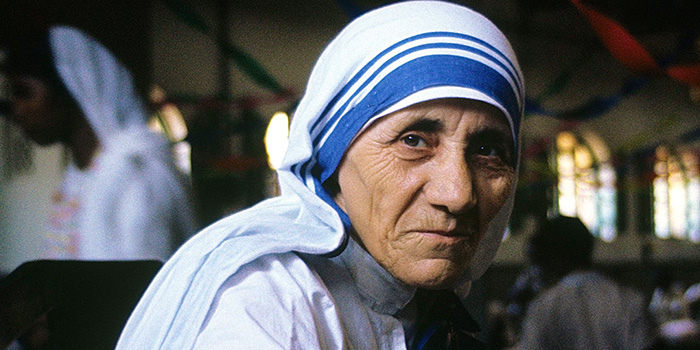
Few people would ever think of Mother Theresa as having had a big ego. We think of her as humility incarnate. Yet, clearly, she had a huge ego – a powerful self-image that allowed her to stand before the whole world convinced of her truth, convinced of her worth, and convinced of her importance. She could stand before anyone in the world secure in the knowledge that her person and her word were important. It takes a powerful ego to do that, one more powerful than most of us possess. Indeed that was one of the keys to her greatness. She was aware that she was a unique and blessed instrument of God in this world and she was secure enough to act on that.

And yet she was humble. She was aware as well, always, that everything that made her unique and special and powerful did not come from her, but from God. She was simply a channel of somebody else’s power and grace. She had a huge ego, but she wasn’t an egoist. She was never full of herself, only full of God.

Spirituality, in general, has been slow to admit the importance of ego and has often been in outright denial of the role it plays in greatness, especially spiritual greatness. Somehow we cannot admit that saints like Francis of Assisi, Theresa of Avila, John of the Cross, or Therese of Lisieux had huge egos – powerful self-images that made them secure in the sense of their unique importance. Instead we project on to them a false idea of humility which isn’t true to them and which hurts us.

It hurts us because, for so many of us, the bigger problem in our lives, including our spiritual lives, is precisely that our egos are too weak. Because our self-image is weak, unlike Mother Theresa, we are too inhibited to reach out, to speak our truth and to express our love. We have too many internal voices (no doubt, originally external voices) that habitually paralyze us with the words: “Who do you think you are!

We struggle to be vulnerable, to not be paranoid and protect ourselves. Why? Precisely because we aren’t secure enough inside, because our egos and our sense of self-worth are shaky. Francis of Assisi, Theresa of Avila, Therese of Lisieux, and John of the Cross never needed to protect themselves. They were secure enough to be vulnerable. They had strong egos. [Excerpt from Ron Rolheiser’s “Humility, Ego, and Greatness.”]

“Now I know that there is no God in all the earth, except in Israel” 2 Kings 5:15

Naaman was a Syrian (an enemy of Israel) and a Gentile who suffered from leprosy. He was the army commander of the Arameans who had captured a little girl in their raid of Israel who became Naaman’s wife servant. This girl tells her mistress that her husband could be healed by the prophet Elisha.

Naaman asks his king and gets his approval to go and meet Elisha. Upon his arrival, after presenting a letter from his king to the king of Israel, Naaman expects a grand gesture from Elisa to cure his leprosy. But he is told to simply wash himself in the dirty Jordan River. But Naaman is angered by this and plans to leave when his servant’s reason with him and help change his mind.

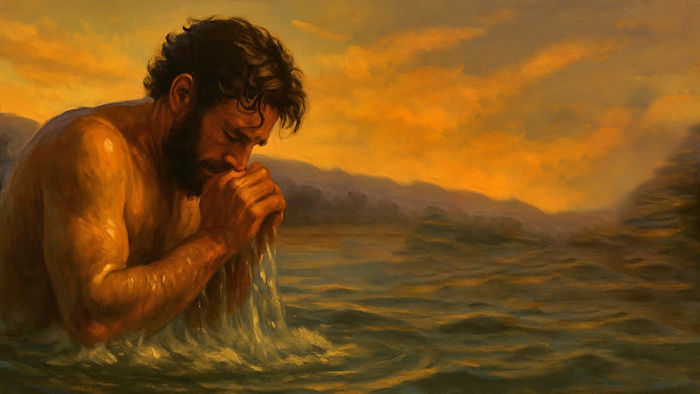
Once Naaman realizes the direction from the prophet Elisha is his opportunity to be cured, he does as Elisha commanded and plunges seven times into the Jordan as sees his leprosy washed away. Fr. Ron Rolheiser highlights this as a lesson in stripping away pride. True healing often requires us to abandon our intellectual, spiritual, or personal pride and accept God’s grace in simple, unglamorous ways.

When Naaman witnesses the healing, he exclaims, “Now I know that there is no God in all the earth, except in Israel.” This statement marks a radical shift from believing in territorial, limited gods to recognizing the one, universal God. His “healing” is as much about spiritual insight as it is about physical health.

Rolheiser notes that Naaman’s declaration is a testament to the universality of God’s grace, which breaks through national, religious, and personal barriers when met with a humble heart. It also emphasizes that God’s power and love are not restricted to the “insiders” or the righteous, but are available to anyone, even those outside the formal faith community.

HTML Snippets Powered By : XYZScripts.com