
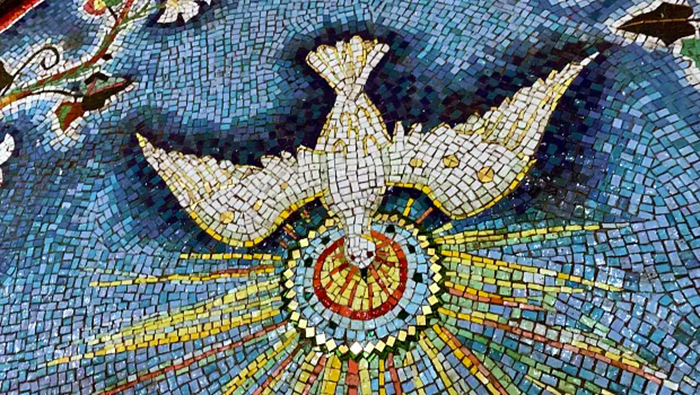
This statement opens one of the deepest windows into the inner life of the Triune God. It is not merely a practical comment about Jesus’ departure; it reveals the dynamic communion between the Father, the Son, and the Holy Spirit, and how humanity is invited into that divine life.
Within the mystery of the Trinity, the Son eternally receives Himself from the Father and eternally returns Himself in love to the Father. The Spirit proceeds as the living communion of love between them. In the economy of salvation, Jesus’ “going” refers not merely to His death, but to His entire Paschal Mystery: His Passion, Resurrection, Ascension, and glorification. Only when the Son has completed His self-offering to the Father does humanity become fully opened to receive the Spirit in a new way.
The risen Christ ascends not to abandon humanity, but to bring human nature into the very life of God. From that glorified humanity, the Spirit is poured out upon the Church at Pentecost. The Spirit is not a replacement for Jesus; He is the presence of Jesus interiorized within believers. Through the Spirit, Christ is no longer beside humanity only in one place and time — He dwells within humanity everywhere.
This is why the early Church understood Pentecost as something far greater than inspiration or emotional empowerment. The Spirit makes believers participants in divine life itself. As Athanasius of Alexandria famously taught, “God became man so that man might become god” — not by nature, but by participation in grace. The Advocate comes to conform humanity to Christ from within.
To truly receive the Spirit requires a death of the ego. Jesus says He must “go,” and in a similar way, the human person must allow self-centeredness to “go” as well. The Spirit does not merely comfort humanity in its present condition; He transforms humanity into the likeness of Christ. That transformation threatens every structure of pride, domination, violence, and self-sufficiency upon which much of the world is built.
The tragedy is that humanity often desires a savior who fixes external problems without transforming the heart. But Jesus did not come merely to improve civilization. He came to unite humanity with the life of the Trinity. The coming of the Advocate means that God is no longer only above humanity or beside humanity — God now dwells within humanity.