
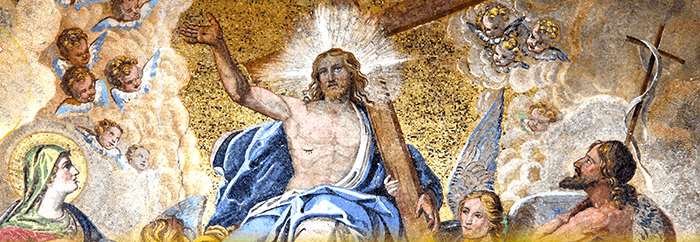
Before His Ascension, Christ’s final words to the apostles were not casual instructions or a summary conclusion to His earthly ministry. They were a solemn commission — the final revelation of what His entire life, death, and Resurrection were meant to accomplish in the world. In the Gospel of Matthew, Jesus declares: “Go therefore and make disciples of all nations”. In Acts, He tells them: “You will be my witnesses… to the ends of the earth”. These final words are striking because, after years of teaching about mercy, humility, forgiveness, sacrifice, and divine love, He does not simply tell them to remember Him privately or preserve His teachings among themselves. Instead, He sends them outward. The love they have received is now meant to become their mission.
Theologically, this reveals something profound about the nature of God’s love. Divine love is never self-contained. Throughout salvation history, God calls a people not merely for their own sake but so that through them the world might know Him. Israel was chosen to be “a light to the nations”. Christ fulfills that mission perfectly and now entrusts it to the Church. The apostles had spent years learning not only doctrines, but a way of life transformed by communion with Christ Himself. Yet the Gospel was never intended to remain enclosed within the Upper Room. If Christ truly conquered sin and death, then His victory is universal in scope. Therefore, the apostles must go outward because the Resurrection changes the destiny of all humanity, not merely a small circle of believers.
There is also a profound connection between these final instructions and everything Christ previously taught about love. Earlier in the Gospel of John, Jesus says, “As the Father has sent me, so I send you”. The mission itself is an act of love. To know Christ and remain silent would contradict the very charity He taught them. Genuine Christian love desires the salvation, healing, and reconciliation of others. Thus, evangelization is not conquest or domination; properly understood, it is the extension of divine mercy into the world. The apostles are sent because love must move outward. Just as the Son was sent by the Father for the life of the world, the Church is sent by Christ for the life of the world.
Christ ascends not to abandon humanity, but to reign universally and to send the Holy Spirit upon the Church. Because He is enthroned at the right hand of the Father, His Gospel now belongs to every nation, culture, and people. The apostles are no longer to remain in Jerusalem waiting for the restoration of an earthly kingdom. The Kingdom has already begun in Christ, and now it must spread to the ends of the earth. His final words direct their eyes away from themselves and toward the universal horizon of salvation history.
In this way, Christ’s last command gathers together everything He taught before it. Love of neighbor becomes a mission. Mercy becomes proclamation. Communion with Christ becomes discipleship for others. The Cross and Resurrection become a message destined for every nation. His final words are simple because they contain the entire purpose of the Church: to continue the saving work of Christ in the world until He comes again.