
From the opening pages of the Bible to the Resurrection narratives of the New Testament, the repetition of “three” frequently marks moments when God brings something incomplete into fulfillment, something broken into restoration, or something earthly into communion with the divine. In biblical thought, three becomes a sacred rhythm of transformation.
At the heart of Christian faith stands the greatest revelation associated with this number: the mystery of the Holy Trinity — Father, Son, and Holy Spirit. The divine life itself is revealed as a communion of three Persons in one God. Thus, whenever the number three appears in Scripture, Christians often perceive echoes of God’s own nature and activity: unity, completeness, and life-giving love.
The Old Testament repeatedly uses the number three as a sign that God is preparing to act decisively. Abraham welcomes three visitors near the oak of Mamre before receiving the promise of Isaac. Jonah spends three days in the belly of the great fish before being restored to life and mission. The prophet Elijah stretched himself over the widow’s dead son three times before the child revived. Israel journeys three days into the wilderness to worship God. On Mount Sinai, the people prepare themselves for three days before the Lord descends upon the mountain in glory. Again and again, “three” becomes a period of purification, transition, and divine encounter.
This pattern reaches its fulfillment in Jesus Christ. Jesus rises on the third day, transforming death into life and despair into hope. The Resurrection is not simply an event after three calendar days; the “third day” becomes the biblical sign that God has completed His saving work. Humanity’s story changes forever through this divine act of restoration.
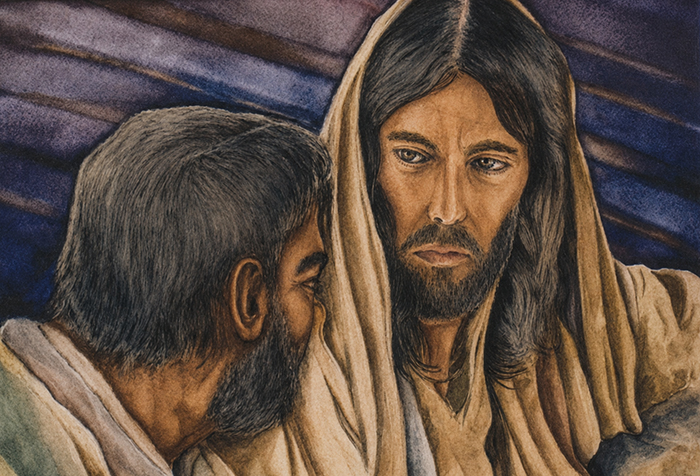
One of the most beautiful examples of the transforming power of “three” occurs in the final chapter of the Gospel of John, when the risen Christ speaks with Simon Peter beside the Sea of Galilee. After Peter’s devastating threefold denial during Christ’s Passion, Jesus asks him three times: “Do you love me?”
The threefold questioning becomes an agent of transformation. Peter, who once trembled before a servant girl, is remade into the shepherd of Christ’s flock. The number three here symbolizes the fullness of reconciliation. Jesus does not merely forgive Peter privately; He recreates him publicly and sacramentally for mission.
Scripture suggests that transformation often unfolds through repetition, testing, repentance, and renewed encounter with God. Peter’s restoration teaches believers that failure does not have the final word. In the conversation between the risen Jesus and Simon Peter, the power of “three” reveals the heart of the Gospel itself: God restores what has been broken and transforms human weakness into instruments of grace. Peter’s threefold profession of love stands as a witness that divine mercy is always greater than human failure, and that in Christ, every ending can become a new beginning.
