
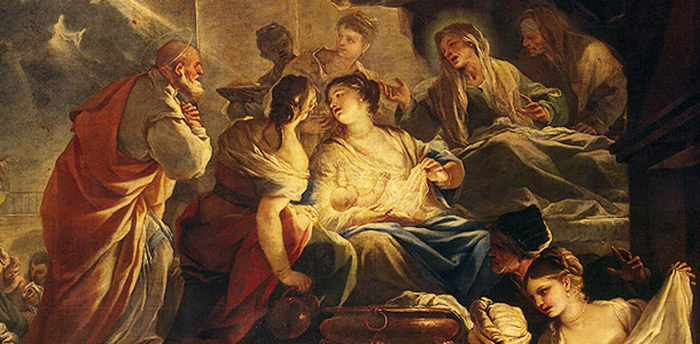
The Church celebrates only three birthdays in the liturgical year: the birth of Jesus, the birth of Mary, and the birth of John the Baptist. That alone tells us something extraordinary about John’s place in God’s plan. Even before he preached in the wilderness, baptized in the Jordan, or pointed to Jesus as the Lamb of God, John was already a child marked by grace and purpose.
Luke’s account of John’s birth is filled with joy, surprise, and the quiet unfolding of God’s providence. Elizabeth and Zechariah had carried the burden of disappointment for many years. They had prayed, hoped, and waited for a child, yet their prayers seemed unanswered. Then, in God’s timing, the impossible became possible, and their son would not simply be a gift to them; he would become a gift to the whole world.
One of the most touching moments in the story comes when the neighbors and relatives assume the child will be named after his father. Instead, Elizabeth insists, “He will be called John.” Zechariah confirms it, and his speech is restored immediately. The name John means “God is gracious,” and this child’s very identity would proclaim God’s mercy.
There is a lesson here for all of us. We often spend much of our lives trying to fit ourselves or others into expectations, traditions, and familiar patterns. Yet God continually calls people by a deeper name. He invites each person into a unique vocation and mission. Like John, we are not accidents of history; we are known, loved, and called by God for a purpose that contributes to His greater work in the world.
The people who witnessed these events asked a profound question: “What, then, will this child be?” It is a question every parent asks and, in a deeper sense, a question every disciple must ask about himself or herself. What is God forming in me? What mission has He entrusted to me? What unique way am I called to prepare the way for Christ in the lives of others?
John’s life offers a beautiful answer. His greatness did not come from drawing attention to himself. In fact, his entire mission was to point beyond himself. Later, he would say, “He must increase; I must decrease.” John understood that fulfillment is found not in being the center of the story, but in helping others encounter the One who is.
This can be challenging in a culture that often encourages self-promotion, recognition, and personal achievement. Yet John reminds us that the deepest joy comes from living for something greater than ourselves. Every act of kindness, every word of encouragement, every effort to reconcile, forgive, teach, or serve can prepare the path for Christ to enter another person’s life.
As we celebrate this solemnity, perhaps the question is not only, “What, then, will this child be?” but also, “What, then, am I becoming?” Each day, God continues to shape us into people who can prepare the way for Christ in our families, workplaces, parishes, and communities.
May Saint John the Baptist teach us to listen for God’s call, trust His timing, and live with the humility and courage to point others toward Jesus. May our lives, like John’s, bear witness to the simple yet profound truth that God is gracious. Amen.
