
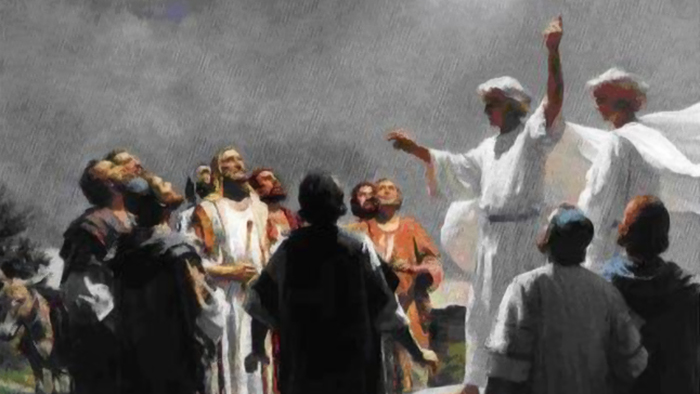
The Ascension of Christ, described in the opening chapter of the Book of Acts, is not merely the story of Jesus departing from the earth; it is the revelation of His glorification, His eternal kingship, and the beginning of the Church’s mission in the world. Within this sacred moment, two details carry profound theological meaning: the appearance of the men in white garments and the promise that Christ “will return in the same way” He ascended.
The “two men dressed in white garments” stand within a long biblical tradition in which heavenly messengers appear clothed in radiant white as signs of divine glory, purity, and heavenly authority. Throughout Scripture, white garments are associated with the holiness of God, the light of heaven, and participation in divine life. At the Transfiguration, Christ’s garments become dazzling white; at the Resurrection, angels appear in shining garments beside the empty tomb; in Revelation, the saints stand before God clothed in white robes. In the Ascension account, these messengers function not only as angels announcing divine truth but also as interpreters of salvation history.
The disciples are “looking intently at the sky,” still focused on the visible presence of Jesus, but the messengers redirect them toward the mission now entrusted to the Church. Their words gently move the apostles from contemplation alone to apostolic action. Christ’s bodily presence is no longer confined to one earthly place because, through the Holy Spirit, He is now sacramentally and mystically present in His Church throughout the world. The white garments, therefore, symbolize the transition from the earthly ministry of Christ to the heavenly reign of Christ and the dawning of the age of the Church.
The final declaration — “This Jesus who has been taken up from you into heaven will return in the same way as you have seen him going into heaven,” carries immense theological significance. First, it affirms the bodily reality of both the Resurrection and the Ascension. Jesus does not abandon His humanity when He enters heaven; rather, humanity itself is brought into the presence of the Father through Him. The Ascension reveals that human nature, united to Christ, is now enthroned in glory. Second, the promise of His return establishes the Christian understanding of history as moving toward fulfillment, not endless repetition. The Church lives between Ascension and Second Coming: Christ reigns already, but His kingdom has not yet been revealed in its fullness. This creates the tension Christians live within the “already and not yet” of salvation history.
For the apostles, this promise transformed grief into hope. The Ascension was not Christ’s absence, but the assurance of His continuing reign and His eventual return. Together, these two elements of the Ascension narrative reveal a profound spiritual truth: the disciples are not meant to remain frozen, gazing upward, longing only for what has passed. They are sent into the world sustained by two certainties: Christ reigns now in heavenly glory, and Christ will come again. Between those two truths, the Church lives its mission: worshiping, proclaiming, suffering, serving, and waiting in hope for the return of the King.
