
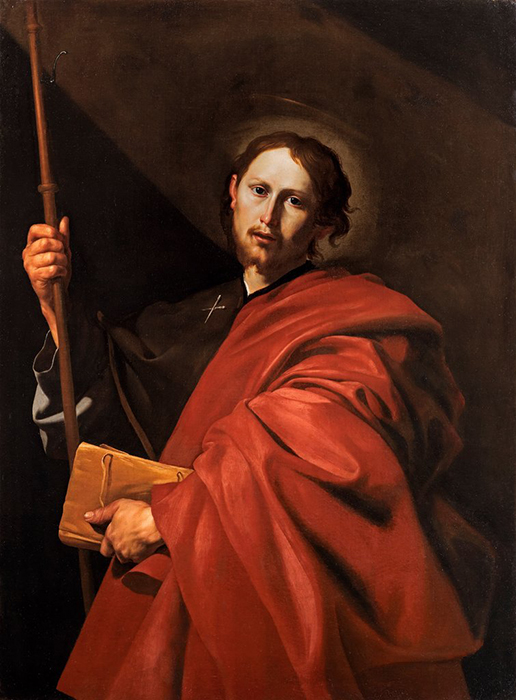
Today the Church celebrates the feast of St. James the Greater, one of the first disciples called by Jesus, one of the three privileged witnesses to the Transfiguration, the raising of Jairus’ daughter, and the agony in Gethsemane. James walked closer to Jesus than almost anyone else, yet his journey reminds us that closeness to Christ is not measured by privilege but by transformation.
James was not always the steady apostle we remember today. Along with his brother John, he earned the nickname “Sons of Thunder”, a fitting description of a man whose zeal often outran his wisdom. He once wanted to call down fire from heaven on those who rejected Jesus. His mother even sought places of honor for her sons in Christ’s kingdom. Like so many of us, James began his discipleship with a mixture of sincere devotion, ambition, and misunderstanding.
Yet Jesus did not reject him. Instead, He patiently formed him.
The New Testament presents a beautiful balance in its portrait of discipleship. St. Peter reminds us that our faith rests upon the grace of Christ. St. Paul proclaims with unmatched clarity that we are justified by God’s grace and not by works of the Law. St. John calls us into the mystery of divine love and communion with God.
James’ voice provides another indispensable note in that same symphony.
Although the Letter of James was written by James the “brother of the Lord,” rather than James the Apostle whose feast we celebrate today, the Church wisely places these two witnesses side by side in our memory. Both embody a discipleship that is visible, practical, and courageous. The apostle lived his faith to the point of martyrdom, and the letter bearing James’ name insists that authentic faith always bears fruit.
“Be doers of the word, and not hearers only.”
Those simple words echo throughout Christian history. Faith is never merely an intellectual agreement or an emotional experience. It is something that reshapes our priorities, governs our decisions, transforms our relationships, and becomes visible in acts of mercy, justice, forgiveness, and sacrifice.
This is not a contradiction of St. Paul’s teaching but its completion. Paul teaches that we are saved by grace through faith. James reminds us that genuine faith, once received, cannot remain hidden. Living faith naturally produces living works, just as a healthy tree naturally bears fruit.
Perhaps that is why the witness of St. James is so important in every generation.
It is easy to admire Jesus without following Him. It is possible to know Scripture without allowing it to change us. We can profess the Creed every Sunday while struggling to forgive, to serve, or to love our neighbor. James challenges us to examine whether our faith has become visible.
The apostle himself offers the perfect example. The man who once sought places of honor eventually accepted the cup of suffering that Jesus had foretold. According to Acts 12, James became the first of the Twelve Apostles to seal his witness with martyrdom. His ambition had been transformed into humble fidelity. The Son of Thunder had become a servant willing to lay down his life for his Lord.
His story reminds us that holiness is not reserved for perfect people. It is the work of Christ in imperfect hearts that continue to say “yes.”
Today, St. James asks each of us a simple question:
“If someone watched your life this week, would they be able to see your faith?“
May we, like James, move beyond merely believing the Gospel to becoming living witnesses of it. For in the end, the most convincing testimony to Christ is not simply what we profess with our lips, but what others encounter through the way we live.