
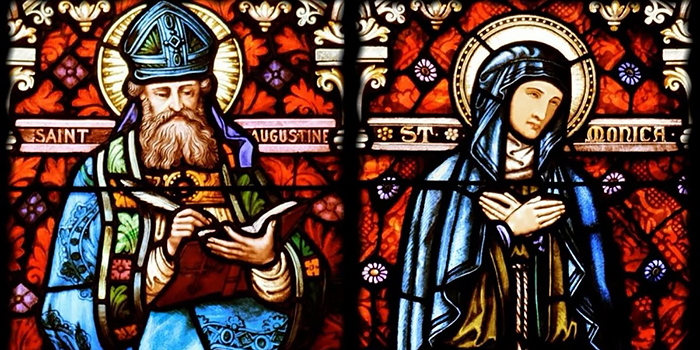
Saint Monica knew the pain of loving someone she could not change. Her son Augustine wandered far from the Christian faith of his childhood, and for years Monica watched him make choices that caused her great anguish. She prayed. She wept. She waited. But she could not make Augustine return to God.
And that may be one of the most important lessons of her life. Love does not always mean fixing someone. Sometimes love means entrusting someone to God. Monica could not control Augustine’s choices, but she could remain faithful. She could continue to pray. She could continue to love. She could continue to believe that God’s grace was at work even when she could not see it.
Eventually, Augustine returned to the faith and was baptized. Augustine later understood that his mother had, in a sense, given birth to him twice—once physically and again spiritually through years of prayer and tears.
But Monica’s final lesson came at Ostia. After Augustine’s conversion, she knew that her earthly life was coming to an end. She had spent years holding her son before God. Now she had to let him go. Perhaps that is where Monica’s faith reached its maturity: she learned not only how to hold on, but how to let go.
There are people in all of our lives whom we cannot change—people we worry about, people who have wandered, people whose choices cause us pain. Saint Monica reminds us that we are not their savior. Christ is. Our calling is to love them, pray for them, witness to the Gospel, and then place them into the hands of God.
The God who heard Monica’s prayers is still the God who works quietly in the hearts of those we love. Sometimes the greatest act of faith is simply to say:
“Lord, I cannot carry this person where they need to go. So I place them in Your hands.”
That is the prayer of Saint Monica. And perhaps it is a prayer we all need to learn.
