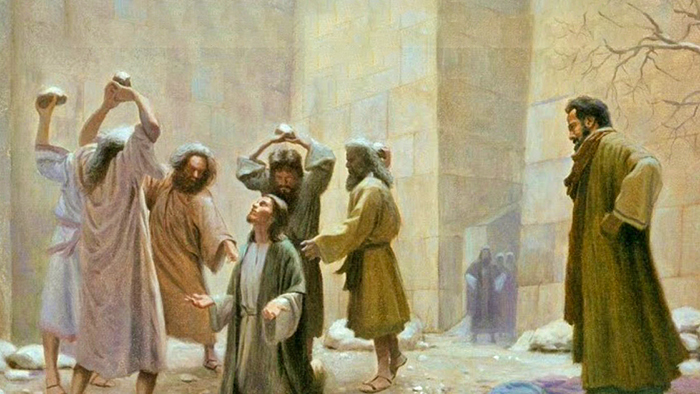
The scene of Saul (later called Paul) consenting to the death of Stephen is one of the most unsettling—and ultimately hope-filled—moments in the New Testament. It places us face-to-face with the mystery of how zeal for God can become distorted, and how grace can transform even the most hardened heart.
Saul is not portrayed as a shallow villain; rather, he is deeply committed, convinced he is defending God’s honor. Ron Rolheiser frequently notes that some of the worst injustices in history have been carried out by people who believed they were doing right. In this light, Saul, standing by, approving the stoning of Stephen, reveals a sobering truth: religious passion, without humility and openness, can justify violence. Yet Rolheiser would also point out that this very zeal becomes, after conversion, the raw material God reshapes for mission. Nothing is wasted—not even our darkest moments.
Before condemning Saul, Henri Nouwen writes that we must acknowledge how often we fail to stand with the “Stephens” in our own lives. God’s gaze is never condemning but always calling—just as Saul, the persecutor, is later called by name and transformed. Saul’s rigid certainty had to collapse before he could encounter the risen Christ. The stoning of Stephen becomes, paradoxically, a moment that exposes the limits of legalistic religion and opens the possibility for grace. God uses even our wrong turns to lead us toward deeper truth; Saul’s fall is not the end of his story but the beginning of his awakening.
In the end, the martyrdom of Stephen and Saul’s consent to it reveal a profound Christian mystery: the same event that manifests human violence also becomes the seedbed of grace. Stephen’s forgiveness (“Lord, do not hold this sin against them”) echoes Christ’s own words and may well have lingered in Saul’s memory, preparing the soil for his encounter with Jesus on the road to Damascus. What appears as a triumph of hatred becomes, in God’s providence, the beginning of redemption.
This passage challenges us not only to condemn injustice but to examine our own certainties, our silences, and our capacity for transformation. It also offers a difficult hope: no life is beyond conversion, and no sin—however grave—lies outside the reach of grace.
