
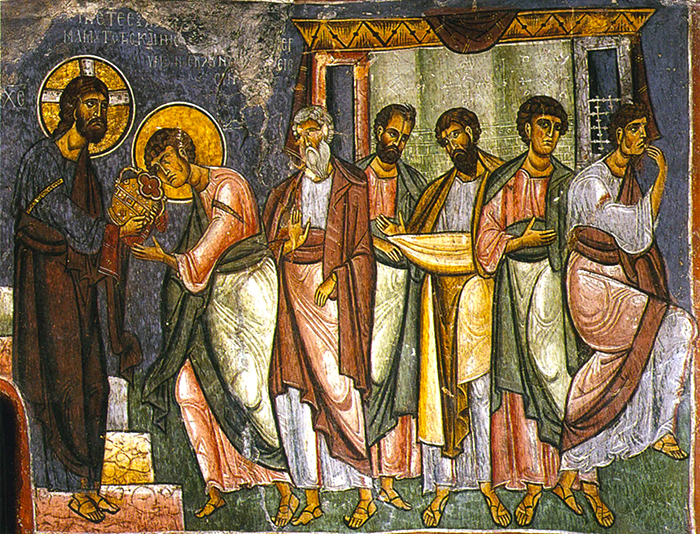
Paul’s instruction to “stand firm and hold fast” was given to Christians facing confusion and false teaching. He reminds them that the apostolic faith had been communicated in two ways: through the Apostles’ oral teaching and through their written letters. Paul does not place these forms in opposition; both transmit the same Gospel received from Christ.
This passage supports the Catholic understanding that God’s revelation is handed on through both Sacred Scripture and Sacred Tradition. Scripture is the inspired written Word of God, while Sacred Tradition is the Church’s living transmission of the apostolic faith. They are not two separate revelations but flow from the same divine source and preserve the one deposit of faith entrusted to the Apostles.
The Magisterium—the Church’s teaching authority—serves Scripture and Tradition by faithfully interpreting and safeguarding what has been handed down. It does not stand above the Word of God or invent new revelation. Likewise, Sacred Tradition should not be confused with customs or disciplines that may change over time; it refers specifically to the faith received from Christ and the Apostles.
Paul’s words also present a personal challenge. Christians are not called to reinvent the faith according to changing opinions or personal preferences, but to receive it humbly, live it faithfully, and pass it on. To “stand firm” is to remain rooted in the apostolic Gospel, while to “hold fast” is to allow that faith to shape how we worship, live, and love.
