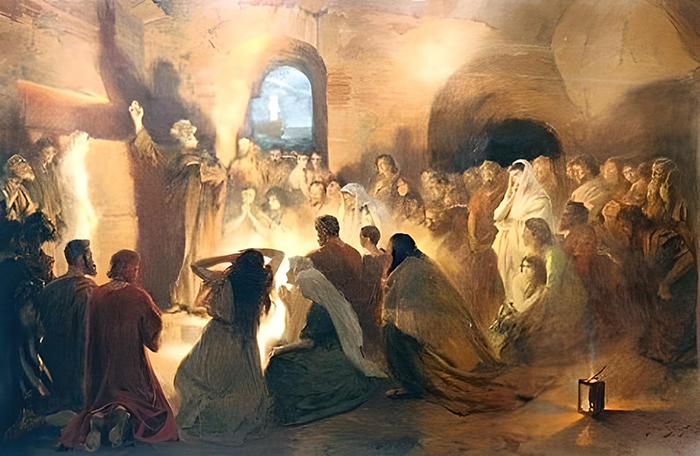

Our reflection verse today from John’s Gospel is one of the most searching statements in the New Testament because it reveals that violence against God’s people is not merely political, social, or psychological—it is ultimately spiritual blindness. Jesus is not simply saying that persecutors lack information about God; he means they do not know God relationally, spiritually, or inwardly. In the biblical sense, to “know” God is to participate in his life, love, mercy, and truth. Those who reject or attack divine love are often defending a world and identity built apart from that love.
The tragedy of humanity, according to Scripture, is that the human heart was created for communion with God yet fears surrender to him. The Gospel of John repeatedly presents this tension between light and darkness. Christ comes as light into the world, but many resist him because the light exposes what is hidden within the heart. Divine love is not sentimental; it is transformative. To encounter the true God means confronting pride, self-centeredness, domination, injustice, and false securities. Many would rather silence the voice of God than allow themselves to be changed by him.
This helps explain why a God who is pure love can become the object of violent rejection. The problem is not that God is unloving, but that authentic love threatens the ego’s desire for control. The Cross itself becomes the great revelation of this paradox: humanity crucifies the very One who heals it. Jesus does not conquer by force, political power, or retaliation; he conquers through self-emptying love. Yet fallen humanity often interprets vulnerable love as weakness and truth as accusation. As a result, divine goodness becomes unbearable to those who cling to darkness.
Jesus’ warning to the disciples is therefore also a profound consolation. He tells them persecution does not mean God has abandoned them; rather, it reveals that they are participating in the same divine life that the world resisted in him. The disciple becomes united to Christ not only in love and joy but also in rejection and suffering. The Cross reveals both the depth of human alienation and the even greater depth of divine mercy. Ignorance of God produces violence; true knowledge of God produces mercy.
This also explains why Christianity insists that evangelization is not fundamentally about winning arguments but about revealing the Father through a life transformed by love. People may reject doctrines they do not understand, but often what they most deeply resist is the call to surrender themselves to a God whose love demands conversion. The believer is therefore called not merely to endure opposition but to become a living witness that the love rejected by the world is still the very love that sustains it.