
“I made known to them your name, and I will make it known, that the love with which you loved me may be in them and I in them.” John 17:26

In the prayer of Jesus recorded in John’s Gospel that we reflect upon today, we are drawn into the very heart of Christ’s mission. These words are spoken at the conclusion of the Last Supper discourse, just before Jesus enters into His Passion. They reveal not only what Jesus has done for His disciples, but also what He desires to continue doing through them and within them.

In biblical language, to “make known” the name of God means far more than teaching a title or concept. The “name” represents the very identity, character, and presence of God. Jesus came to reveal the Father fully, not merely through words, but through His entire life: His compassion toward sinners, His healing of the broken, His defense of the weak, His obedience, sacrifice, mercy, and truth. To know the Father is to encounter divine love embodied in Christ Himself. Jesus is therefore saying that He has revealed the Father’s heart to humanity and will continue revealing Him through the life of the Church.

This passage indeed places a responsibility upon believers. The Christian disciple cannot keep the revelation of God private or hidden. To encounter Christ is to become a witness. Just as Jesus made the Father known, Christians are sent into the world to make Christ known. This is the missionary dimension of discipleship. Yet the verse also clarifies how this proclamation must occur: not through domination, pride, or self-righteousness, but through the very love that exists between the Father and the Son. The believer is called not simply to speak about God, but to reveal God by living in divine love.

This is why the phrase “that the love with which you loved me may be in them” is so profound. Jesus is not asking merely that His followers imitate moral goodness externally. He is praying that they participate interiorly in the very communion of divine love shared within the Trinity. The Christian life is therefore not simply ethical imitation; it is participation in God’s own life. Through grace, prayer, sacrament, charity, forgiveness, and self-giving service, the love of God begins to dwell within the believer and shape every action.

In a culture often marked by division, suspicion, and self-interest, this prayer of Jesus remains a summons to every Christian. The believer is called to reveal the true name of God not as an angry tyrant or distant force, but as the Father revealed in Jesus Christ: holy, just, merciful, faithful, and infinitely loving. And this revelation must occur through lives transformed by grace. Christians proclaim the Gospel most authentically when their words and actions become united, when truth is spoken in charity, and when others can glimpse, through them, the living presence of Christ Himself.


“I consecrate myself for them, so that they also may be consecrated in truth.” John 17:19

Our reflection today is on the great prayer of Jesus at the Last Supper. This brief sentence opens a deep window into the mystery of Christ’s mission, the nature of holiness, and the calling of every Christian disciple.

In the biblical sense, to “consecrate” means to be set apart for God’s sacred purpose. In the Old Testament, priests, prophets, altars, and even the Temple itself were consecrated and dedicated wholly to the service of the Lord. Jesus now applies this language to Himself. Yet unlike the priests of the old covenant, Jesus is not merely offering sacrifice; He is the sacrifice. He consecrates Himself by freely surrendering His life in obedience to the Father. His entire earthly mission—His teaching, healing, suffering, death, and resurrection—is an act of total self-offering.

Christ’s consecration reaches its fullness on the Cross. There, the eternal Son offers Himself completely for the salvation of the world. His words reveal that His sacrifice is not isolated or self-contained; it is undertaken “for them”—for His disciples, and ultimately for all who would believe through their witness. Jesus gives Himself so that others may become holy. His holiness is not distant or unattainable; it is communicative. The sanctity of Christ overflows into the lives of those united to Him.

This reveals an essential truth of Christian discipleship: holiness is not self-generated. Christians do not consecrate themselves merely through moral effort, religious discipline, or personal virtue. Rather, they are consecrated through participation in Christ’s own life. Through baptism, believers are united to His death and resurrection. Through the Eucharist, they receive the very life He offered to the Father. Through the Holy Spirit, they are gradually transformed into His likeness. The disciple becomes holy because Christ first made Himself holy on their behalf.

Jesus also says that His followers are to be “consecrated in truth.” In John’s Gospel, truth is not merely factual correctness or intellectual knowledge. Truth is ultimately revealed in the person of Christ Himself: “I am the way, and the truth, and the life”. To be consecrated in truth means to live in communion with Christ, to abide in His word, and to allow one’s life to be shaped by divine reality rather than by the falsehoods of the world.

The Christian life is not merely about ethical improvement or religious observance; it is about being drawn into the self-offering love of Christ and becoming, through Him, a living witness to the holiness of God in the world.

“I glorified you on earth by accomplishing the work that you gave me to do.” John 17:4

The words in our reflection today come from Jesus, who reveals the deepest meaning of His earthly life: everything He did was ordered toward the glory of the Father through loving obedience, faithful service, sacrificial love, and complete surrender to the divine will. For the Christian disciple, these words become both a revelation and an invitation. They reveal what holiness looks like, and they invite every believer to ask: What is the work God has given me to do, and how can my life glorify Him?

To glorify God is not primarily to achieve worldly greatness, recognition, or success. Jesus glorified the Father not through earthly power, but through fidelity. He glorified the Father in hidden years at Nazareth, in preaching truth, in healing the broken, in washing the feet of His disciples, in enduring rejection, and ultimately in offering Himself on the Cross. The Christian journey begins with the realization that glorifying God is found less in extraordinary accomplishments and more in faithful discipleship.

Every Christian receives a vocation and mission through baptism. While vocations differ, the fundamental “work” entrusted to all believers is the same: to know God, love Him, serve Him, and make Him known in the world. This work unfolds through daily acts of charity, prayer, repentance, forgiveness, and witness. Often, Christians search for dramatic signs of God’s plan while overlooking the sanctity hidden within ordinary responsibilities. Yet much of the work God gives His people consists precisely in the quiet faithfulness of daily life lived in grace. Jesus spent most of His earthly life in obscurity before beginning His public ministry, revealing that holiness is often formed in the unnoticed places of life.

The Christian faith journey involves learning to trust God even when His path includes uncertainty, sacrifice, or suffering. The temptation of every age is to define life in terms of personal ambition, comfort, or self-fulfillment. But discipleship calls believers to ask not merely, “What do I want?” but “What does God desire of me?” Such surrender is not passive resignation; it is an active offering of one’s life to God with confidence that His will leads to true life.

This journey cannot be lived by human strength alone. Jesus remained constantly united to the Father through prayer, and Christians are called to do the same. Prayer is not separate from the work God gives; it is what sustains and purifies that work. Through Scripture, the sacraments, especially the Eucharist, and continual conversion of heart, believers receive the grace necessary to persevere. Without communion with God, Christian service risks becoming mere activism. But when rooted in prayer, even ordinary actions become sacred offerings that glorify the Father.

At the end of life, every Christian hopes to stand before God having loved well, served faithfully, and remained steadfast in faith. The words of Jesus in John 17 become, in a sense, the desire of every disciple: to be able to say that one’s life, however imperfectly, sought to glorify the Father through obedience, love, and perseverance. This does not mean a life without failure or sin, for every Christian falls short. Rather, it means continually returning to God in repentance, trusting His mercy, and allowing grace to shape one’s life ever more fully into the likeness of Christ.

I have told you this so that you might have peace in me.  In the world, you will have trouble, but take courage, I have conquered the world. John 16:33

Jesus’ words in our reflection today from the Gospel of John are not merely a warning about suffering; they are a promise that discipleship will place the Christian in tension with the spirit of the world. Christ never presents the Christian life as a path of comfort, popularity, or cultural approval. Instead, He teaches that to follow Him is to live according to a different kingdom, one grounded in truth, sacrificial love, holiness, humility, mercy, and obedience to the Father.

Because the world wounded by sin often values power over service, pleasure over self-denial, relativism over truth, and self-glorification over worship of God, the Christian who genuinely lives the Gospel will inevitably experience resistance. The “trouble” Christ speaks of is therefore not accidental to discipleship; it is part of the spiritual conflict between the Kingdom of God and the fallen tendencies of the world.

The Christian life is counter-cultural because it challenges the assumptions by which society often lives. To forgive when the world demands revenge, to defend human dignity when others reduce people to utility, to live chastity in a culture of indulgence, to choose humility instead of self-promotion, or to proclaim objective truth in an age suspicious of absolutes. All of these actions expose deeper moral and spiritual questions. The Gospel becomes a mirror that reveals the disorder of sin, and people do not always welcome that light. Jesus Himself explained this tension when He taught that the world hated Him because He testified that its works were evil. Christians, as members of His Body, share in that same rejection whenever they faithfully witness to Him.

Yet Christian “trouble” is not limited to persecution from society. There is also an interior struggle. Following Christ requires dying to self. The disciple battles pride, selfishness, fear, greed, lust, impatience, and the countless attachments that resist surrender to God. The counter-cultural life is difficult precisely because it opposes not only external pressures but also the fallen inclinations within the human heart. Every act of discipleship becomes a participation in the Cross: the daily choice to carry oneself beyond comfort toward holiness.

But we must not forget that Christ’s words are also filled with hope: “Take courage, I have conquered the world.” Jesus does not promise escape from suffering; He promises victory through it. His conquest was achieved not by worldly domination but through the Cross and Resurrection. Sin, death, hatred, and evil did not have the final word. Therefore, the Christian endures trouble with confidence, knowing that faithfulness is never meaningless. The Resurrection reveals that suffering united to Christ can become redemptive, transformative, and ultimately victorious.

This is why the saints throughout history could endure ridicule, hardship, persecution, and even martyrdom with peace. They understood that Christianity is not fundamentally about fitting comfortably into the world, but about transforming the world through fidelity to Christ. A disciple who never experiences tension with the surrounding culture may need to ask whether the Gospel is being lived in its fullness. The light of Christ inevitably stands apart from darkness. Christ’s victory is eternal.

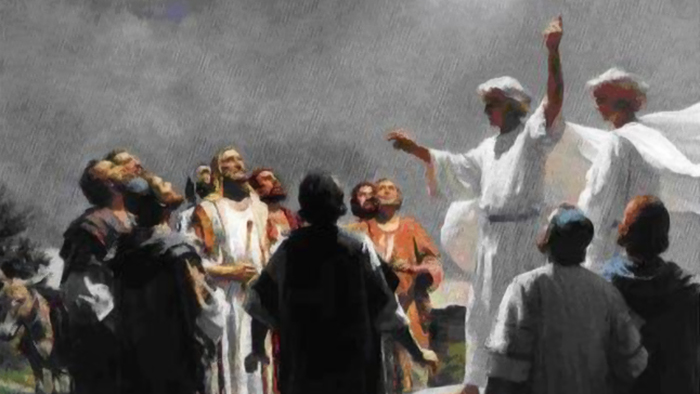
Suddenly, two men dressed in white garments stood beside them… “This Jesus, who has been taken up from you into heaven, will return in the same way as you have seen him going into heaven.” Acts 1:10b, 11b

The Ascension of Christ, described in the opening chapter of the Book of Acts, is not merely the story of Jesus departing from the earth; it is the revelation of His glorification, His eternal kingship, and the beginning of the Church’s mission in the world. Within this sacred moment, two details carry profound theological meaning: the appearance of the men in white garments and the promise that Christ “will return in the same way” He ascended.

The “two men dressed in white garments” stand within a long biblical tradition in which heavenly messengers appear clothed in radiant white as signs of divine glory, purity, and heavenly authority. Throughout Scripture, white garments are associated with the holiness of God, the light of heaven, and participation in divine life. At the Transfiguration, Christ’s garments become dazzling white; at the Resurrection, angels appear in shining garments beside the empty tomb; in Revelation, the saints stand before God clothed in white robes. In the Ascension account, these messengers function not only as angels announcing divine truth but also as interpreters of salvation history.

The disciples are “looking intently at the sky,” still focused on the visible presence of Jesus, but the messengers redirect them toward the mission now entrusted to the Church. Their words gently move the apostles from contemplation alone to apostolic action. Christ’s bodily presence is no longer confined to one earthly place because, through the Holy Spirit, He is now sacramentally and mystically present in His Church throughout the world. The white garments, therefore, symbolize the transition from the earthly ministry of Christ to the heavenly reign of Christ and the dawning of the age of the Church.

The final declaration — “This Jesus who has been taken up from you into heaven will return in the same way as you have seen him going into heaven,” carries immense theological significance. First, it affirms the bodily reality of both the Resurrection and the Ascension. Jesus does not abandon His humanity when He enters heaven; rather, humanity itself is brought into the presence of the Father through Him. The Ascension reveals that human nature, united to Christ, is now enthroned in glory. Second, the promise of His return establishes the Christian understanding of history as moving toward fulfillment, not endless repetition. The Church lives between Ascension and Second Coming: Christ reigns already, but His kingdom has not yet been revealed in its fullness. This creates the tension Christians live within the “already and not yet” of salvation history.

For the apostles, this promise transformed grief into hope. The Ascension was not Christ’s absence, but the assurance of His continuing reign and His eventual return. Together, these two elements of the Ascension narrative reveal a profound spiritual truth: the disciples are not meant to remain frozen, gazing upward, longing only for what has passed. They are sent into the world sustained by two certainties: Christ reigns now in heavenly glory, and Christ will come again. Between those two truths, the Church lives its mission: worshiping, proclaiming, suffering, serving, and waiting in hope for the return of the King.

He vigorously refuted the Jews in public, establishing from the Scriptures that the Christ is Jesus. Acts 18:28

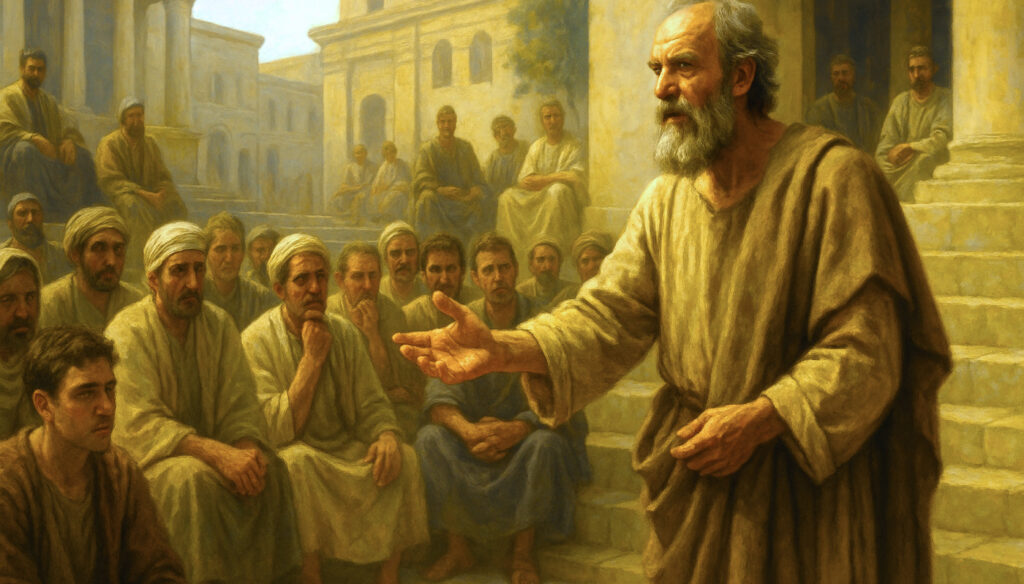
When the Apostles went forth into the world after the Resurrection and Ascension of Christ, they did not preach a vague spirituality or a mere moral philosophy. They proclaimed a Person — Jesus Christ crucified and risen — and they proclaimed Him with conviction because they themselves had come to know Him as the fulfillment of everything God had promised. In the Acts of the Apostles, we hear of Apollos and of Saint Paul “vigorously” proclaiming and defending the truth that Jesus is the Christ. Their preaching was not rooted in emotion alone, nor in blind zeal, but in a deep knowledge of the Scriptures, the promises of God, and the saving work of Christ. They understood not only that they believed, but why they believed.

This is essential for every Christian disciple. Faith is not meant to remain private, fragile, or unexamined. The believer is called to love God not only with the heart, but also with the mind. To know the faith deeply is to be able to recognize the hand of God throughout salvation history — from the covenant with Abraham, to the Law given through Moses, to the prophets who foretold the Messiah, and finally to Christ Himself, who fulfills all things. Saint Paul could stand before Jews, Greeks, philosophers, governors, and persecutors because he knew the Scriptures and could demonstrate how every promise converged upon Jesus. His confidence came not from pride in his own intellect, but from certainty in the truth.

There is also a profound pastoral importance in knowing the faith. The world continually asks questions: Why believe in God? Why trust the Church? Why does suffering exist? Why did Christ have to die? Why does the Eucharist matter? Why should one follow Christ rather than merely live according to personal desire? If Christians cannot answer these questions — even imperfectly — the faith risks appearing to others as inherited custom rather than living truth. But when a believer can speak thoughtfully and faithfully about Christ, the Gospel becomes credible and compelling. Knowledge gives clarity to witness.

Knowing the faith also strengthens perseverance. A believer who understands the foundations of Christianity is less easily shaken by suffering, doubt, cultural opposition, or false teaching. The storms of life inevitably come, and emotional fervor alone can fade under hardship. But a faith rooted in understanding becomes enduring. One who knows why Christ is trustworthy can remain faithful even in seasons when feelings are absent. Knowledge deepens conviction, and conviction strengthens endurance.

The early Christians changed the world because they were convinced that Jesus truly was the promised Messiah, the Son of God, and Savior of the world. Their witness was courageous because it was grounded in the truth they had come to know deeply. The same calling remains for Christians today. The disciple of Christ is not merely called to believe silently, but to be ready, as Saint Peter writes, to “give an explanation to anyone who asks you for a reason for your hope”. To know the faith, then, is not optional for the Christian life; it is part of loving God fully and participating in the mission Christ entrusted to His Church — to proclaim the Gospel to all nations.

“When a woman is in labor, she is in anguish…but when she has given birth to a child, she no longer remembers the pain because of her joy that a child has been born into the world.” John 16:21

Our reflection verse today provides an image that is at once deeply human and profoundly divine: the anguish of a mother in labor giving way to joy at the birth of a child. In this moment, Jesus is preparing His apostles for the scandal of the Cross, the confusion of His death, and the sorrow they will endure when it appears that darkness has won. Yet He tells them that their suffering is not meaningless. Like labor pains, it is a suffering that carries within itself the promise of life.

The image is important because labor is not suffering for suffering’s sake. It is purposeful pain. The mother endures agony because love is bringing forth a new life. Christ reveals that the Christian life often follows this same pattern. To belong to Him is to pass through seasons of waiting, sacrifice, misunderstanding, loss, and perseverance. The disciple is not spared suffering; rather, suffering becomes transformed when united to Christ. What appears to the world as defeat becomes, in God’s providence, the very path by which resurrection is born.

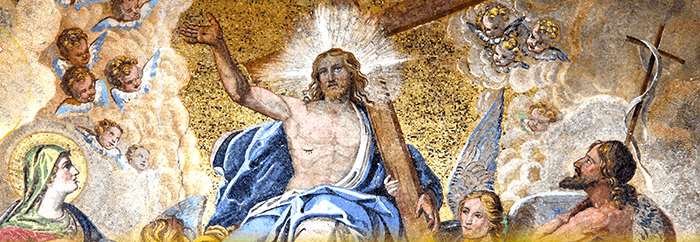
This mystery stands at the heart of Christianity. The Cross always precedes the Resurrection. Crucifixion of Jesus Before Easter morning came Good Friday. Before the apostles proclaimed the Gospel with courage, they experienced fear, grief, and apparent abandonment. Jesus does not deny the reality of anguish. He sanctifies it by entering into it Himself. The Son of God does not save humanity from a distance; He suffers with humanity and for humanity. Therefore, the Christian who suffers in fidelity to God is never suffering alone.

The comparison to childbirth also reveals that pain can become transformative. A woman in labor is not the same after giving birth; she has become a mother. In a similar way, enduring trials in faith changes the soul. Patience deepens. Compassion grows. Pride is stripped away. Dependence upon God becomes more real than dependence upon worldly securities. Through suffering faithfully endured, the believer is spiritually “reborn” into greater holiness. This is why the saints so often spoke of suffering not merely as an obstacle, but as a participation in the life of Christ. Saint Paul the Apostle writes that “suffering produces endurance, and endurance produces character, and character produces hope.” Epistle to the Romans

Yet Christ’s words also contain a promise about memory and joy. He says the mother “no longer remembers the pain” because of the joy before her. This does not mean the pain was unreal or insignificant. Rather, joy reinterprets suffering in light of what it produced. Christians believe that eternal life will cast all earthly suffering into a new perspective. In the presence of God, the wounds endured for love of Him will not be seen as wasted moments, but as hidden seeds of glory. Book of Revelation speaks of the day when God “will wipe every tear from their eyes.” The tears mattered. The pain mattered. But neither had the final word.

“Go, therefore, and make disciples of all nations, baptizing them in the name of the Father, and of the Son, and of the Holy Spirit, teaching them to observe all that I have commanded you.” Matthew 28:19-20a

Before His Ascension, Christ’s final words to the apostles were not casual instructions or a summary conclusion to His earthly ministry. They were a solemn commission — the final revelation of what His entire life, death, and Resurrection were meant to accomplish in the world. In the Gospel of Matthew, Jesus declares: “Go therefore and make disciples of all nations”. In Acts, He tells them: “You will be my witnesses… to the ends of the earth”. These final words are striking because, after years of teaching about mercy, humility, forgiveness, sacrifice, and divine love, He does not simply tell them to remember Him privately or preserve His teachings among themselves. Instead, He sends them outward. The love they have received is now meant to become their mission.

Theologically, this reveals something profound about the nature of God’s love. Divine love is never self-contained. Throughout salvation history, God calls a people not merely for their own sake but so that through them the world might know Him. Israel was chosen to be “a light to the nations”. Christ fulfills that mission perfectly and now entrusts it to the Church. The apostles had spent years learning not only doctrines, but a way of life transformed by communion with Christ Himself. Yet the Gospel was never intended to remain enclosed within the Upper Room. If Christ truly conquered sin and death, then His victory is universal in scope. Therefore, the apostles must go outward because the Resurrection changes the destiny of all humanity, not merely a small circle of believers.

There is also a profound connection between these final instructions and everything Christ previously taught about love. Earlier in the Gospel of John, Jesus says, “As the Father has sent me, so I send you”. The mission itself is an act of love. To know Christ and remain silent would contradict the very charity He taught them. Genuine Christian love desires the salvation, healing, and reconciliation of others. Thus, evangelization is not conquest or domination; properly understood, it is the extension of divine mercy into the world. The apostles are sent because love must move outward. Just as the Son was sent by the Father for the life of the world, the Church is sent by Christ for the life of the world.

Christ ascends not to abandon humanity, but to reign universally and to send the Holy Spirit upon the Church. Because He is enthroned at the right hand of the Father, His Gospel now belongs to every nation, culture, and people. The apostles are no longer to remain in Jerusalem waiting for the restoration of an earthly kingdom. The Kingdom has already begun in Christ, and now it must spread to the ends of the earth. His final words direct their eyes away from themselves and toward the universal horizon of salvation history.

In this way, Christ’s last command gathers together everything He taught before it. Love of neighbor becomes a mission. Mercy becomes proclamation. Communion with Christ becomes discipleship for others. The Cross and Resurrection become a message destined for every nation. His final words are simple because they contain the entire purpose of the Church: to continue the saving work of Christ in the world until He comes again.

“I have much more to tell you, but you cannot bear it now.” John 16:12


Our reflection verse today comes from the Gospel of John, where Jesus tells the disciples: “I have much more to tell you, but you cannot bear it now.” The statement comes during the Farewell Discourse, shortly before his arrest and crucifixion. The disciples are anxious, confused, and fearful. Jesus has spoken of betrayal, suffering, departure, persecution, and the coming of the Spirit. Into that atmosphere, he introduces a profound truth: there are limits to what human beings can spiritually receive at any given moment.

Theologically, the phrase “cannot bear it now” refers not simply to intellectual understanding but to spiritual and emotional readiness. The Greek verb used in the passage means “to carry,” “to endure,” or “to sustain.” Jesus is not suggesting that the disciples are unintelligent; rather, they are not yet capable of carrying the weight of the fuller truth he wishes to reveal. Divine truth often requires a corresponding maturity in the one who receives it.

This suggests that Christian truth is not merely theoretical knowledge but lived reality. Certain truths can only be grasped through participation and experience. Before the crucifixion, sayings such as “whoever loses his life will save it” may have sounded confusing or paradoxical. After the resurrection, however, those same words become illuminated by experience. The disciples eventually grow into truths that were once beyond them.

The condition Jesus describes remains highly relevant in the twenty-first century. Modern believers possess unprecedented access to information through scholarship, technology, and global communication. Yet information is not the same as spiritual readiness. A person may know a great deal about Christianity while still struggling to live its deeper demands.

Many teachings of Jesus remain difficult to “bear” because they challenge deeply rooted human instincts and cultural values. Teachings about loving enemies, forgiving wrongs, embracing humility, renouncing selfish ambition, or enduring suffering continue to test believers in every generation. Contemporary society often prizes autonomy, self-fulfillment, and immediate gratification, whereas the Gospel calls for surrender, patience, sacrifice, and transformation.

Some dimensions of Christian faith can only be understood through suffering and lived experience. Truths about hope, resurrection, trust in God, or divine comfort often acquire meaning only when individuals encounter grief, illness, failure, or injustice. Spiritual maturity develops slowly, and believers frequently discover that truths once recited intellectually become profoundly meaningful only after life has tested them. Jesus’ words reveal both human limitation and divine patience. The disciples’ inability to “bear” fuller truth was temporary, not permanent.

The same remains true for believers today. Human beings continue to struggle with truths that demand transformation, humility, endurance, and surrender. Yet the Christian faith holds that God patiently leads believers into deeper understanding over time. Faith is therefore not only learning what God says, but becoming spiritually capable of carrying the weight of that truth.

“For if I do not go, the Advocate will not come to you.” John 16:7

This statement opens one of the deepest windows into the inner life of the Triune God. It is not merely a practical comment about Jesus’ departure; it reveals the dynamic communion between the Father, the Son, and the Holy Spirit, and how humanity is invited into that divine life.

Within the mystery of the Trinity, the Son eternally receives Himself from the Father and eternally returns Himself in love to the Father. The Spirit proceeds as the living communion of love between them. In the economy of salvation, Jesus’ “going” refers not merely to His death, but to His entire Paschal Mystery: His Passion, Resurrection, Ascension, and glorification. Only when the Son has completed His self-offering to the Father does humanity become fully opened to receive the Spirit in a new way.

The risen Christ ascends not to abandon humanity, but to bring human nature into the very life of God. From that glorified humanity, the Spirit is poured out upon the Church at Pentecost. The Spirit is not a replacement for Jesus; He is the presence of Jesus interiorized within believers. Through the Spirit, Christ is no longer beside humanity only in one place and time — He dwells within humanity everywhere.

This is why the early Church understood Pentecost as something far greater than inspiration or emotional empowerment. The Spirit makes believers participants in divine life itself. As Athanasius of Alexandria famously taught, “God became man so that man might become god” — not by nature, but by participation in grace. The Advocate comes to conform humanity to Christ from within.

To truly receive the Spirit requires a death of the ego. Jesus says He must “go,” and in a similar way, the human person must allow self-centeredness to “go” as well. The Spirit does not merely comfort humanity in its present condition; He transforms humanity into the likeness of Christ. That transformation threatens every structure of pride, domination, violence, and self-sufficiency upon which much of the world is built.

The tragedy is that humanity often desires a savior who fixes external problems without transforming the heart. But Jesus did not come merely to improve civilization. He came to unite humanity with the life of the Trinity. The coming of the Advocate means that God is no longer only above humanity or beside humanity — God now dwells within humanity.

HTML Snippets Powered By : XYZScripts.com